Havana/The Miami-Dade County tax collector, Dariel Fernandez, reported this Sunday that a company sued before the Southern District Court of Florida for the revocation of the Local Business Tax for 20 establishments, which came into effect on last monday. The measure, promoted by the official, seeks to prevent South Florida from being used as an economic platform to support the Havana regime.
In a document dated this Saturday, the collector noted that “a private company – without mentioning which one – has now decided to initiate a judicial process.” While the case is resolved, he said, the revocation will remain in effect, “until the company demonstrates compliance and satisfies all legal and administrative requirements necessary to operate legally in Miami-Dade County.”
Firm in his position, Fernandez stressed that these demands will not deter him. “On the contrary, they reinforce the importance of applying the law correctly and without concessions. The Miami-Dade County Tax Collector’s Office will continue to put the people of Miami-Dade first, acting when necessary and protecting at all times the safety and integrity of our community,” he added in the document posted on his social networks.
“The Miami-Dade County Tax Collector’s Office will continue to put the people of Miami-Dade first”
Fernandez insisted that his decision is based on “the duty to safeguard the national security of the United States and to ensure that our county is not used, directly or indirectly, to benefit or support the Cuban dictatorship, which is an enemy of the United States of America.”
The measure applied by the collector, with which he canceled licenses of 20 businesses for alleged links to Castroism, is protected by Section 205.0532 of the Florida Statutes and Section A-175.1 of the Miami-Dade County Code, which authorize the revocation or denial of the renewal of the Local Business Tax to companies that carry out operations with Cuba in violation of US federal legislation.
However, this whole process began to take shape from September past. At that time, Dariel Fernández warned county businessmen that his office would be “more attentive than ever” to those who trade with Cuba without the relevant federal authorization. “We know who they are and where they are,” he said at the time.
“As Miami-Dade County Tax Collector I will not tolerate businesses that attempt to profit by illegally engaging in trade with the murderous communist dictatorship of Cuba,” he warned on his Facebook account. In the message, Fernández recalled that “Florida law and the Miami-Dade County Code are clear” and that whoever “collaborates” with the regime faces the consequences.
Whoever “collaborates” with the regime faces the consequences
“Our county will never be a refuge for those complicit in tyranny. It is about defending freedom, protecting our residents and ensuring that no one gets rich by betraying the values we represent,” he said in a post in which he shared a letter in which he stated that he had already identified several offenders to whom his office would send “letters” in the coming weeks.
Almost two months later, on October 28, a first round of 75 letters was sent to companies suspected of maintaining commercial ties with the Cuban dictatorship. These notifications requested documentation demonstrating the existence of a valid federal authorization, either through specific or general licenses issued by the Office of Foreign Assets Control (Ofac), of the Department of the Treasury, or by the Bureau of Industry and Security (Bis), of the Department of Commerce.
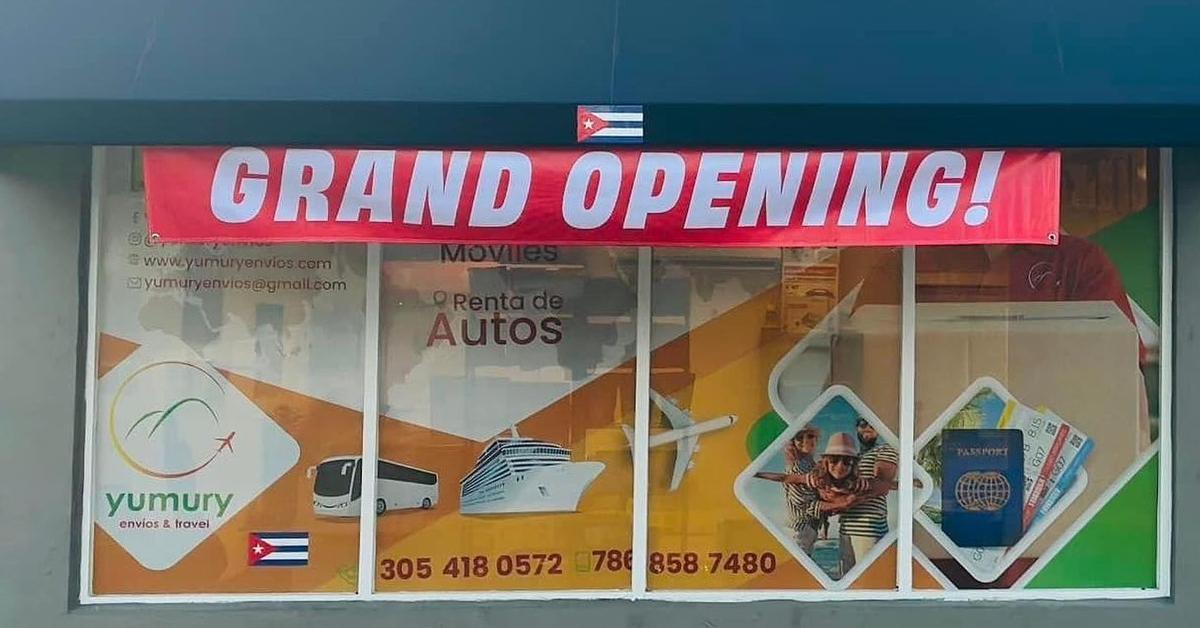
Among those affected are travel agencies, shipping companies and logistics firms.
According to the county itself, 48 companies responded and managed to demonstrate that they did not do business with Cuba or that they had sufficient legal support. The remainder received a second notice, sent on November 25 by certified mail, warning them that failure to respond would be interpreted as an indication of noncompliance with federal law and would result in the revocation of their local license.
Under notice there is no deception and, after expiration of that period and in the absence of additional documentation, the collector’s office proceeded to revoke the Local Business Tax, which prevents the indicated companies from operating legally within the county. Those affected include travel agencies, shipping companies and logistics firms, several of them with multiple locations in South Florida.