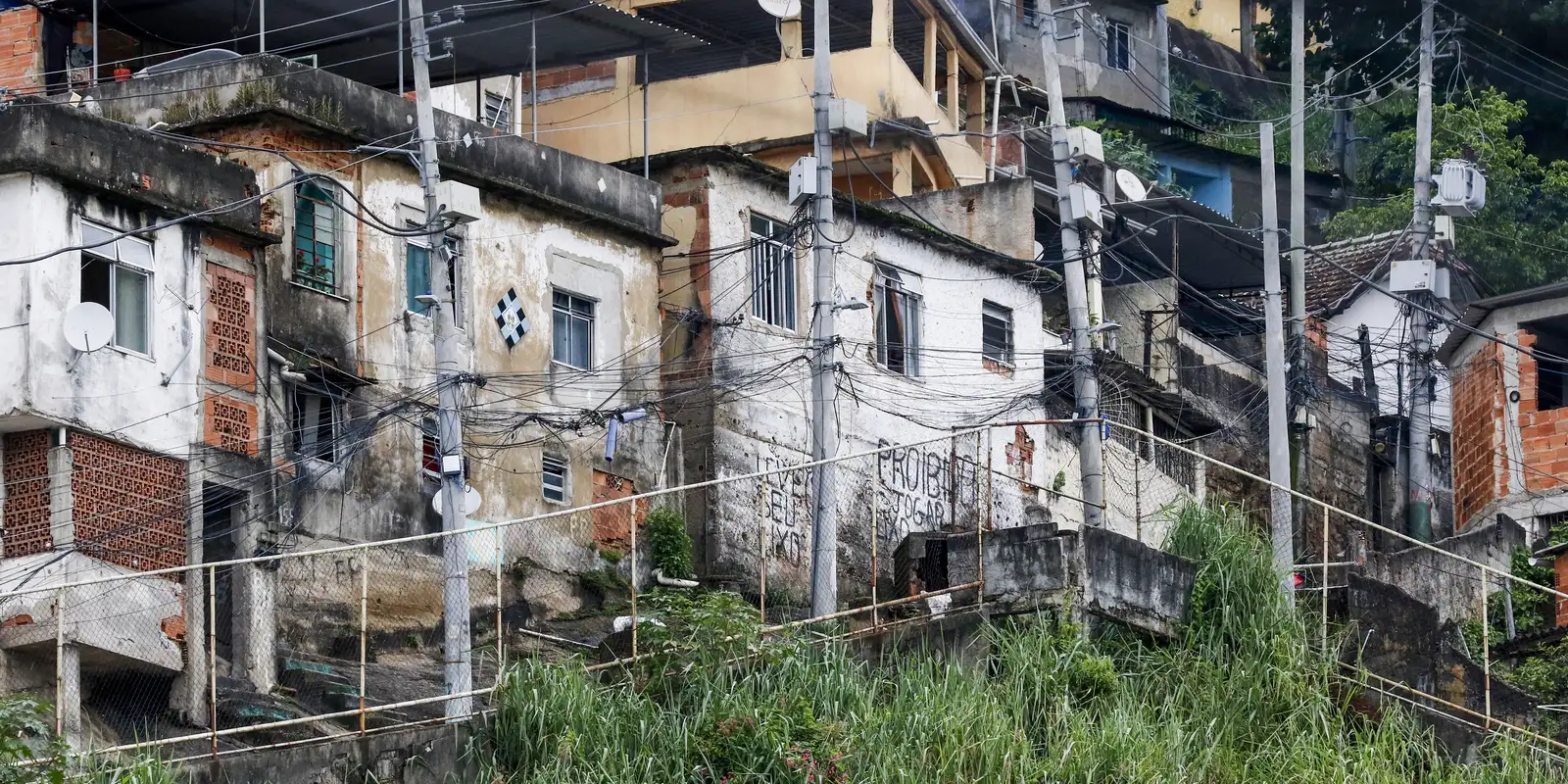
In partnership with the University of Glasgow, in the United Kingdom, three Brazilian universities will conduct research to propose ways to reduce the impact of climate change in Brazilian favelas. The research group will focus until 2027 on communities in Natal (RN), Curitiba (PR) and Niterói (RJ), and It is planned, from January 2026, the publication of a notice with research grants aimed at integrating residents into work.
The Pacha project (acronym in English for Participatory Analysis for Climate Adaptation and Health in Disadvantaged Urban Communities in Brazil) has as its general coordinator the Brazilian scientist João Porto de Albuquerque, director of the Urban Big Data Center, at the University of Glasgow. The funding, in excess of R$14 million, comes from the British foundation Wellcome Trust, a non-profit entity that funds research in the area of health and climate change.
The Pontifical Catholic University of Paraná (PUCPR) partners with the British university in Brazil, through the Postgraduate Program in Urban Management (PPGTU); the Fundação Getulio Vargas, through the Department of Technology and Data Science of the São Paulo School of Business Administration (FGV EAESP); and the Federal University of Rio Grande do Norte (UFRN).
In an interview with Brazil Agencythe coordinator of the Postgraduate Program in Urban Management (PPGTU) at PUC-PR, Paulo Nascimento, recalls that all Brazilian municipalities must develop climate change adaptation and mitigation plans. The Pacha project, however, is based on the premise that the data generated reflects the formal city much more than the favelas.
“For this reason, our entire effort is to build a database produced collectively with the residents of these communities and, from this, generate evidence that will help to review or look at these climate action plans in a different way,” he said.
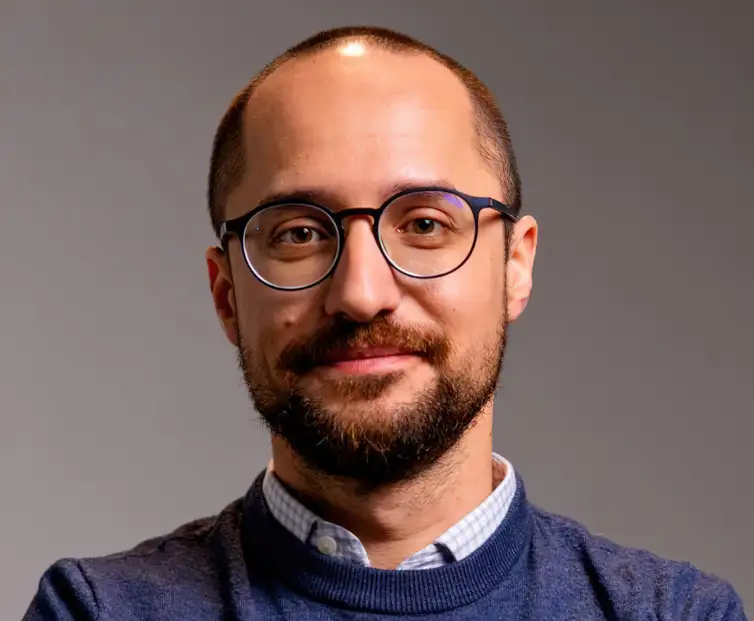
PUC-PR professor Paulo Nascimento participates in an international project to reduce the impacts of climate change on residents of favelas in the country. Paulo Nascimento/Personal archive
With the choice of the three Brazilian cities that will be studied, the project will be able to address very different climatic contexts, highlights Nascimento. The study will investigate how urban communities are working on this issue and what challenges they face, with a view to creating indicators with the participation of residents. The idea is to check what capabilities these communities are already developing and how researchers can learn from them.
Community researchers
The PUC-PR professor drew attention to the fact that favelas are seen, in general, through the lens of precariousness, of absence. “And what we are trying to do is, through residents, learn and see which problems they consider most relevant. So, the whole idea is the perspective of co-creation.”
Within this perspective, the project will grant doctoral and post-doctoral scholarships and also scholarships linked, obligatorily, to residents of these communities. “We will have community researchers, linked to the project, but from those communities involved and who will be financed by this British agent, with the prospect of the project being built collectively.”
Between the end of January and the beginning of February 2026, a notice should be launched for researchers from favelas who wish to participate in the project in Curitiba, Natal and Niterói.
The proposal is that these researchers have the capacity to engage communities. “And that they are replicators of what is produced after the project. In other words, the project will end at some point, but the local capacity will be aware of the context”, stated Paulo Nascimento.
Inequality
In 2022, according to Census data produced by the Brazilian Institute of Geography and Statistics (IBGE), there were more than 12 thousand favelas in Brazil, with a total of 16.39 million people ─ 8.1% of the country’s 203 million inhabitants.
These populations are among those most affected by the impacts of climate change, such as intense rains, landslides, floods and heat waves, as they live with precarious housing and a lack of adequate infrastructure.
The project also has a partnership with other scientific institutions, including the Oswaldo Cruz Foundation, through the Health Data Integration Center (CIDACS/Fiocruz), which works with the CadÚnico database with sections of race, income, gender and age. This will allow us to understand how these different groups, within urban communities, are exposed to different types of climate risks”, highlighted Nascimento.
The idea is to have a perspective for the work that is done from the bottom up, building community capabilities and, from this, building results that are relevant for each community and for the group of favelas.
Pacha will work to produce data to support public policies to better consider social and environmental inequalities, creating, together with communities, a diagnosis and indicators that are relevant to them. The conclusive result of the project should be released at the end of 2027.
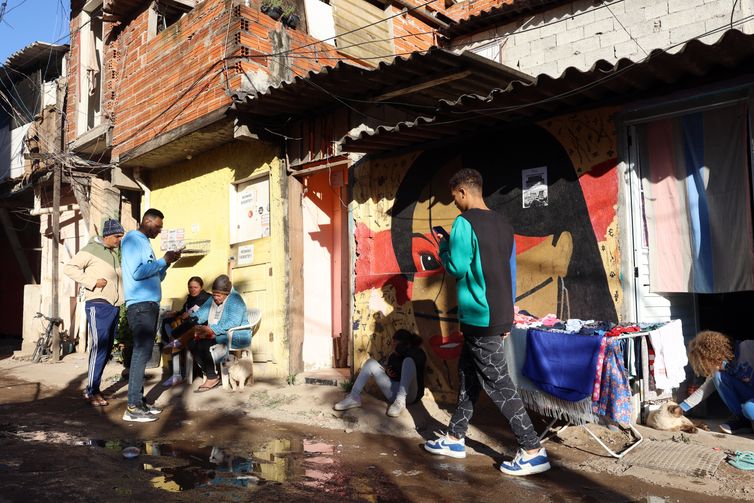
Favela do Moinho, in the center of the capital of São Paulo. Photo: Rovena Rosa/Agência Brasil
Launch
In the first week of December, researchers from Brazilian universities met in Natal with members of the University of Glascow, with representatives from the National Secretariat for Peripheries, the Ministry of Cities, and the National Center for Monitoring and Alerting of Natural Disasters (Cemaden), also linked to the federal government, as well as representatives from the Potiguar communities that are involved in the research.
“We spent the whole week discussing the research design. We officially launched it in Rio Grande do Norte.”
According to the researcher, every six months an event will be held in one of the three participating cities, involving local communities, to present partial results.