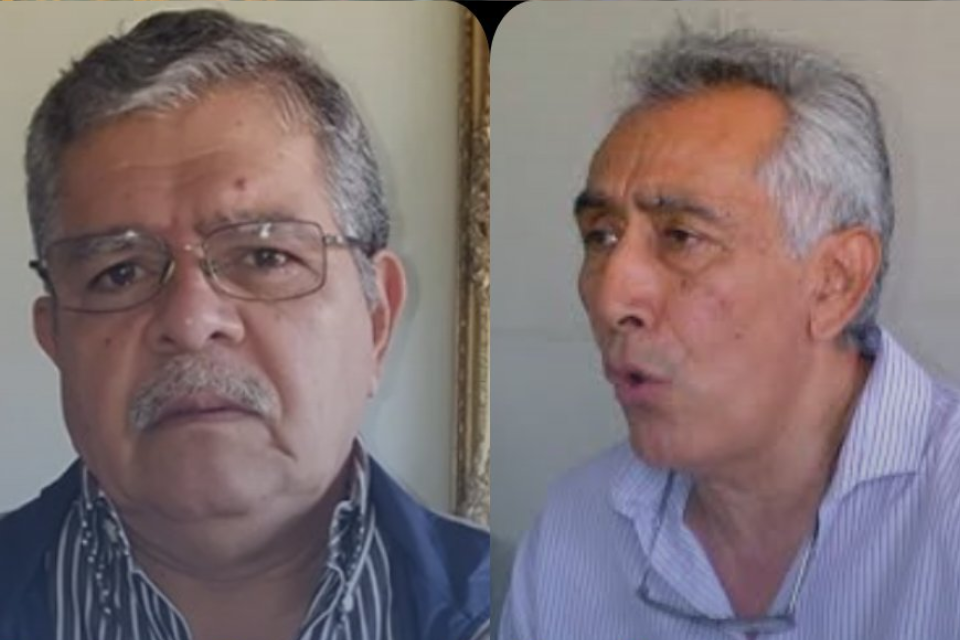
The Venezuelan Observatory of Trade Union Freedom demanded the freedom of José Elías Torres and William Lizardo. He pointed out that the relatives have visited all the detention centers and in none of them do they give them information
The Venezuelan Observatory of Trade Union Freedom denounced the “denial of justice” to union leaders José Elías Torres, general secretary of the CTV, and William Lizardo, president of Fetraconstrucción, who were detained by security agencies and to date, their families do not know where they are being held or how they are.
«The criminal courts do not accept habeas corpus and the Supreme Court of Justice only assigns a rapporteur and never processes them. “The families are left in a state of absolute defenselessness and the anguish for the lives of their loved ones increases with each day of their disappearance,” He noted on his social networks this Saturday the 27th.
He explained that the relatives of the union leaders have visited all the detention centers without receiving any type of information. “The omission of the TSJ is a denial of justice.”
The organization pointed out that 25 days have passed since the habeas corpus request was presented to the Supreme Court of Justice in favor of José Elías Torres and it has not been processed.
*Read also: LIST | Committee confirms 63 releases: 21 women, 39 men and three adolescents
In this sense, he recalled that these requests must be responded to within 24 hours of their presentation “because what is at stake is the person’s life.”
The Venezuelan Observatory of Trade Union Freedom demanded the freedom of Torres and Lizardo.
The president of Fetraconstrucción was arrested on November 28, in Valencia, Carabobo state. Lizardo was arrested at the Valencia passenger terminal by the Strategic Intelligence Division of the Bolivarian National Police.
The next day, November 29, the Bolivarian National Police (PNB) arrested the general secretary of the CTV, after carrying out a raid on his apartment, located in Bello Monte, Caracas.
*Journalism in Venezuela is carried out in a hostile environment for the press with dozens of legal instruments in place to punish the word, especially the laws “against hate”, “against fascism” and “against the blockade.” This content was written taking into consideration the threats and limits that, consequently, have been imposed on the dissemination of information from within the country.
Post Views: 139