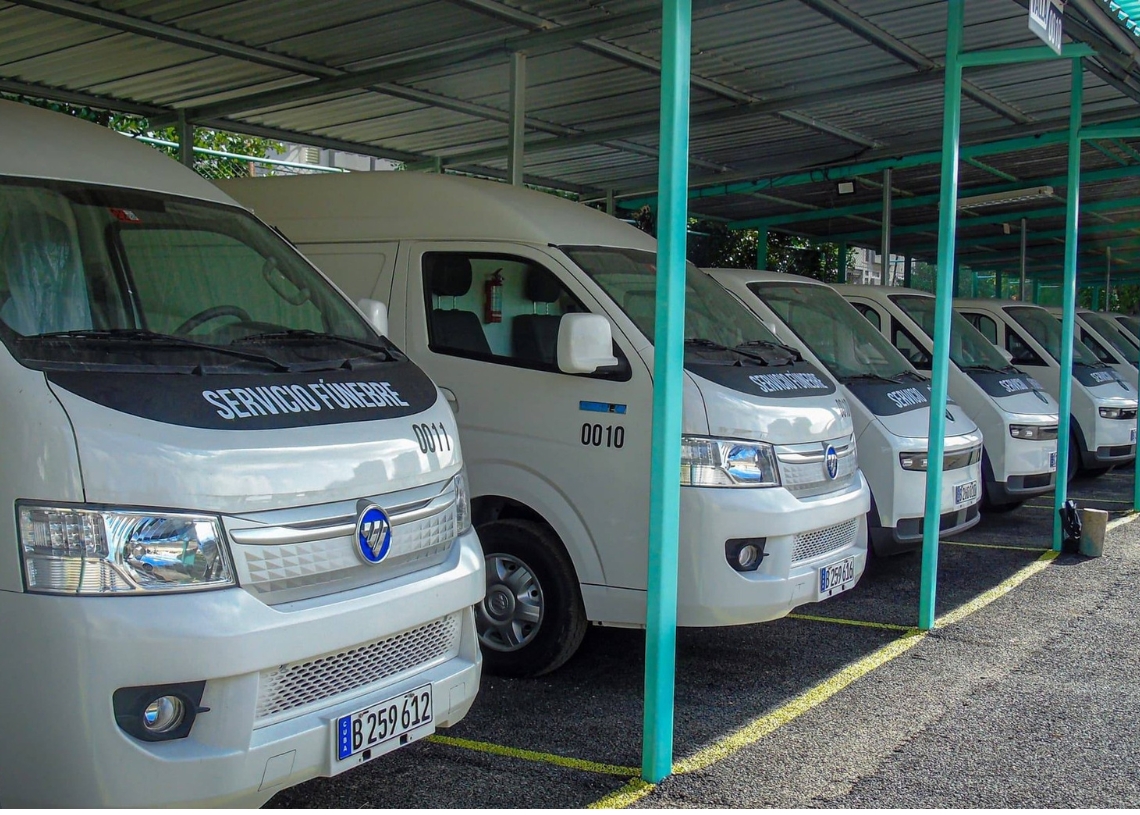
A new fleet of 15 new hearses began operating this Saturday in Havana. The cars are electric, belong to the state company Servi Axess and will operate free of charge for the population, according to authorities.
The Minister of Transportation, Eduardo Ródriguez Dávila, explained on his official Facebook profile that this is a “project on which we have been working rapidly over the last month.”
The use of these cars will be limited to the city of Havana, but the owner specifies that “it is part of an ongoing plan, which includes the rest of the provinces and the Isla de la Juventud Special Municipality, with the incorporation of new electrical and combustion equipment, already contracted.”
Other projects
The Budgeted Obituary Services Unit of the Provincial Government of Havana, which according to Dávila is “under difficult conditions,” will assume the costs of the service, with funds that come from the State budget.
The maintenance and repairs of the vehicles will be assumed by the supplier, and the charging of the cars will be carried out through solar panels and their accumulation, and a generator set will support emergency cases.
Dávila also explains that this investment by the Ministry of Transportation is added to other projects such as the purchase of electric tricycles, Photon microbuses, ecomobiles in the province of Sancti Spíritus, and the V2V catamaran, in addition to inputs such as tires and batteries, which are the result of the funds for the Sustainability and Development of Public Transportation, a mechanism that the entity has implemented since this year, which are generated with the sector’s foreign currency income.
Situation, from difficult to alarming
The minister also assumes that these new cars arrive “in response to an indication from the country’s leadership, received by our organization in the face of the current difficult situation.”
The funeral transportation service in Cuba, “a sensitive aspect for the population,” has received numerous public complaints in recent years.
The poor technical conditions of the cars, the “painful” delays due to situations such as lack of fuel and electricity; and even the “inventions” in many places in the country, which include the use of vehicles from other state entities not prepared for that purpose, have caused many to take their complaints to social networks.
Added to all this are other aspects related to funeral services in general, ranging from the lack of electricity in funeral homes and cemeteries, their poor conditions or insufficiency and poor quality in the manufacturing of coffins.