The year of Paralympic sport in the country, the first in the cycle of the Los Angeles Games (United States), in 2028, was marked by historic performances in the World Athletics and Judo Championships, in which Brazil occupied the top of the medal table. But there was also tension behind the scenes with the clash between athletes and the Brazilian Table Tennis Confederation (CBTM) over controversial demands regarding the Bolsa Atleta.
The start of the 2025 season brings optimism for the year ahead. In February, Cristian Ribera became world champion in cross country skiing in Trondheim (Norway), in the sprint race (one kilometer). The Rondônia native is Brazil’s hope of a medal at the Winter Paralympics, which will be held in the Italian cities of Milan and Cortina, in March 2026.
At the Wheelchair Tennis World Cup, held in Antalya (Turkey), in May, the Brazilian team in the quad class (athletes with limitations in at least three limbs) reached the final for the first time, winning silver, beaten by the Netherlands. In the junior category, Brazil was a semi-finalist and came fourth, with important participation from Minas Gerais natives Vitória Miranda and Luiz Calixto.
They also shone in the Grand Slams, as the most traditional events in the sport are known. Vitória was champion of women’s singles and doubles (alongside Belgian Luna Gryp) at the Australian Open and Roland Garrosin France. Luiz won the men’s doubles tournament on Australian soil, together with North American Charlie Cooper. It was their last year in juniors.
Just like wheelchair tennis, the judo World Cup took place in May, in the city of Astana (Kazakhstan). Brazil was on the podium 13 times, five of which were at the top, leading the medal table in an unprecedented way. The event celebrated Alana Maldonado, from São Paulo, three-time champion in the category up to 70 kilos (kg) of class J2 (low vision), and Wilians Araújo, from Paraíba, who won twice in the category over 95 kg in class J1 (totally blind).
Also noteworthy is the 100% Brazilian final between judokas over 70 kg in the J2 class, marked by Rebeca Silva’s victory over Meg Emmerich, also from São Paulo. And to the unprecedented golds of Brenda Freitas from Rio de Janeiro in the up to 70kg category and Rosi Andrade from Rio Grande do Norte in the up to 52kg category, both in the J1 class.
At the canoeing World Cup, in Milan, Fernando Rufino from Mato Grosso do Sul won the only Brazilian gold, in the 200 meters (m) of the VL2 class (athletes who use the trunk and arms in rowing), repeating the double from the Paralympic final of the Paris Games, in France, in 2024, with Igor Tofalini from Paraná in second. In total, the country reached the podium five times in Italy.
Same performance as Brazil in the road cycling World Cup, in Ronce (Belgium), also in August, which had the São Paulo native Lauro Chaman securing his third title in the C5 class endurance race (moderate upper limb disabilities). Already in the track cycling, which took place at the Rio de Janeiro Velodrome in October, the Brazilian team obtained nine medals, with emphasis on the gold – with a record – from São Paulo’s Sabrina Custódia in the time trial (1 km) of class C2 (physical-motor impairment that does not prevent the use of a conventional bicycle).
In September came the Swimming World Cup in Singapore. The fight for the top of the medal table was balanced, with Italy topping the list with 18 gold medals. Brazil came in sixth, with 13 gold medals and 39 podiums. Gabriel Araújo from Minas Gerais, Gabrielzinho, from class S2 (the second with the greatest physical-motor impairment), and Carol Santiago from Pernambuco, from S12 (low vision), were the stars, with three golds each.
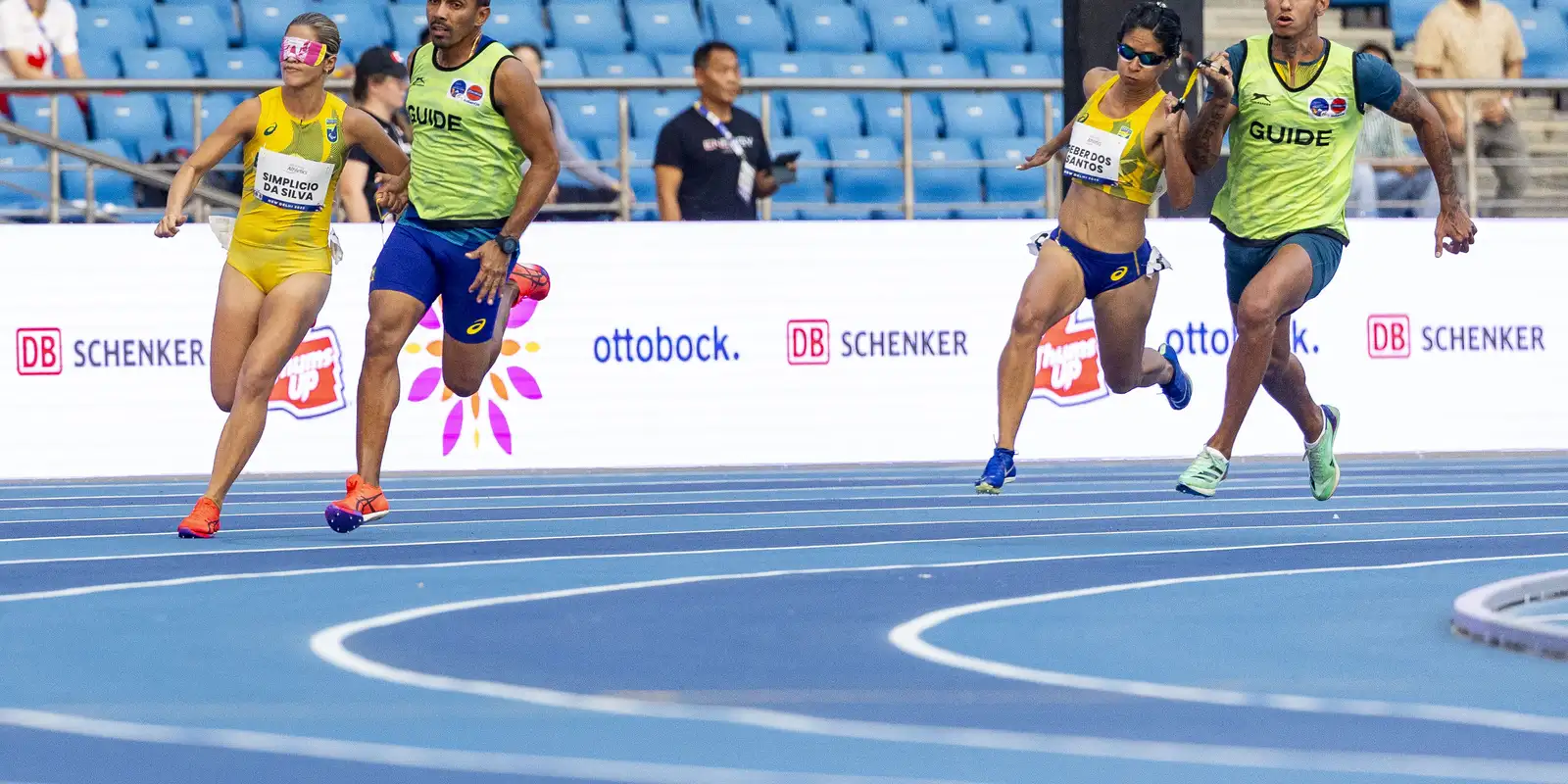
In the month of October, Brazil made history in New Delhi, with the athletics team finishing the World Cup in India on top, with 15 golds, 20 silvers and nine bronzesahead of China. In the three previous editions, Brazilians had been runners-up. To add to the scale of the feat, it was only the second time that the Chinese did not occupy first place in the competition.
And there’s no way the green and yellow star on Indian soil isn’t Jerusa Geber. The native of Acre won two gold medals, being four-time champion of the 100 m dash in the T11 class (total blind). She reached 13 podiums in World Championships (seven golds, five silvers and one bronze), surpassing the 12 medals (eight golds and four silvers) of Terezinha Guilhermina from Minas Gerais, who competed in the same category.
Still in October, in weightlifting world championshipthe women’s team won the team gold medal, with Tayana Medeiros from Rio, Lara Lima from Minas Gerais and Mariana d’Andrea from São Paulo. They also reached the podium in Cairo (Egypt) in individual competitions. Mariana and Tayana took silver in the up to 73 kg and 86 kg categories, respectively, while Lara won bronze among the up to 41 kg athletes.
Although the table tennis World Cup will be held in 2026, the sport was also in the spotlight this year, but because of behind the scenes. In July, a group of nine athletes (who have a total of 16 Paralympic medals) sent a letter to the Ministry of Sports expressing dissatisfaction with the CBTM.
Among the complaints is the requirement that they invest a percentage (ranging from 30% to 60%) of the Bolsa-Pódio – the main category of Bolsa Atleta – to pay for participation in international championships and that each one’s planning should include at least ten events outside the country. Only then would their sports plan be approved by the entity – which is necessary to receive the benefit from the Federal Government.
In the letter, the table tennis players asked, among other actions, for intervention in the confederation, the recognition of excellence based on results and not the number of events played and demands for the preparation of a plan with “objective technical criteria”. In response, the Ministry informed that “there is no provision, in the current regulations of the Bolsa Atleta Program”, regarding the requirements of the CBTM. The entity ended up revoking the measure, but the split remains.