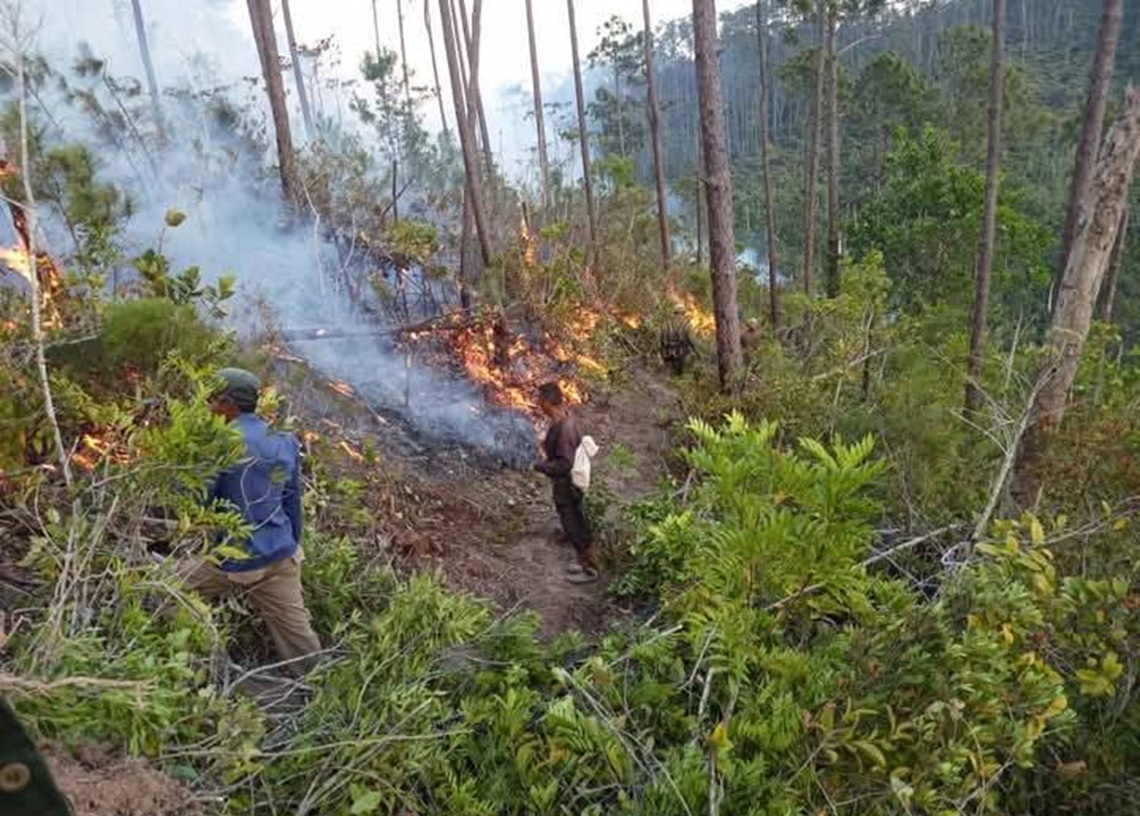
The projections for the next forest fire season in Pinar del Río are not encouraging.
At the threshold of the period considered to be the highest risk – between January and May – specialists estimate that In 2026, between 85 and 112 fires could occur throughout the province.
The combination of a high accumulation of combustible material in the forests, the lack of rainfall and the deterioration of forest roads could cause damage of up to 4,000 hectares.
This is how he explained it to the newspaper Granma Rubén Guerra Corrales, head of Fire Management and Management, of the Forest Ranger Corps (CGB).
Pinar del Río, the second most reforested province in Cuba, closed 2025 with around a hundred forest fires.
Of them, 13 were classified as large or very large and accounted for nearly 80% of the more than 9 thousand hectares damaged during the year.
According to Guerra Corrales, most of these accidents has human originso the CGB has reinforced the work with entities of the Agriculture system and other organizations with an impact on forested areas, with the aim of reducing indiscipline and negligence.
Pinar del Río registers more fires in the first months of 2025 than in the last four years
Forest fire prevention
At the same time, educational actions are carried out in communities and schools, as well as campaigns through the media, aimed at promoting greater awareness about the protection of forests.
The official stressed that in territories where there is a culture of environmental preservation, the occurrence of fires is considerably lower. As an example, he mentioned the municipality of Viñales, eminently mountainous, where only one fire was recorded in all of 2025.
In contrast, towns such as San Juan y Martínez, Mantua and Minas de Matahambre have reported accidents on a recurring basis in recent years.
Among the favorable elements, Pinar del Río has a surveillance system that makes it possible to detect heat sources through the use of satellites, as well as a network of observation towers distributed in the mountains.
However, authorities insist that effective prevention depends, to a large extent, on the support of the population and, especially, of communities near forest areas.