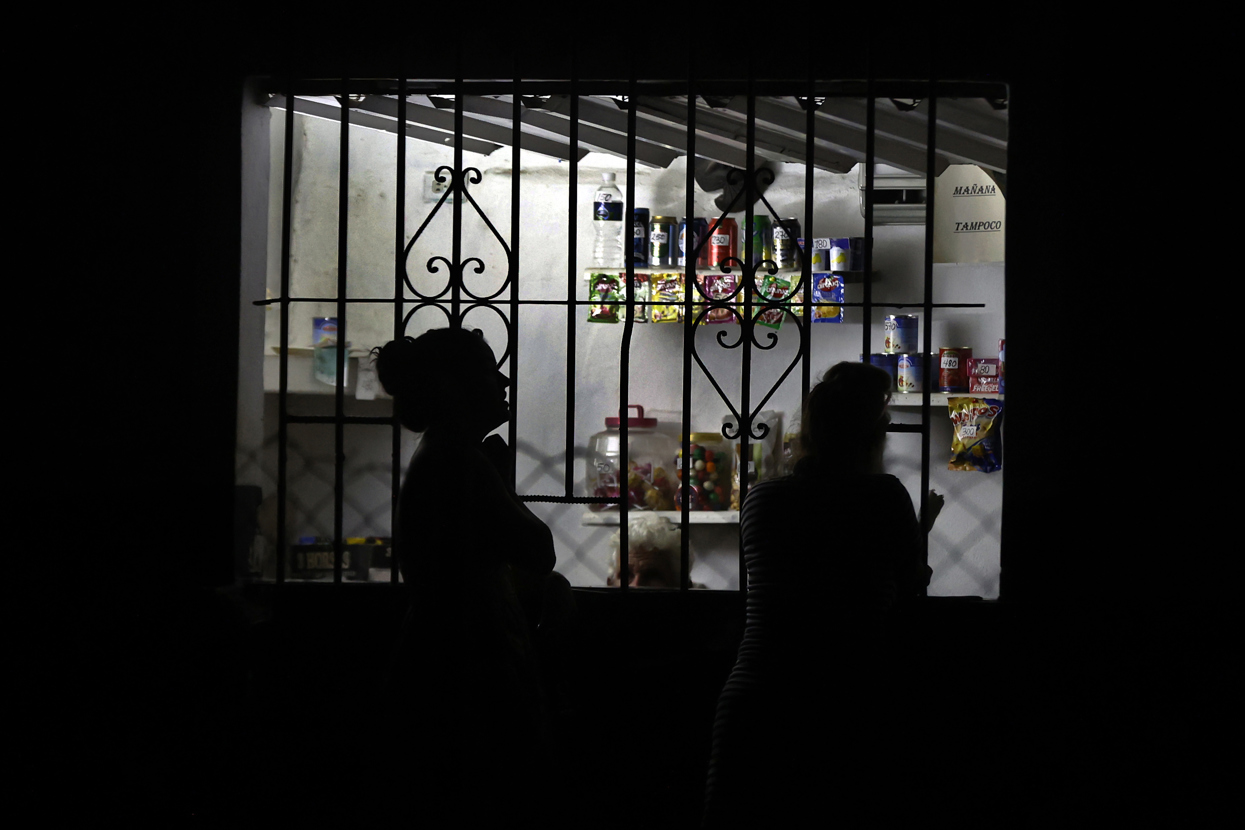
Cuba will face blackouts throughout the day this Friday, with simultaneous effects of up to 56% of the country in the hours of greatest electricity demand, between the afternoon and night, reported the state-run Unión Eléctrica (UNE), according to data cited by the EFE agency.
During the last week, high levels of impact on the electrical service have been recorded, according to daily UNE reports collated by EFE. On Christmas Eve and Christmas, the rates reached 60%, very close to the maximum documented so far, of 62%, recorded at the beginning of December.
These figures reflect the depth of the energy crisis that the island has been going through since mid-2024, marked by frequent breakdowns in obsolete thermoelectric plants and by the shortage of foreign currency to import the fuel necessary for electricity generation.
For this Friday’s peak hour, the UNE – attached to the Ministry of Energy and Mines – foresees a generation capacity of 1,490 megawatts (MW), compared to a maximum demand estimated at 3,350 MW. The deficit would reach 1860 MW, while the expected impact, that is, the energy that will be disconnected to avoid disorderly outages, will amount to 1890 MW.
Currently, six of the 16 thermoelectric units in operation are out of service due to breakdowns or maintenance. This type of generation contributes around 40% of the country’s energy mix. Added to this is the shutdown of 102 distributed generation plants, as well as the engine infrastructure of Moa, in eastern Cuba, due to lack of fuel. In addition, a dozen engines remain stopped due to a shortage of lubricant. Together, this source represents another 40% of the national energy matrix.
Independent specialists attribute the crisis to chronic underfinancing of the electricity sector, which has remained under state control since 1959. For its part, the Cuban Government blames US sanctions and accuses Washington of causing “energy asphyxiation,” recalls EFE.
The prolonged daily blackouts continue to seriously affect the national economy, which has contracted 11% in the last five years and will also close the current year in negative numbers. Likewise, power outages have been a key trigger for the main social protests registered on the island during that period, according to data cited by EFE.
EFE/OnCuba