Santo Domingo.-The voluntary passing of the torch is not part of the Dominican political culture, although in recent years there has been a marked tendency for the emergence of new electoral figures, as a consequence of the fact that the iconic leaders have physically disappeared and that the constitutional architecture has removed the last two presidents of the Republic from the electoral path.
For most of history, the transition of power occurred between political allies. However, in the first quarter of this century, cases have begun to be seen in which children of political leaders have come to the fore.
In the cases of José Rafael Abinader and Hipólito Mejía, the story was relatively simple, as both stepped aside to make way for their children -Luis and Carolina-, even though, at the time their offspring began to make their way, they remained active in their respective parties.
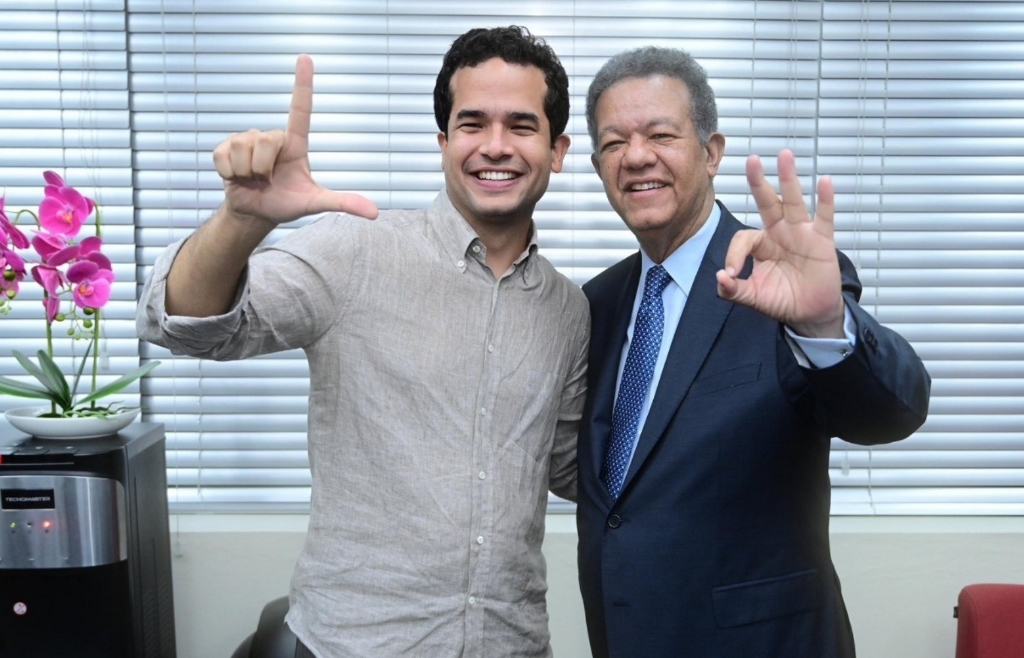
But the story in the case of Leonel Fernández does not seem to be so simple or idyllic, since the former president persists in presenting himself for the sixth time as a presidential candidate, despite the fact that his son, Omar Fernández, has burst onto the political scene, who appears in the polls with favorable numbers to face, in the next elections, the candidate from the ruling Modern Revolutionary Party.
History has placed Leonel Fernández and his son Omar in the same dilemma that José Rafael Abinader with his son Luis Rodolfo and, later, Hipólito Mejía with his daughter Carolina faced. In these last two cases, the decision was quick, although not without fuss, since it was made with political resonance to benefit their offspring.
PRD-PRM
The now deceased José Rafael Abinader is remembered as a pillar of Dominican politics, not because of his electoral successes, but because he passed on the torch to his son and facilitated the party that he himself had founded, the Social Alliance for Democracy, so that the now known Modern Revolutionary Party was founded on that structure, when the division of the Dominican Revolutionary Party occurred.
When his son Luis Abinader began to emerge as a figure of renewal within the old PRD, a party dominated by the so-called “old oaks,” José Rafael Abinader understood that historical time no longer belonged to him. There were no public breakups or ego disputes. On the contrary, the father stepped aside so that the son could advance, first as a vice-presidential candidate, then as an opposition leader and, finally, as president of the Republic.
The case of former president Hipólito Mejía has different nuances, but a similar conclusion. Mejía, one of the most charismatic and combative leaders of the PRM, last sought the presidential candidacy in 2019. He did not obtain it and, from there, he made an unusual decision in Dominican politics: not to insist.
Since then he has remained active, visible and with internal weight, but he renounced presidential ambition. First he determinedly supported Luis Abinader, helping to make him the first president of the PRM. He then turned all his political energy toward his daughter, Carolina Mejía.
Carolina was a vice-presidential candidate in 2016, twice mayor of the National District and today she is fighting for her party’s presidential candidacy. Hipólito Mejía does not compete with her, but rather drives and encourages her, constantly accompanying her on her political journey.
Although they use different languages, the styles of Carolina and Hipólito are similar in terms of charismatic, spontaneous and tenacious, which has allowed Mejía’s former followers to see in the current mayor a kind of version 2.0 of the original project, for better or worse of the aspirations that are attributed to her today.
In the cases of José Rafael Abinader and Hipólito Mejía, the gesture was the same: stepping aside without a word to make way for their offspring.
Leonel’s dilemma
But in the case of Leonel Fernández, the story is not so idyllic. He is a politician convinced that a successful presidential project can still be articulated around his figure and that he is able to overcome the difficulties that his eventual candidacy faces. Fernández has managed to build a party, Fuerza del Pueblo, that almost organically revolves around his figure. However, the polls begin to tell another story, one that tightens the neck of Leonel and his closest circle.
Omar Fernández, a young senator, with a high level of sympathy, modern discourse and transversal acceptance, appears better positioned than many veterans of national politics. This reality presents Leonel with a clear political dilemma, with a strong human component: deciding whether to step aside to give way to his son Omar or insist on being himself the axis of the 2028 presidential competition.
So far, Leonel Fernández shows no signs of being willing to retire. The People’s Force continues to function as a Leonelista party, although internal voices are beginning to emerge that understand that with Omar the electoral chances could be greater.
It is not the first time that the former president faces a similar crossroads. In 2019, the possibility of his then wife, Margarita Cedeño, being a presidential candidate for the Dominican Liberation Party, was raised as an intermediate formula that would allow a point of agreement between the groups of Danilo Medina and Leonel Fernández, in a dispute that even then seemed insurmountable.
From Danilo Medina’s entourage it has been argued that Leonel preferred to “break the child” rather than give up his presidential aspirations, even when the option was to give way to his then wife, as Juan Domingo Perón or Néstor Kirchner did in Argentina at the time.
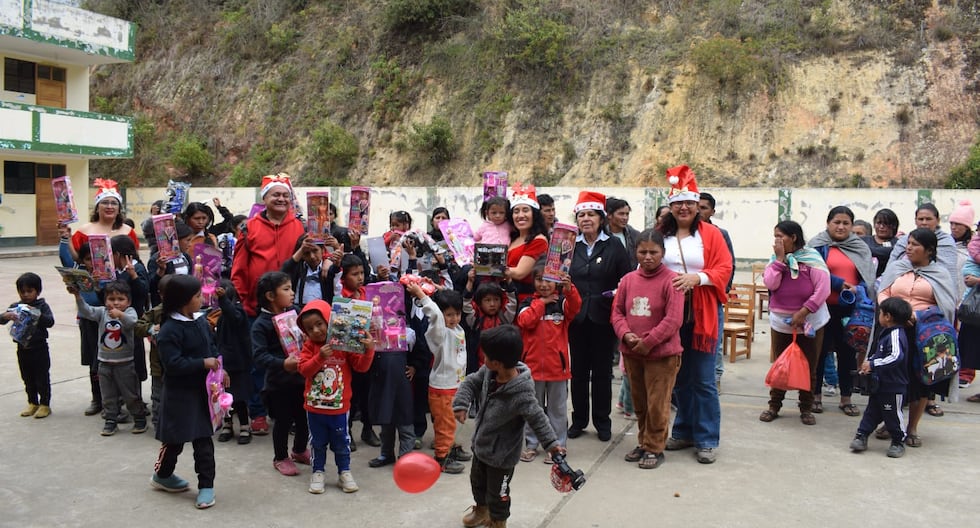
In fact, Leonel Fernández himself has given primacy to his son at key moments: he supported his candidacy for senator, placed him on the National Council of the Judiciary representing his party and has kept him by his side even in symbolic acts, such as the delivery of Christmas boxes.
Relationship
— Leonel-Omar
Blood has a weight that surpasses other bonds. Leonel and Omar maintain a close father-son relationship, which suggests that, although there is pain or political tensions, there will be no personal distancing.