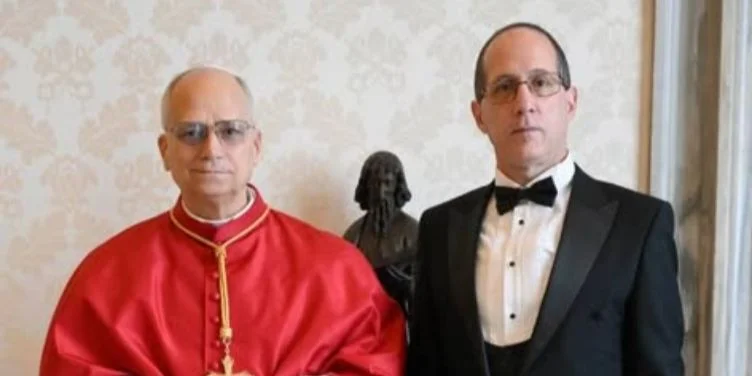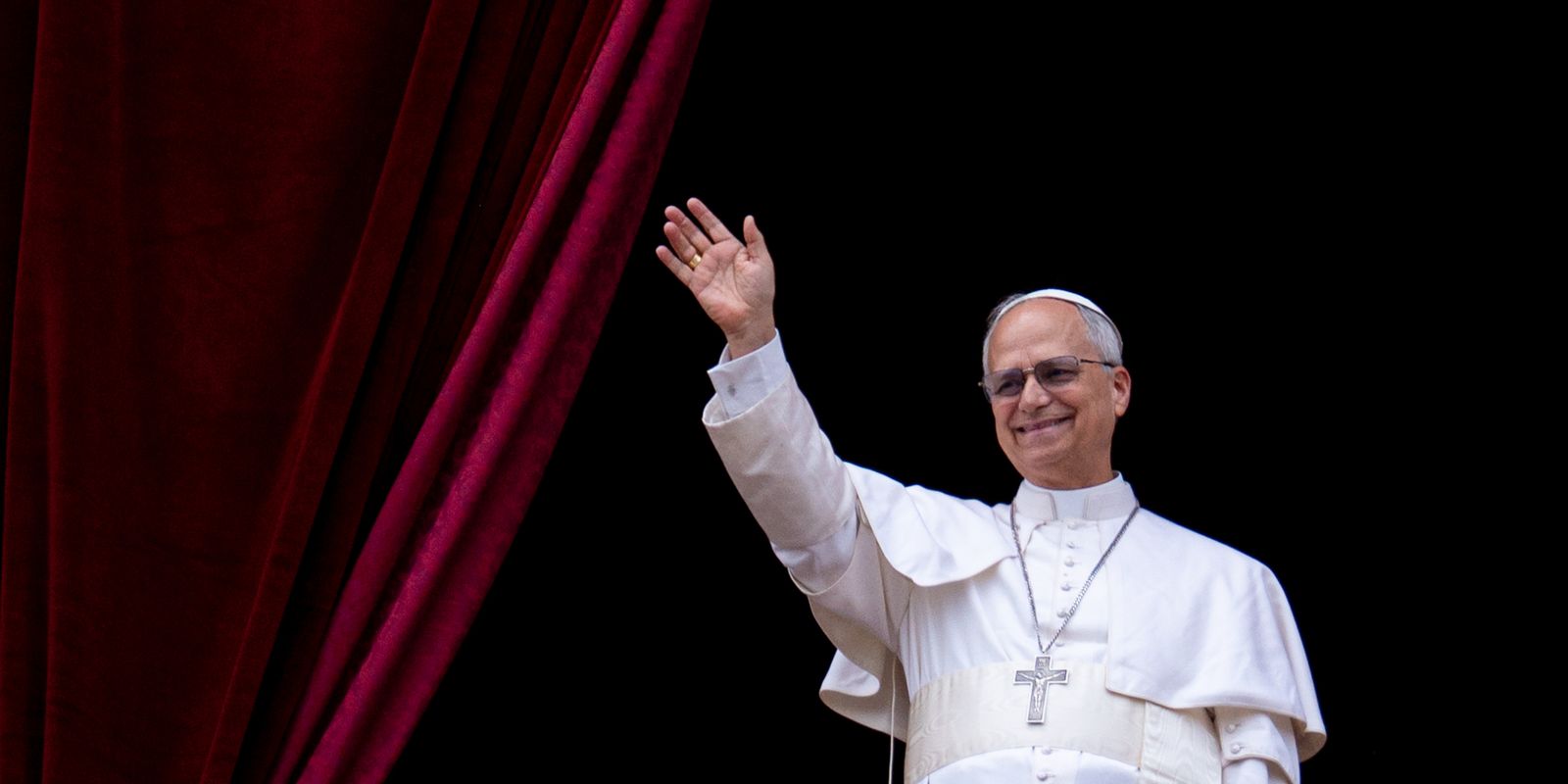
Pope Leo XIV celebrates, for the first time, this Wednesday night (24), the rites of Christmas. From St. Peter’s Basilica, in the Vatican, he must reinforce the message with a request for peace, which he has already been disseminating in recent days, in the face of a complex global scenario, with ongoing conflicts in Sudan, Ukraine and Gaza, for example.
In the message prepared for January 1st, the World Day of Peace, released in advance, Leo XIV presented a request for “unarmed and disarming” peace and encouraged the construction of a culture of peace in domestic and public life.
For World Peace Day, Pope Leo XIV defended disarmament and advised Christians and, especially, political authorities, to look up to Jesus Christ, who fought an “unarmed” fight.
He also criticized the countries’ arms race, with increasing military expenditure, associated with speeches “spreading the perception that we live under threat and that security must be armed.”
The pontiff also condemned the warlike use of artificial intelligence (AI), which “radicalized the tragedy in armed conflicts.” In Gaza, for example, in a pioneering way, Israel used AI-guided drones as tools for intimidation, surveillance and attacks.
“A process of de-responsibility of political and military leaders is even being outlined, due to the increasing ‘delegation’ of decisions relating to people’s lives and deaths to machines”, he warned, in the message.
“It is an unprecedented spiral of destruction, which compromises the legal and philosophical humanism on which any civilization depends and by which it is protected”, criticized Leo XIV, regarding the use of technologies in the military sphere.
Having been in office for seven months, the pope seeks, with his message, to encourage nations to support each other, with dialogue and mutual trust, and for people to cultivate, in addition to prayer, dialogue with other traditions and cultures.
“Around the world, it is desirable that each community becomes a ‘house of peace’, where we learn to neutralize hostilities through dialogue, practice justice and maintain forgiveness”, he reinforced.
“Today, more than ever, it is necessary to show that peace is not a utopia, through attentive and generative pastoral creativity.”
Leaders of other religions reinforce appeal
Apostolic Roman Catholics are the majority in Brazil, a country also made up of a growing proportion of evangelicals. When analyzing Pope Leo XVI’s message, Baptist theologian and pastor Marco Davi de Oliveira assessed that the pope was happy to provoke a “deep reflection on peace” to start the year 2026.
The evangelical said that, often, it is necessary to first find peace within ourselves, facing inner conflicts, and then reflect on everything around us.
“Often, violent attitudes are a reflection of internal wars and a lack of justice,” he said, citing a prophetic excerpt from the Book of Isaiah.
“The pope is correct in talking about disarming peace. He helps us understand that we must use all our strategies, our faith, our understanding of the world, to produce peace. First, in ourselves, and then in others”, he assessed.
In the pastor’s view, this is a medium and long-term construction, which involves respect and otherness. “The production of peace is not necessarily uniform. But, if there is a will, there is a way, in Brazil and in the world.”
This is the same assessment as pastor and gospel singer Kleber Lucas. He believes that Pope Leo XIV continues Pope Francis’ legacy by drawing attention to the urgency of peace in the world.
“From the moment he [papa] puts these reflections, he ends up being an agent of the Kingdom of God in a world that needs to practice more peace”, he stated.
“Practicing peace is a challenge of our time, through dialogue, respect, tolerance, and a daily practice of conciliation.”
From the Brazilian Spiritist Federation, vice-president Geraldo Campetti also highlighted that peace is part of the “beatitudes of happiness” and that, in the face of so many conflicts, it is more than necessary.
“Peace is an achievement that we must undertake every day of our lives”, he reinforced.
“The pope was right in his analysis, and spiritualism is in the same line, because we all want to be happy, right? And there is no way to be fully happy if there is no peace”, claimed the spiritualist leader.
The first step, according to him, is to look at yourself. “Often, we create walls, out of prejudice, out of judgments, and we need to learn to have a more inclusive look, just as Jesus taught us, of understanding, of seeking a fraternal relationship, between people and peoples”, he said.
All great religious leadership defends an environment of harmony, dialogue and respect, added Babalaô Ivanir dos Santos about the papal message. In Brazil, as the Pope warned in his message, faith has been diverted to the mobilization of political interests and discord.
Interlocutor of the Commission to Combat Religious Intolerance (CCIR), representing Afro-Brazilian religions, and professor at the Federal University of Rio de Janeiro, Ivanir demands that the message be transformed into concrete gestures by Christians.
“The pope speaks in one direction, but there are Catholic Christian authorities who have different actions”, he denounced.