A report from the ‘Miami Herald’ reveals how the hotel expansionism of the Cuban regime has plunged the Island into the worst crisis of the last century.
MIAMI, United States. – The decision of the Revolutionary Armed Forces (FAR) of the Cuban regime to concentrate the country’s foreign currency income on the massive construction of luxury hotels, through its business conglomerate Business Administration Group SA (GAESA)contributed directly to the economic and social deterioration of the Island and ended up aggravating the collapse of tourism, according to an investigation of Miami Herald based on confidential financial documents of the military group itself.
The report reveals that, despite the collapse of the tourism sector after the tightening of US sanctions, the COVID-19 pandemic and the worsening of the internal crisis, GAESA maintained for years an expansionist model focused on the construction of hotels, even when the basic infrastructure, food production, public health and the country’s electrical system were in clear deterioration.
At the center of this strategy is Gaviota SAthe main tourist company of the military conglomerate. In the last decade, Gaviota went from being a secondary player to becoming the largest hotel group in Cuba, with 121 hotels, 20 marinas, its own transportation company, a travel agency and a logistics and supply company. In just 10 years, it more than doubled its hotel portfolio.
The internal financial statements of GAESA obtained by the Miami Herald show that, between January and March 2024, Gaviota achieved a net profit margin of 42%, almost four times the average for the global tourism industry. In that quarter, the company recorded profits of 13.3 billion Cuban pesos on sales of 31.6 billion. At the official exchange rate used by state companies—24 pesos per dollar—this is equivalent to about $554 million in profits on revenues of $1.3 billion.
Gaviota’s sales represented 72% of the net sales reported by GAESA in that period, confirming that tourism is one of the main sources of income for the Cuban military apparatus. These data do not include the income of CIMEX, the largest company in the conglomerate, whose financial statements were not part of the documents obtained.
According to the investigation, the high profit margins were not limited to Gaviota. GAESA’s consolidated financial statements show net margins close to 42% at different times in 2023 and 37% in the first quarter of 2024, exceptional figures for a country immersed in a deep economic crisis.
Military control over currency flows allowed resources previously allocated to key sectors to be redirected to hotel investment. The report maintains that this reallocation contributed significantly to the current humanitarian emergency, characterized by prolonged blackouts, shortages of food and medicine, health deterioration and accumulation of garbage in cities, factors that, in turn, reduced the attractiveness of Cuba as a tourist destination.
The hotel construction boom began after the diplomatic rapprochement promoted by then-US President Barack Obama in 2015, when a sustained arrival of American tourists was expected. However, the shift in policy towards Cuba under the Donald Trump administration, followed by the pandemic, dashed those expectations. Despite this, the military continued investing in new hotels without modifying the model.
According to documents cited by the Miami HeraldGAESA controls around 40% of the Cuban economy, operates with little transparency, is not subject to audits by the Comptroller General of the Republic and does not pay taxes on its income in dollars. Its finances are considered military secrets.
The report details that GAESA’s business model is based on extremely low salaries paid in devalued Cuban pesos, while goods and services are marketed in foreign currency. A hotel worker who receives the average salary in the sector, 5,019 pesos per month, sees his real income reduced to about 11 dollars when he exchanges it in the informal market to be able to buy basic products.
In addition, Gaviota transfers a good part of the operating costs to the foreign chains that manage its hotels. According to studies cited in the investigation, international companies receive around 5% of gross income from management, leaving the majority of profits in the hands of the military company. Currently, Gaviota maintains contracts with at least 11 foreign chains, including the Spanish Meliá and Iberostar, which manage 75 of its 121 hotels.
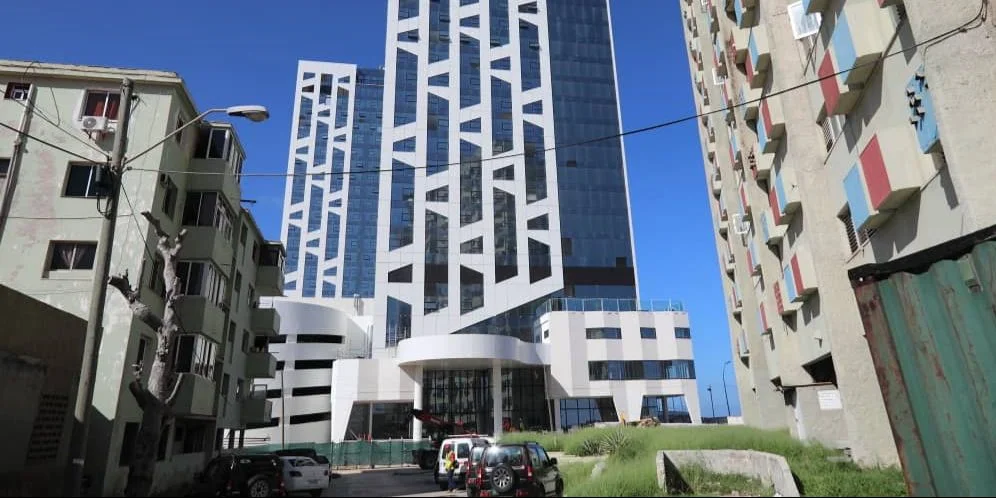
The magnitude of the investment is another central element. Estimates cited in the report place spending on hotel construction and renovation at at least $5 billion until 2018, although other calculations raise the figure to $24 billion in the last 15 years. In 2021, in the midst of airport closures and with hotel occupancy of 11.4%, 37.6% of all state investments in the country were allocated to hotels. Last year, that proportion once again exceeded 37%, 11 times more than what was invested jointly in health and education.
Despite these investments, hotel occupancy never justified the pace of construction. Even in the peak tourist years, between 2017 and 2019, occupancy rates remained below 50%, and have since hovered around 30% or less, according to official data cited by independent economists.
The collapse of tourism was clearly reflected in 2024 and 2025. The Minister of Economy recently acknowledged that only 1.9 million visitors arrived in the country, the worst result since 2003 if the years of the pandemic are excluded. Analysts cited by Miami Herald They point out that the persistence of the militarized model, more focused on real estate profitability than on the quality of service and infrastructure, ended up scaring away visitors.
For some experts, the consolidation of GAESA’s economic power marks a transformation of the Cuban government system. Emilio Morales, former director of CIMEX, told the American newspaper that “the social pact of the old socialist state no longer exists” and that the country has drifted towards “a mafia system” in which the social responsibilities of the State have been relegated.
While the Army is now testing new schemes, such as leasing hotels to foreign partners in exchange for fixed payments, the social impact of the tourism collapse is evident in cities like Trinidad, where thousands of families lost their main livelihood. “Tourism has disappeared, and that has been felt a lot,” he told the Miami Herald parish priest José Conrado Rodríguez, describing the increase in poverty and dependence on community help.
The investigation concludes that, far from rescuing the economy, the concentration of tourism in military hands and the excessive commitment to luxury hotels contributed to deepening the country’s structural crisis, with consequences that continue to affect both the Cuban population and the future viability of the tourism sector itself.