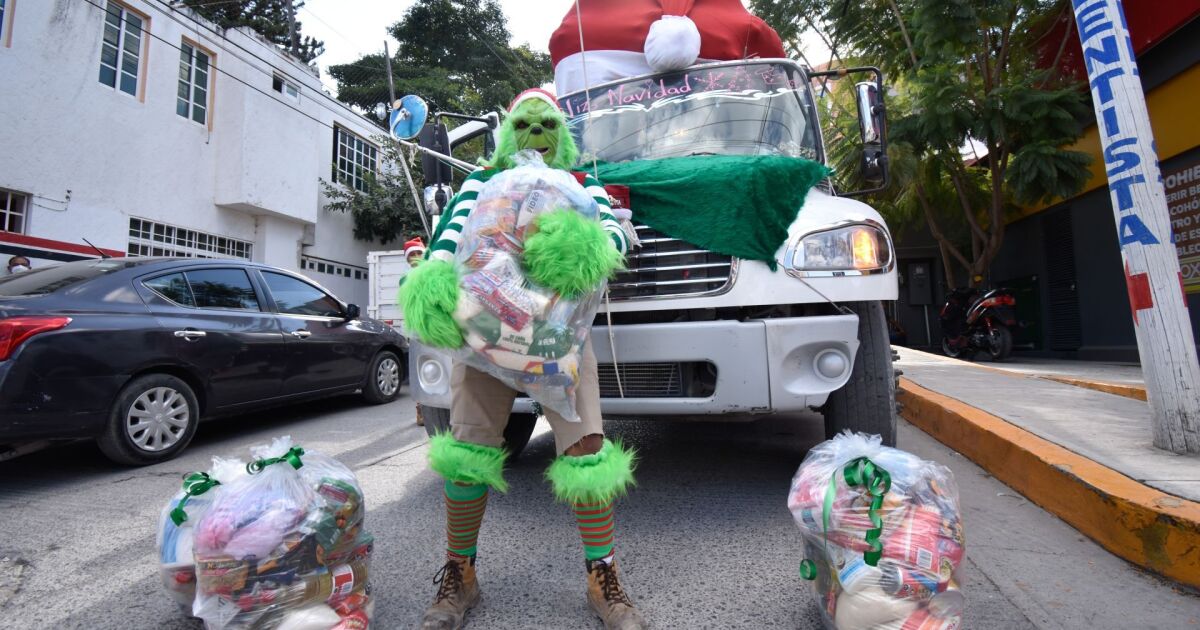
In Mexico, according to data from the UNAM University Coordination for Sustainability, the season of high food consumption extends from December 16 to February 2, which subjects cities to critical environmental pressure.
Meanwhile, in Mexico City, for example, garbage generation increases on average 30% compared to the rest of the year, reaching up to 16,000 tons per day.
But the problem also has a global scope and is that, according to the 2024 Food Waste Index Report, food that is thrown away generates between 8% and 10% of global greenhouse gas emissions and takes up about 30% of the planet’s agricultural land.
While vast amounts of food are wasted, up to 783 million people suffer from hunger each year, according to data from the United Nations Environment Program (UNEP).
Electrical energy consumption also increases in a similar proportion due to December decorations and gatherings.
In addition to this waste generation situation, the Environmental Commission of the Megalopolis (CAMe), in coordination with the Environment Secretariats of the governments of Mexico City (SEDEMA) and the State of Mexico (SMAyDS), also warned that, between the months of December to February, pollutants (especially PM10 and PM2.5 particles) also tend to increase their concentration with respect to the rest of the year, due to low temperatures and the presence of a greater number of thermal inversions that favor their stagnation. and prevent their dispersion.
Added to this are the particle emissions generated by the burning of pyrotechnics, in addition to the bonfires with firewood or tires made during the celebrations, which causes the deterioration of air quality and, frequently, an atmospheric environmental contingency is decreed in the Metropolitan Zone of the Valley of Mexico (ZMVM), Metropolitan Zone of the Valley of Toluca (ZMVT) and other cities of the Megalopolis.
Faced with this scenario, environmental authorities urged citizens not to burn fireworks or light bonfires during this Christmas and to use alternatives to celebrate without contaminating. While Greenpeace proposed five simple actions to celebrate a more sustainable Christmas.
The organization suggests as a first action to decorate in an ecological way, choosing natural trees from local producers, since during their growth they capture carbon dioxide and provide income to the communities. In contrast, the carbon footprint of an artificial tree can reach 40 kilograms of CO₂, which is equivalent to between 3.5 and 16 kilograms of a natural tree.
The second recommendation is to avoid excessive wrapping and opt for gifts without packaging or using reusable and biodegradable materials.
As a third action, the organization suggests eliminating single-use plastics, using reusable tableware and utensils and avoiding drinks bottled in PET, one of the main sources of ocean pollution.