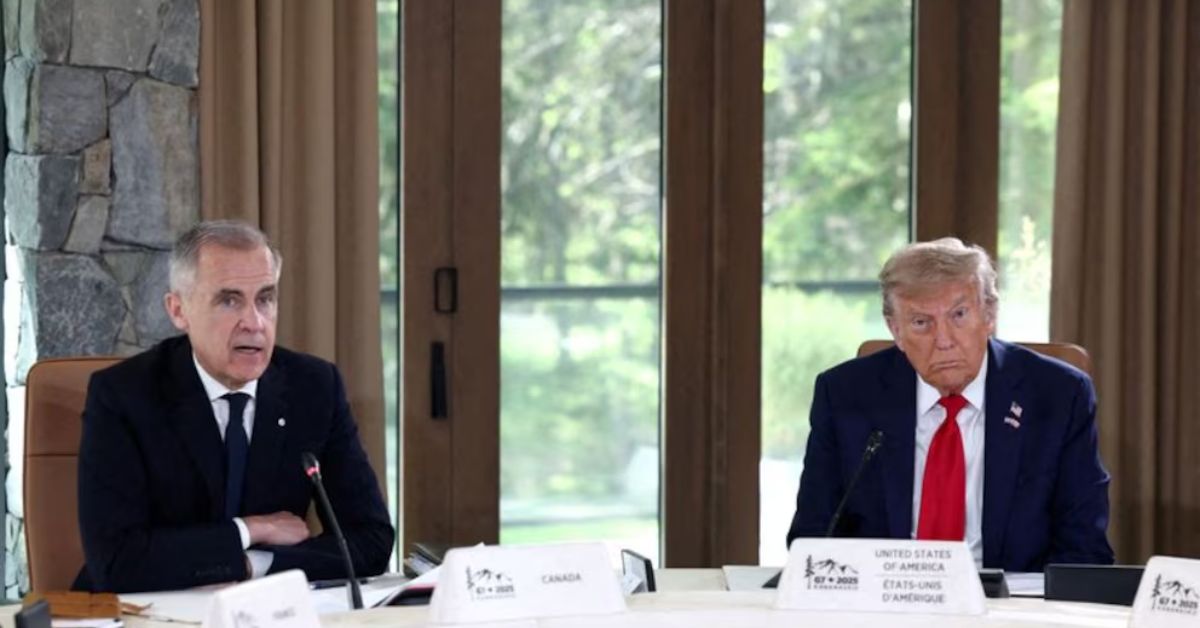
The Canadian government announced that, starting in mid-January, its trade minister, Dominic LeBlanc, will hold formal talks with US officials to begin the bilateral review of the US-Mexico-Canada Agreement (USMCA).
Canadian Prime Minister Mark Carney explained that the process will seek to evaluate the scope of the agreement and its compliance, in accordance with the review clause scheduled for 2026.
The opening of this dialogue follows negotiations that were interrupted in October, when US President Donald Trump suspended a round after US media outlets broadcast critical ads from Canada about US tariff policy.
The summary occurs amid persistent trade disputes and under the review obligation established in the treaty, which has been in force since July 1, 2020.
The AP agency added that more than 75% of Canadian exports go to the United States, primarily in sectors including steel, aluminum, automobiles, lumber, oil, and electricity.
The agreement stipulates that, in the 2026 review, the three partner countries — the United States, Canada, and Mexico — must evaluate the treaty’s functioning, dispute resolution, and its impact on industry and employment. If there is consensus, the USMCA can be extended for an additional 16 years; if any party objects, annual reviews will be implemented, or bilateral agreements will replace the trilateral pact. Both Canada and Mexico have confirmed their willingness to maintain the treaty.
US Trade Representative Jamieson Greer testified before Congress this week. He stated that “the USMCA has been successful in some ways, although it has not achieved all of Washington’s objectives regarding manufacturing and job creation.”
On the other hand, Carney confirmed to provincial leaders that Canada and the United States are moving toward an agreement to reduce sectoral tariffs on steel and aluminum. These tariffs affect various Canadian industries, including the automotive and lumber sectors.
Canada is the leading export destination for 36 US states, and daily trade between the two countries exceeds CAD 3.6 billion (USD 2.7 billion). In addition, Canada is the largest foreign supplier of steel, aluminum, uranium, and oil to the United States, and covers 85% of US electricity imports.
The Canadian government did not rule out exploring trade alternatives in other regions, particularly in Europe. According to Carney, “Canada has other partners interested in participating in strategic sectors.” Provincial leaders and the prime minister agreed to meet in Ottawa early next year to follow up on the progress of bilateral negotiations.