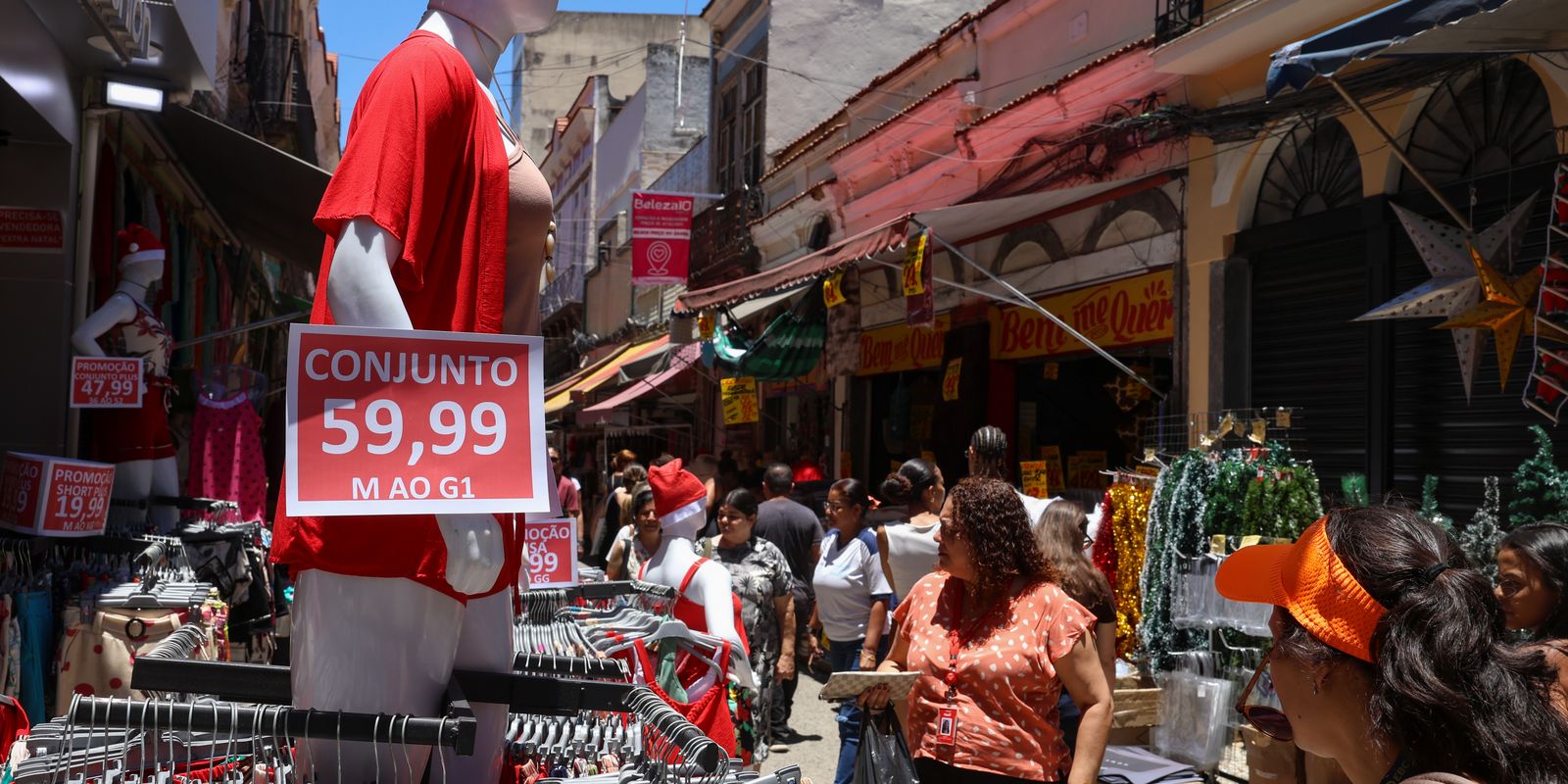
The best Christmas gift may be being with family and friends, but souvenirs remain among the priorities of those who will celebrate the date. And, in an attempt to find the ideal gift, two days before the party, thousands of people went shopping this Tuesday (23) in popular stores in the center of Rio de Janeiro.
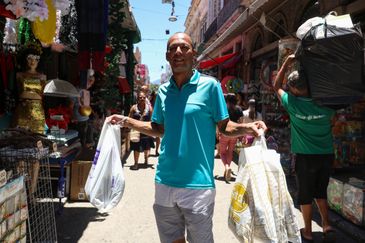
Rio de Janeiro (RJ), 12/23/2025 – Erithon Lopes shows gifts bought for the family. Photo: Tomaz Silva/Agência Brasil
On the streets of Saara, the Sociedade de Amigos da Rua da Alfândega e Adjacências, there are options for all types of budgets. From jewelry and keychains, including beachwear and decoration, the variety is what attracted Heriton Lopes, 58 years old. He was looking for gifts for his daughters and grandchildren. “I found overalls, shorts, a t-shirt, that sort of thing,” he said. He chose Sahara to try to make money from the souvenirs. “Here you can buy something for everyone.”
Considered the largest open-air shopping mall in Rio, with more than 800 stores, street shopping was also the choice of Simone Reis Rodrigues, aged 44, and her son, Benjamin, aged 11, in search of the long-awaited gift: a football.
“We don’t believe in Santa Claus,” said the boy, as he examined the balls in a basket. They arrived at 9am and at 12pm they still hadn’t bought the ball. “Santa Claus is thinner, we are haggling”, revealed Simone, 44, who is a credit assistant.
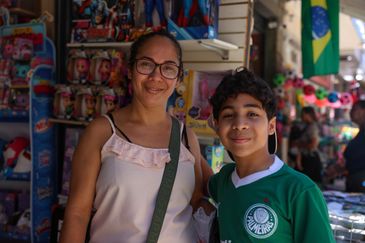
Rio de Janeiro (RJ), 12/23/2025 – Mother and son, Simone Reis Rodrigues and Benjamin Reis Rodrigues shop on Christmas Eve in Sahara. Photo: Tomaz Silva/Agência Brasil
Already at the house of little Alice Lopes, aged 3, who accompanied her mother shopping, Santa Claus promised not to abandon her. “I asked [ao Papai Noel] Elsa and Anna dolls,” he said. “They sing I’m free [música infantil]”, added the girl. Her mother, Fabiana Lopes, said she found it in a toy store, but the day before this Tuesday. For the rest of the family, she revealed that Christmas was thin. “This year, gifts, are just for the children”, she declared.
Someone who also found a last treat in Sahara before the festivities was young Graziele Soares, 22 years old. Continuing a family tradition, the fashion student bought panties for herself. “I got this yellow one here, I got there, because I thought it would give me more luck, I even saw this other one [mais pastel]but I didn’t want to”. She intends to use it in the New Year as a ritual to attract money, according to legend.
On another corner of Sahara, at the door of a cosmetics store, Santa Claus Eduardo Cintra, 40, spends the day attracting customers, announcing promotions on a loudspeaker. He said the movement was as expected.
“That’s Brazilian behavior, right? Always leaving everything to the last minute”, he joked.
With the store busy, he confirmed that sales are strong and wished happy holidays. “Santa Claus is kind, everyone is filling the bag with five to ten packets of perfume!”
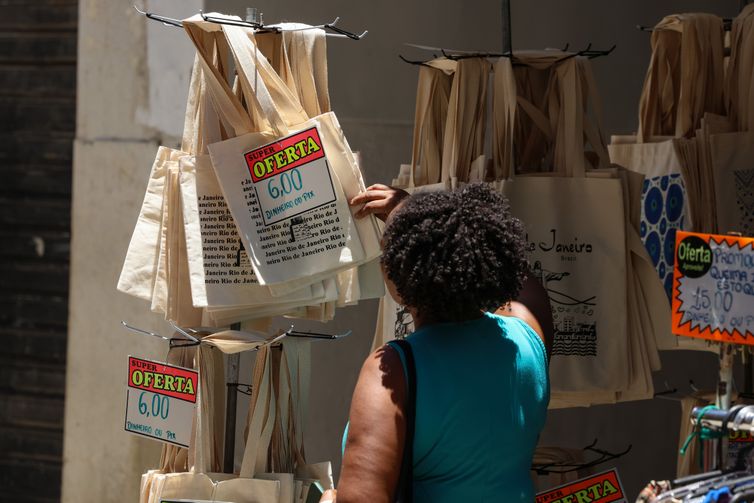
Consumers shop on Christmas Eve in Saara, in the central region of Rio de Janeiro – Photo: Tomaz Silva/Agência Brasil
Christmas inflation
The dynamic movement in Sahara shows that Brazilians did not feel the slight increase in prices for Christmas items. Inflation for these products rose 0.1% in 2025, compared to Christmas in 2024. Measured by Fundação Getulio Vargas (FGV), the survey considered the rise in gift prices and the fall in food prices and was released on Monday (22).
In relation to gifts, while the value of electronics and some children’s products fell, bringing inflation down, those of clothing, health and beauty products rose, especially men’s clothing. Items for children fell, especially footwear, with a 6% drop in prices.
FGV researcher Ibre Matheus Dias explained that the gift basket rose after 2 years of very low inflation in the country. “The movement reflects a more heated consumption in 2025, in line with the strong job market, which may have influenced the faster recovery of semi-durable consumer goods”, he explained, in a note.
The good surprise is for those who haven’t done their supermarket shopping yet. According to FGV, Christmas dinner in 2025 is cheaper, even if some meats are still putting pressure on the shopping cart. The prices of olive oil, rice and potatoes decreased, despite the small increase in beef, ham and loin prices of between 9% and 7%, on average. Cod, an imported product, at this time of year, due to demand, saw a 20% increase in price.
According to FGV, this Christmas is different from previous ones, with lower growth in the global economy combined with improved harvests, which were reflected in falling consumer prices. The exchange rate, which remained high for most of the year, and logistical costs still impact the Brazilian economy, maintaining higher prices for imported items, such as cod and health and beauty products.