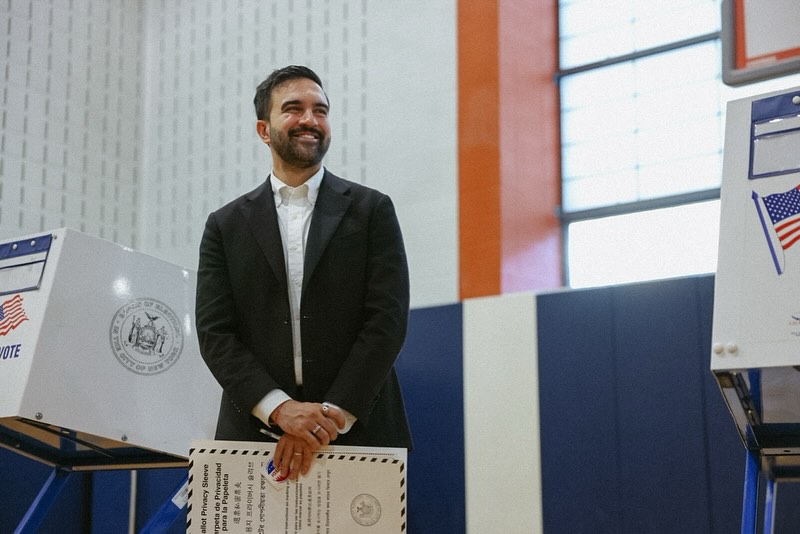
Espinoza spoke from personal experience and from the position he holds as president of the Concamin Customs Commission. “When we talk about the abuse of IMMEX programs, it has been misinterpreted as saying that we are not in favor. Yes, we are. What we are against is their misuse.”
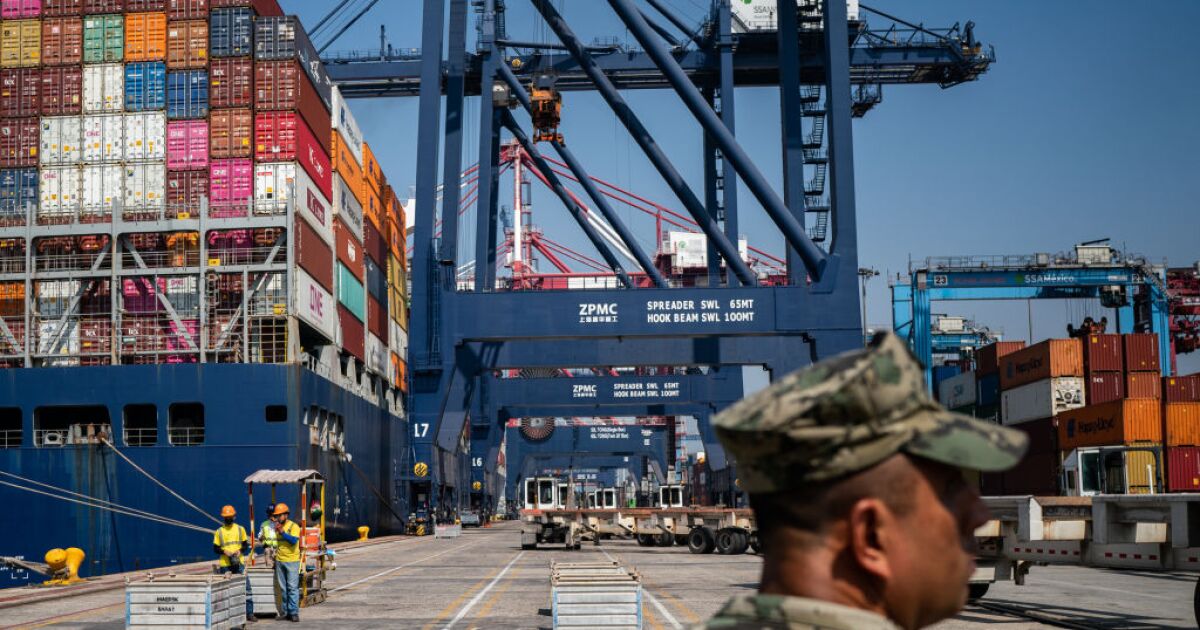
The program was created in 2006 with the objective of allowing companies to import inputs and components tax-free, as long as they transformed and exported them. It was the missing piece to consolidate Mexico within global value chains, especially alongside the United States. Its initial success was indisputable. The Mexican maquila consolidated itself as an essential cog in the North American economy.
The problem arose when the rule was no longer followed. Over time, complaints of merchandise that never left the country multiplied. They arrived as temporary imports and ended up in the domestic market at prices that were impossible to compete with.
Claudia Sheinbaum’s administration took up these complaints. The scrutiny on IMMEX companies became more severe from the Ministry of Economy. Specific audits pointed to sectors highly damaged by the entry of inputs under IMMEX: textiles, clothing and footwear. The result was devastating. In the footwear and textile sector, more than 70% of the market is controlled by illegality. “We are not afraid of competition, but we are afraid of an uneven floor,” said the president of Concamin, Alejandro Malagón.
Every year the Ministry of Economy deregisters around 300 IMMEX companies. It was a stable number, assumed as part of the natural process of administrative purification, but in 2025 the record shot up to 670 cancellations, a historical peak that illustrates the magnitude of the abuse.
The hunt
The most visible blow came with the so-called Operation Cleanup. In Baja California, Aguascalientes and Jalisco, Economía, headed by Marcelo Ebrard, canceled the registration of eight IMMEX companies that simulated operations and had imported textiles for 24,000 million pesos. With the support of the National Guard and the Financial Intelligence Unit, he dismantled five front companies that accumulated footwear imports worth 9,000 million pesos.
In Monterrey and Ciudad Juárez, the focus was on LAU Industries, accused of introducing 400,000 tons of steel without traceability, a volume equivalent to the sector’s total imports in a quarter; The inspection goes beyond the industries that are most affected.
It’s not the only thing. At the Leather and Footwear Show, in León, Guanajuato, Ebrard himself announced a decree that prohibits the temporary importation of footwear under IMMEX, which has been in force since August. The argument is to protect 130,000 formal workers in that industry and stop the entry of Asian merchandise without paying taxes. “Enough is enough. It’s over. If you want to import, pay taxes,” he said. Between 2019 and 2024, footwear imports skyrocketed from 3.7 million to more than 40 million pairs, according to the National Chamber of the Footwear Industry.
The denunciation of the so-called “front companies” was even more stark. Jael Durán, general director of Index, assured that a large part of the companies deregistered in 2025 fall into that assumption. “Several imported inputs, especially from Asia, which they never transformed or sent abroad. They moved like contraband in the country. I would even dare to call them ghosts.”
The hardening not only closes chapters, it also opens debates. Index presented to the government its proposals for what will be IMMEX 4.0, a renewal of the program, with the dual purpose of shielding the scheme from abuse and, at the same time, modernizing the country’s industrial platform.
The proposal proposes greater trade facilitation, increased national content, import substitution and job creation in advanced manufacturing. What is sought is for this scheme to leave behind the years of abuse and recover its original meaning: to be an engine of competitiveness for Mexico and not a feast for illegality.
_____
Editor’s note: This story was originally published in the October print edition of Expansión magazine.