The National Electric Energy Agency (Aneel) announced this Tuesday (23) that the year 2026 will begin with no extra cost on the energy bill for the population. In January, the green tariff flag will be applied.
The regulatory agency highlighted that although the rainy season began with rainfall below the historical average, in November and December the country generally maintained the volume of rainfall and the level of the plants’ reservoirs.
“In January 2026 it will not be necessary to dispatch thermoelectric plants in the same quantity as in the previous month, which avoids charging additional costs to the consumer’s energy bill”, explained Aneel.
This month of December there was already a reduction in the red tariff flag at level 1 to yellow. The measure reduced by R$ 4.46 for every 100 kilowatt-hours (KW/h) consumed and rose to R$ 1.885.
According to the Ministry of Mines and Energy, the adoption of the green flag reflects an energy security scenario, in which there is no need for intensive activation of thermoelectric plants. These units, in addition to having higher generation costs, use fossil fuels and contribute to the emission of greenhouse gases.
“Despite the growing participation of renewable sources such as solar and wind in the Brazilian energy matrix, hydroelectric generation continues to be the basis of the national electrical system. The production capacity of the plants depends directly on the volume of rainfall that falls on the main river basins, a factor that has proven itself”, recalls the ministry.
Extra costs
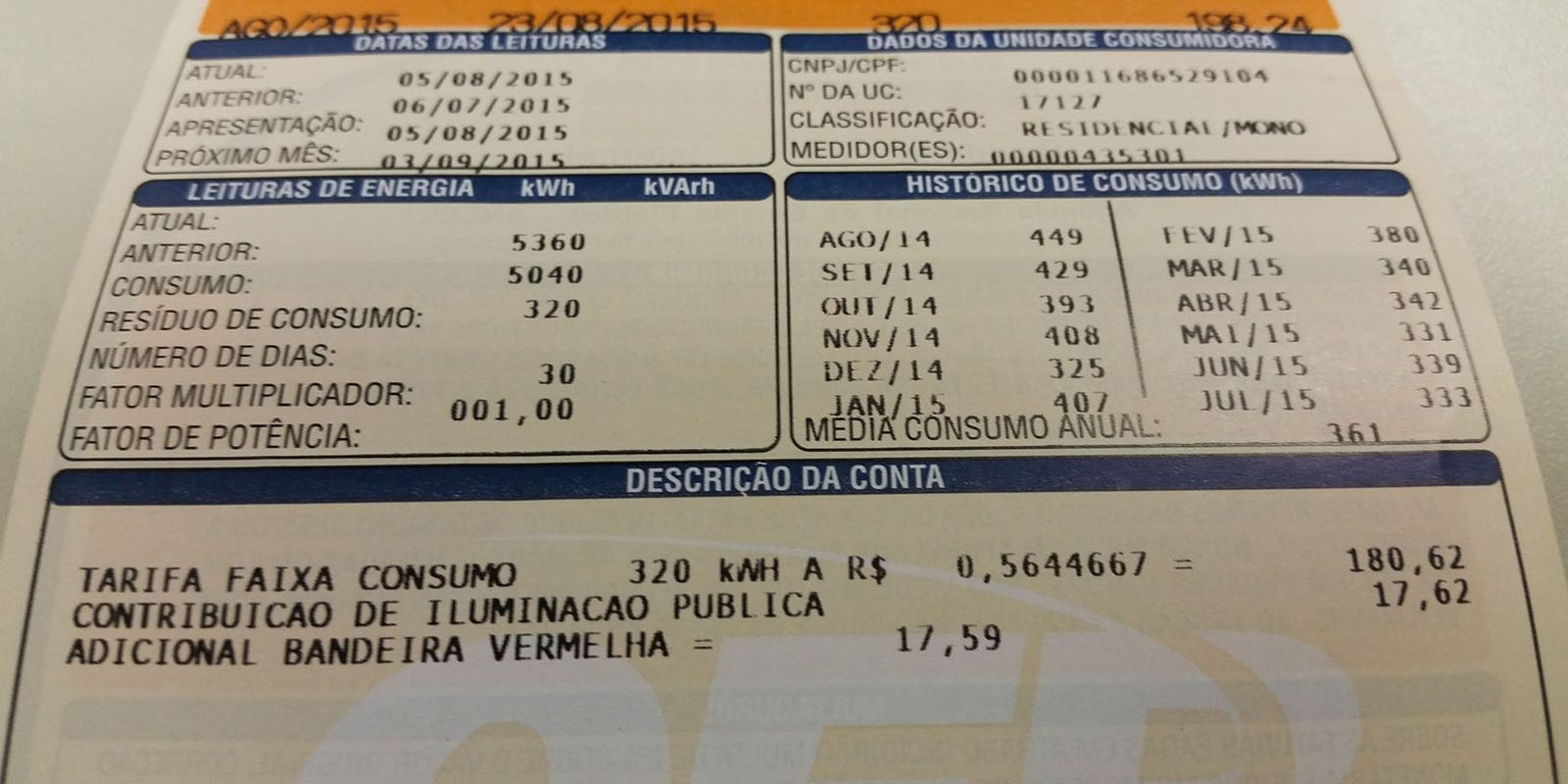
Created in 2015 by Aneel, the tariff flag system reflects the variable costs of generating electricity. Divided into colors, the flags indicate how much it is costing the National Interconnected System (SIN) to generate the energy used in homes, commercial establishments and industries.
When the electricity bill is calculated using the green flag, there is no increase. When the red or yellow flags are applied, the bill increases for every 100 kilowatt-hours (kWh) consumed.