Workers at the center warn about the prolonged accumulation of garbage, bad odors and health risks.
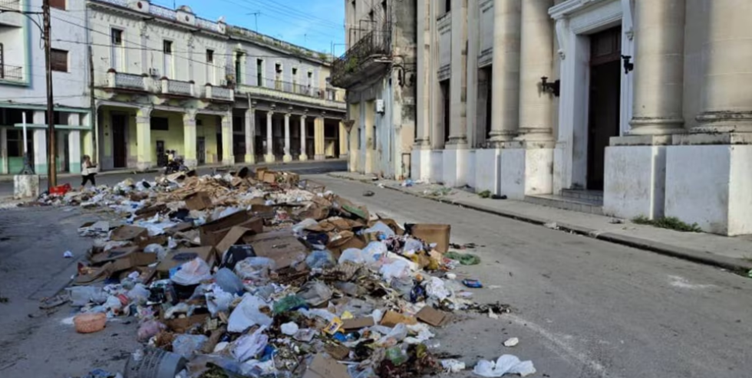
MADRID, Spain.- A garbage dump accumulated for months in the vicinity of the Amadeo Roldán Conservatory, in El Vedado, has generated serious unsanitary problems that affect the daily functioning of this institution dedicated to musical education, one of the most prestigious and longest-established music schools in Cuba. with more than a century of history forming generations of musicians.
According to testimonies from workers at the center, the accumulation of waste on public roads, right in front of the building, causes persistent bad odors, the proliferation of flies and leaks of dirt into interior areas, especially when it rains. These conditions have made administrative and teaching work difficult, in addition to affecting permanence in offices and common spaces.
A conservatory employee described the situation in statements offered to Martí News: “The fly trap is horrible, the bad smell is unbearable, all the flies come in here.” Along the same lines, the administrator of the institution explained to the media that when it rains, the reception and offices become unusable, due to the dragging of waste and liquids from the nearby landfill.
The manager assured that the complaints have been presented through official channels, without an effective solution having been given so far. He also warned of additional risks, noting that there is a gas station in front of the conservatory, which could aggravate the consequences of a possible accident in an already deteriorated environment.
The situation reported at the Amadeo Roldán Conservatory is not an isolated event. Havana has been going through a visible unhealthiness crisis for years, marked by overflowing containers, improvised micro-landfills in streets and corners, and irregular waste collection that has also spread to the rest of the country.
The garbage problem, systematically documented by the independent press, remains without a structural solution. While landfills multiply and dirt accumulates in residential, school and heritage areas, authorities reiterate explanations based on the scarcity of resources or the US embargo, without this translating into sustained improvements for the population.
In this context, citizens continue to live with mountains of waste, overflowing pits and permanent sources of contamination, which increases the risk of diseases associated with unhealthiness. Beyond the visual and environmental impact, the deterioration in solid waste management has favored the proliferation of vectors such as mosquitoes and rodents, with direct consequences for health.