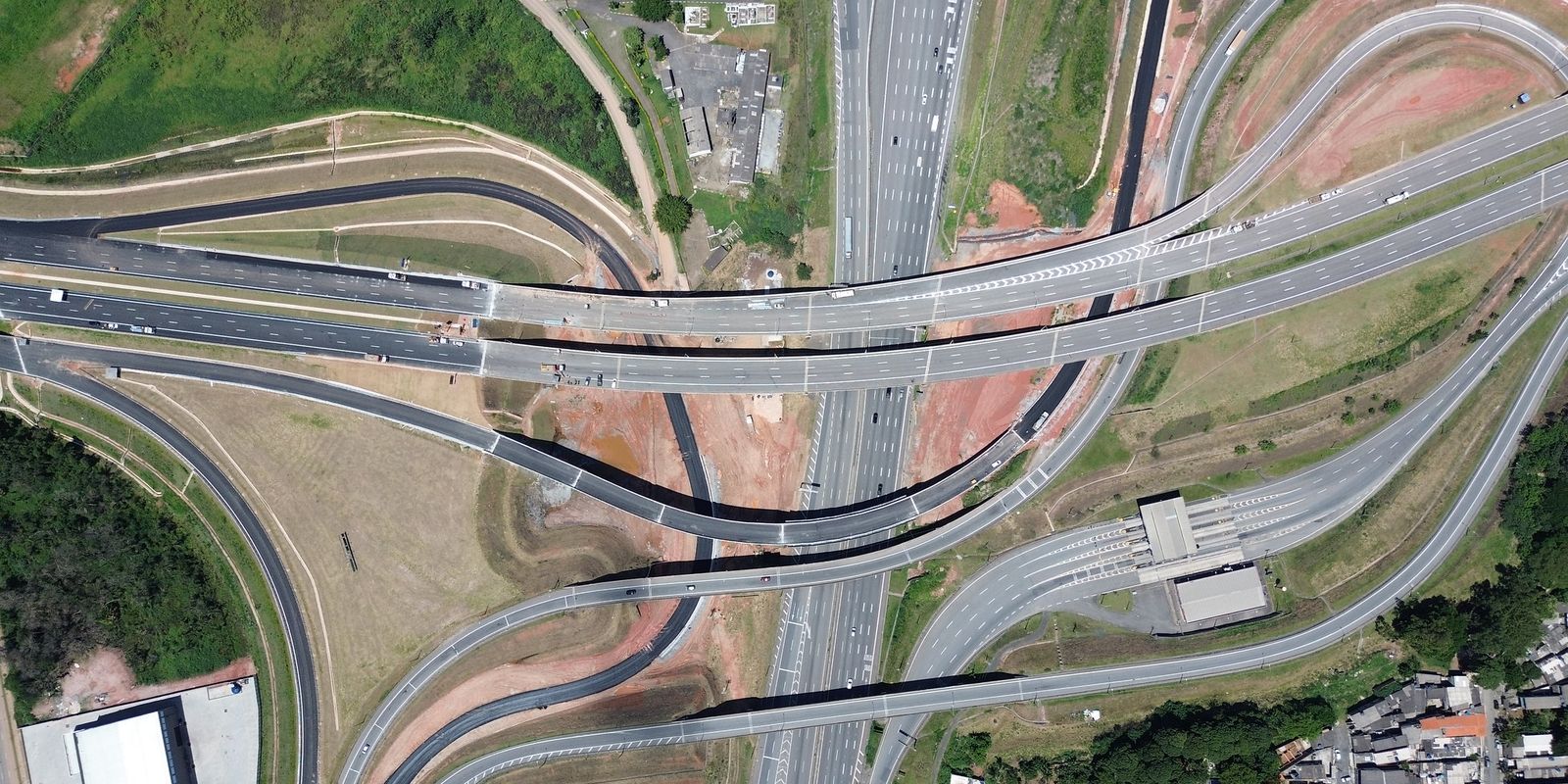
The first part of the northern section of the Mário Covas Rodoanel, in the metropolitan region of São Paulo, was inaugurated this Monday (22). The section will be released for circulation this Tuesday (23).
The section connects the Presidente Dutra and Fernão Dias highways, with three lanes on each lane, four tunnels, bridges and viaducts.
The work aims to improve road flow, reduce congestion and divert heavy vehicles from road roads, contributing to improving air quality and reducing travel time. The expectation is that around 40,000 vehicles will use the new stretch daily, more than half of them trucks and trailers.
There are also four underground wildlife passages with monitoring, to prevent wild animals from being run over.
The total investment was approximately R$3.4 billion, with R$1.35 billion contributed by the state of São Paulo, via BNDES financing, and R$2 billion by the Via SP Serra concessionaire, from the Via Appia Group, which is carrying out the works.
“A third of this work is financed by BNDES, because the president [Lula] He doesn’t look at who the governor is, he looks at the State, the population and says: ‘Let’s work’”, stated the president of BNDES, Aloizio Mercadante at the handover ceremony.
In total, the North section will be 44 km long, passing through São Paulo, Guarulhos and Arujá. The remaining 20 km, which will run to Avenida Raimundo Pereira de Magalhães, in the capital, is scheduled for delivery in the second half of 2026.
The governor of São Paulo, Tarcísio de Freitas, highlighted the importance of the work. “Tomorrow [terça-feira, 23]this section will be open and many will use this link. The Rodoanel begins to be completed almost 30 years after its conception. There will be 10 thousand fewer trucks on the marginal road. This means more time for the driver at home with the family, less time in traffic. It’s no joke. This work seemed impossible, but we are showing that it is not, delivering section 1 six months ahead of schedule,” he said.
The stretch will have a User Service (SAU) base, equipped with parking, bathrooms, drinking water and a rest area; operations control center at the kilometer and a Military Highway Police station.