Thinking about Cuba today is like walking on a terrain where the map no longer coincides with the territory. There is constant talk of economic “distortions”; But where are the political “distortions” that condition an important part of our reality?
The words that we have used for decades to name what is happening in these times seem to have worn out, or at least, are no longer enough to explain what we experience every day. The Cuban crisis does not only consist of a lack of transportation, inflation suffocating us or the electrical system collapsing; It is a crisis of meaning, legitimacy and horizons.
To unravel these tensions beyond the daily urgency, I speak with the Cuban philosopher Wilder Pérez Varona, who has dedicated time to research and analysis on what he considers disputed imaginaries, who invites us to overcome the usual polarization and understand the historical density of the Cuban political moment.
Let’s start with the fundamentals, because sometimes academic terms distance us from people. What are we talking about when we say “political imaginary” in today’s Cuba?
Look, to say it “in Cuban”: the political imaginary is how we agree—or not—on what is fair, what is dignified, and where we are going as a country. It is that “shared grammar” that allows us to live together.
For decades, words like “people”, “Revolution”, “sovereignty” or “equality” functioned as a strong glue that united social experience. You knew what they meant and what was expected of you. The problem today is that that glue dried out. Those words no longer manage to organize the experience of the majority. When the official discourse speaks of “continuity” or “resistance”, it sounds empty to many people, because their daily lives are marked by a precariousness and inequality that these words can no longer explain or justify.
The discussion is often reduced to pure economics. “The problem is that there is no money, there is no oil, the blockade is tight.” Why do you insist that there is a crisis of the imagination and not just a crisis of management or resources?
Because economic problems are concrete conditions—that the ship with fuel does not arrive is an undoubted fact—but what allows this shortage to have a meaning, that people endure it or justify it in the name of a larger project, is the imaginary.
When that symbolic framework is broken, the bread queue stops being a heroic sacrifice and becomes an unbearable waste of time. The State has lost the ability to turn everyday reality into a narrative that convinces people.
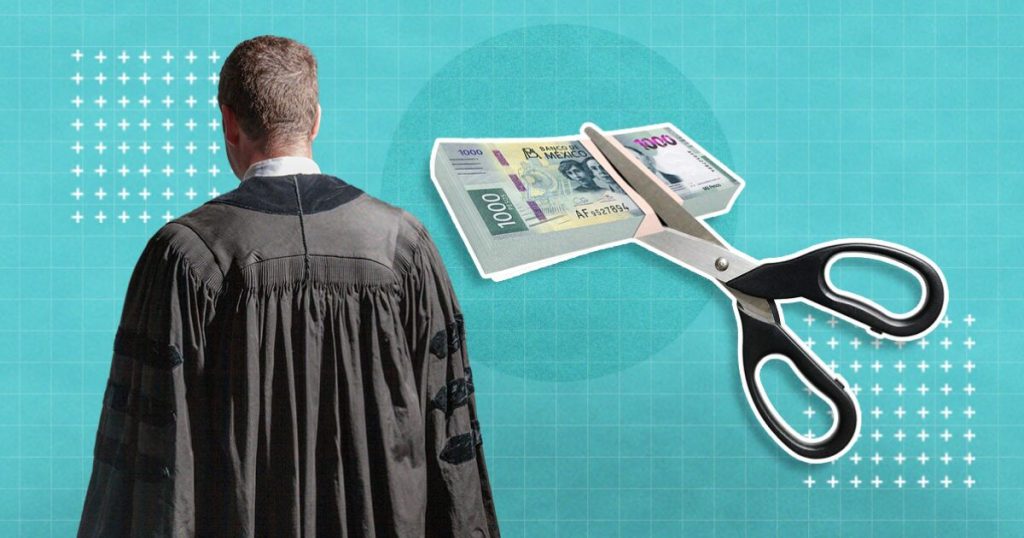
And this has a clear trigger in recent economic policy. The “Ordering Task” was not only a technical error that triggered inflation, but a political blow to the heart of the social pact. It deepened unprecedented wage gaps and transferred the cost of adjustment to the most vulnerable families and groups, with which the State effectively broke what gave it legitimacy. If the state salary has not protected for a long time and equality is an abstraction, what remains of the original contract?
Traditionally they have sold us the idea of two irreconcilable sides: “Revolution vs. counterrevolution.” Does that scheme still serve to understand what is happening today, or are we missing something in the middle?
That straitjacket that no longer helps anyone understand the country, although the official discourse insists on using it to entrench itself and simplify things. Social reality has overflowed this binary.
Today the political field is a much more complex mosaic. Of course there is opposition linked to regime change agendas and US policy. But reducing everything to that is willful blindness.
Let’s think about what has happened in recent years: you have cultural and artistic movements that fight for freedom of creation, not necessarily for capitalism; there are spontaneous citizen protests that amplify material and political demands; There are the feminist, anti-racist, animal rights and LGBTIQ+ movements, which have very specific demands that the State had ignored or postponed; and there is also a critical and socialist left that wants to democratize the country, that defends sovereignty, but denounces authoritarianism and bureaucracy.
The tragic mistake of the Government is to put all this in the same bag of “mercenaries” or “confused.” By criminalizing feminists, “independent” journalists and external political operators alike, what it does is erase nuances and radicalize potential interlocutors.
You touched a nerve point: the critical left and those intermediate actors. There was a moment, around 2017, when there was a lot of talk about “centrism” as a threat. Why do you think the system is so hostile precisely to those who try to clarify or propose dialogue?
Because the Cuban political system, as designed, has operated under a logic of “monolithic unity” that does not know how to process difference, not even when it comes from its own ideological side. “Centrism” was a label to delegitimize any position that sought gradual but critical reforms.
For the bureaucracy, the socialist critic is sometimes more uncomfortable than the radical opponent, because he disputes the language of the Revolution. When someone says “I want socialism, but with democracy and without censorship,” they are challenging the ethical core of the project. The State’s response has been to activate what Julio César Guanche has called a “delegitimization algorithm”: automatically labeling any dissent as a threat to national security. But if you cancel out critical interlocutors, you are left alone listening to your own echo, and that prevents you from seeing reality until it explodes in your face, How did July 11 happen?.
You talk about new actors and technology has been key there. How does the fact that today many of us have a phone with data in our hands change policy?
It’s a change in the rules of the game. For the first time in decades, the State lost its monopoly on the production of “truth.” The Internet broke the information fence, creating a “public countersphere” where citizens document queues, repression, corruption.
I give you a very current example of this dispute: the exchange rate of The Touch. You have the government accusing them of financial terrorism and algorithmic manipulation, and you have a self-proclaimed independent media defending that their data is just a reflection of a broken and deregulated market. But at the end of the day, the common citizen and MSMEs look at the phone to put a price on their life. That’s a real loss of power; hence the discredit campaign and the new attempt to regulate the exchange market.
You mention a tension between the “ethos of sacrifice” and new consumer aspirations. How do young people process this reality?
The rhetoric of sacrifice—the idea of postponing present well-being for a bright future—worked as long as there was epic or as long as there was a welfare state that protected you. But to a 20-year-old boy today, the Sierra Maestra is a black and white photo in a history book.
They have been socialized in scarcity, but also in the global culture of consumption through screens. For them, wanting brand-name sneakers or wanting to emigrate is not an “ideological deviation” or a betrayal of the country; It is simply an aspiration for dignity and normality. They live a “gentrified sociality” where status is given by access to foreign currency. The official discourse asks them to resist, but their reality requires dollars. And if the national project does not offer them a path to realize those life aspirations here, the answer is what we are seeing: mass migration.
Cuba has always been crossed by the outside, but now it seems different. How does the diaspora enter into this equation you speak of?
It is decisive. We can no longer continue thinking about emigration through the lenses of the Cold War, as “the enemy” or, in the best of cases, as “the wallet” that sends remittances. The diaspora is today a constitutive part of the nation; It is what has been called an “expanded Cubanness.”
The nation today is a distributed space where remittances circulate, but also affections, care, political ideas and culture. Cuban identity today is constructed and disputed both in Havana and in Hialeah, Madrid or Mexico City. This transnationality breaks the territorial control of the State. People live here, but manage their survival with resources and references from there. And that changes political loyalty, because if the State does not guarantee my life and my transnational family network does, who really represents me?
You also mention the 2019 Constitution as a moment of “productive indefinition.” What are you talking about?
The 2019 Constitution It was a hybrid that crystallized our contradictions. It was an attempt to update the software of the country, which recognized important things: private property, the market, the rule of law. But at the same time, it maintained centralized political control and locks on effective political participation.
So, you live in constant tension: you have an economy that reluctantly opens to the private sector and a society that is pluralizing, but a political structure that continues to operate with the logic of centralism of the 1970s. This contradiction is unsustainable in the long term. You can’t have a diverse, connected society governed by top-down, unanimous institutions. Something has to give.
Faced with this panorama of fractures, of old stories that do not work and new ones that are in dispute, where are we going? Do you see a new consensus emerging?
We are in a moment of transition (although the lack of definition of what it is towards is fundamental), of open dispute.
The challenge is enormous. Cuba has become a regional laboratory for hegemonic crises. What happens here resonates with what happens in Latin America: crisis of representation, social outbreaks, polarization.
It is about imagining a future that avoids pure and simple neoliberal restoration, which we already know that in Latin America has brought exclusion, privatization of life and an “every man for himself” that leaves workers unprotected; But we cannot continue in the current authoritarian entrenchment, which in the name of sovereignty suffocates the diversity and even the reproduction of the life of the majority.
We need to move towards a democratic and sovereign horizon, where social justice (that there is no lack of food, school, health) and political freedom (that you can say what you think, organize and really participate) are not enemies, but rather mutual conditions. That is the real dispute today, to imagine a sovereign democracy, where equality does not cost freedom.