The fafrican soccer It has had very marked nuances for years. On the one hand, talent spread across the best teams on the planet; on the other, institutional messes of its people in long pants.
The African Cup of Nations (AFCON) 2025 It is a reflection of that ambiguity. At the same time that it has made significant progress in economic issues, such as prize pools and sponsorships, it continues to deal with problems from the leaders of its federations, which ends up dirtying the perception from other latitudes.
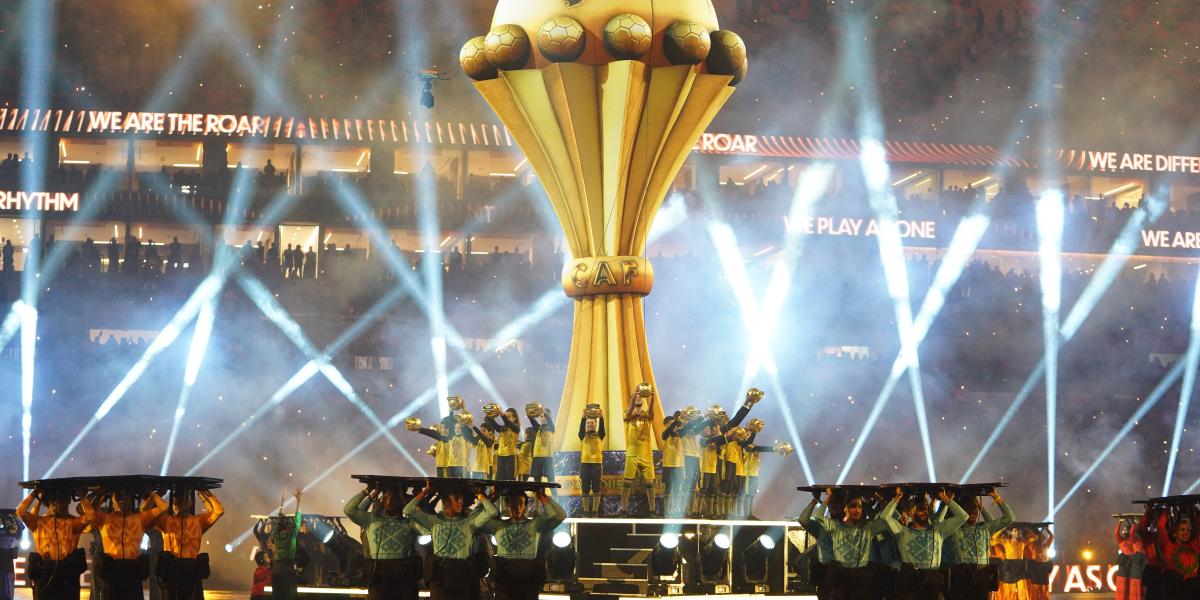
From December 21 to January 18, Morocco hosts the 35th edition of the AFCON with 24 participants, including seven with a guaranteed ticket for the 2026 World Cup in North America (Morocco, Egypt, Tunisia, Algeria, Senegal, Ivory Coast and South Africa; Democratic Republic of the Congo will also play the AFCON and the intercontinental playoff to the World Cup).
The Confederation of African Football (CAF) and its main sponsor, Total Energies, announced that in this edition the champion will receive 10 million dollars. That means an increase of 43% compared to the last event, in 2023, and 100% compared to the penultimate one, in 2021.
It is the third highest prize within the six confederations that make up FIFA, only behind the more than 30 million dollars for the champion of Europe (Euro Cup) and of the 16 for South America (Copa América).
Furthermore, CAF confirmed that the African Cup will be held every four years from now on and not every two, as it had been practically since its inception in 1957. The objective is financial sustainability.
“With this new administration we are going to earn more money than we could have earned every two years. It is unfair for African players who are involved in fights with their coaches and clubs because they have to come,” said CAF president Patrice Motsepe.
Africa has a long list of footballers who are stars in the Old Continent, where the Champions League, Premier League, LaLiga and other highly demanding competitions are played.
Mohamed Salah (Liverpool), Achraf Hakimi (PSG) and Victor Osimhen (Galatasaray) are some of the most recognized today, among others who make the AFCON a highly desirable tournament throughout the planet.
That is why the CAF managed to agree on a record of 20 partners to broadcast the tournament within 30 European territories, in association with the prestigious international company IMG.
However, it is difficult for European clubs to easily release their players to travel to the African Cup every two years between December and January, just when they are in the middle of various competitions.
The rules of FIFA They maintain that players must join their teams, in the case of official competitions such as the AFCON, up to two weeks before, although there is the possibility of agreements between the federations.
Finally, AFCON 2025 does have all its stars, but the problem comes, rather, from internal issues.
Eternal controversies
Although African football has taken steps in terms of organizational transparency, serious problems continue to be seen in different federations, which affect players, coaches and other personnel.
Heading towards AFCON 2025, Cameroon and Uganda They were among those that drew the most attention due to off-field problems.
In the case of the Cameroonians, the recent election of former footballer Samuel Eto’o as president of their federation fractured the team. He fired current coach Marc Brys and brought in David Pagou, but Brys argued that he never received an official dismissal and therefore sent his AFCON squad list along with Pagou’s.
Some of Cameroon’s most prominent players in recent years, such as André Onana, Vincent Aboubakar and Eric Choupo-Moting, were ruled out of Pagou’s list due to alleged differences with Eto’o.
Regarding Ugandathe players did not attend training a day before the start of the AFCON as a protest against alleged bonus debts from their federation.
African football gave three important blows of authority with Morocco as the main protagonist in recent years. First, it achieved the best participation of an African team in a World Cup by finishing in fourth place in Qatar 2022; They then won the FIFA U-20 World Cup for the first time and the Arab Cup after 13 years.
However, its leaders still do not have a complete performance like that shown by the players in the best teams in the world.
Top champions in AFCON history
*Egypt (7; last in 2010)
*Cameroon (5; last in 2017)
*Ghana (4; last in 1982)
*Nigeria (3; last in 2013)
*Ivory Coast (3; last in 2023)