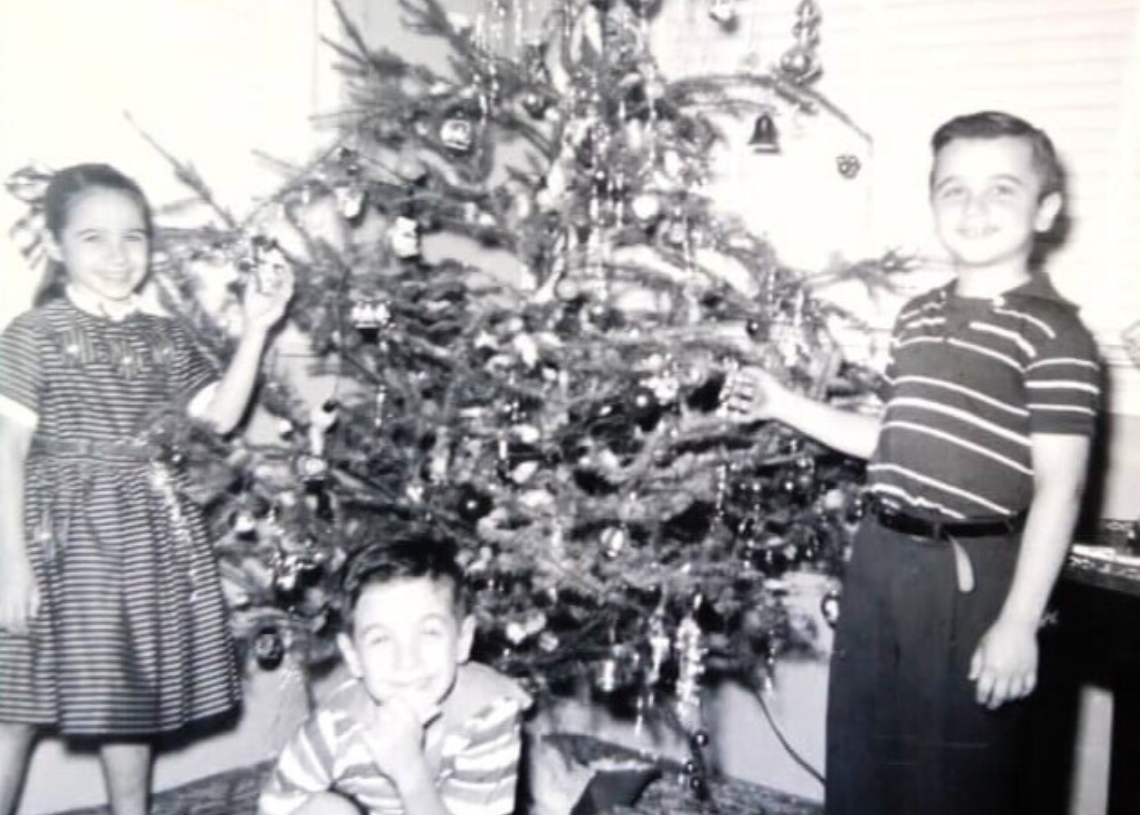
The Christmas holidays are approaching, which are celebrated or remembered in many countries. I think that this year the world we live in is so bad—with wars, genocides, massacres and economic crises—that few will have the desire to celebrate. Not to mention our country, with its endless and tragic polycrisis and the terrifying epidemic of viruses and arboviruses. But, even so, the celebrations will take place and in many places little trees with their garlands and Santa Claus will appear; Shops and businesses will make great profits and believers of some religions will commemorate the arrival of the Baby Jesus. They are ancient traditions—Santa Claus is more recent—that have been established over the years.
Traditions are not changed or imposed by decree, as has happened in our country since 1959. Thanks to the diary of a friend somewhat older than me, I learned that Three Kings’ Day, which had always been celebrated on January 6, was moved for a time to the 11th, due to the entry of the bearded people into the West. I suspect no one paid attention. But that was already a sign of the arbitrary decisions that governed and still govern politics in this country.
I am not going to talk about the origins of Christmas nor will I go into details of the intolerance – not to use a stronger word – of the government, starting in 1959, towards all types of religious manifestations, something that later became more flexible. But many injustices and serious mistakes were committed that lasted too long. Much has been written on both topics. My intention is just to remember how it was celebrated in Cuba and in my family.
For Cubans, more than Christmas, what was celebrated was Christmas Eve, December 24. That night the family got together and ate roast suckling pig, white rice, black beans, salad, chatinos or fried ripe plantains. The dessert was nougat, although homemade sweets such as fritters and orange or grapefruit peels were also prepared. Each family had dinner according to their economic possibilities, but something was always done. The idea was to gather in peace and harmony and prepare to wait for the new year. That dinner was on the 24th, not the 31st, which was a night of partying with friends, cabarets, depending on taste.
All that changed with what I have called “intolerance” to all types of religious manifestations. It was then that the people had dinner for the 31st. Popularly, Christmas Eve was that: family gathering and dinner, nothing to do with religious beliefs. The tradition changed its date, but it was not lost.
For religious families, like mine, which was Catholic, Christmas celebrated the birth of Baby Jesus. He went to mass, either at midnight, Midnight Mass, or on the morning of the 25th.
My paternal grandmother’s family, Berta, emigrated to the United States, to New York, around 1895. She was four years old and returned when she was ten or twelve. His language was practically English, although he spoke Spanish perfectly, since his parents were Spanish. It came with the customs of that country, where what was celebrated was Christmas and, of course, Santa Claus. That benefited the three of us, his grandchildren, since we received toys twice: on December 25th and January 6th.
Days before, my father was preparing the Nativity scene, which was large, with some very beautiful Italian figures, which he placed on a specially prepared table in a corner of the dining room. He bought a piece of paper with shades of rock and grass and placed it on the table. Some of his books were already there to give the impression of slopes and hills. And he explained to us—every year always the same, perhaps with a slightly more tired voice—all the moments of the Birth. The little tree, with colored balls, garlands and lights, was placed in the living room and was the place where the toys “magically” appeared.
My grandmother—who became practically deaf over the years—always missed her Christmas carols in English, which were no longer heard on the radio or television, and we did not have any records with those beautiful songs. His favorites were Silent Night (Silent night) and White Christmas (White Christmas). Although the latter was composed in 1940, she associated it with her memories as a child. I saw the sadness in his eyes, because the Christmas carols reminded him of his very distant childhood.
I have always liked jazz and one day a friend gave us a record by the excellent American saxophonist Charlie Parker, which included, to my surprise, White Christmas. Anyone who has ever listened to Parker knows that his jazz style has nothing to do with a sweet and soft melody. But there it was. I listened to it and realized that my grandmother wouldn’t recognize her Christmas carol in the middle of those improvisations; Still, I put it on.
-Look, grandmother, White Christmas.
She put the hearing aid on one of the speakers, but shook her head.
—No, mi’ja, no, that’s not it. White Christmasyou are wrong.
I insisted:
—Here, listen, quick, this part, you can hear it.
But she separated herself from the speaker, gently closed her eyes and began to hum, very softly: “I’m dreaming of a White Christmas…”. At that moment, I’m sure, she was with her parents and siblings in New York, watching the snow fall, on her unforgettable and first very white Christmas.