Holguin/The suspension of transportation for hemodialysis patients in the province of Holguín has sparked alarm among family members, patients and health personnel, who describe the current panorama as “unsustainable” and “cruel.” For two weeks, the transfer service managed by Public Health was paralyzed due to lack of fuel, they confirmed to 14ymedio several affected. The measure especially hits those who live outside the provincial capital and must travel long distances to receive treatment that does not allow delays or interruptions.
Until the moment the suspension was announced, state buses picked up patients in different municipalities and transported them to the Holguín hospitals where the sessions are held: the Lucía Íñiguez Landín Surgical Clinic and the Vladimir Ilich Lenin University General. But, with the buses stopped, transportation is now in the hands of the sick and their families. The result is devastating: trips that cost thousands of pesos, journeys that exceed two hours in private vehicles and extreme situations for patients in delicate condition, some of them convalescing from dengue or chikungunya.
“This for me is life or death, it is not something that I can postpone or leave for another day,” a 30-year-old woman who has been receiving hemodialysis for 12 years and who on Saturday traveled from Rafael Freyre to Holguín, paying out of pocket for the trip, told this newspaper. “I have to come three times a week. It’s impossible to sustain it by transportation alone,” he laments. The trip from his municipality, in a car with the minimum conditions for a patient who leaves treatment in pain, exceeds 3,000 pesos per day with a family member. “I have to come accompanied, because I leave practically without strength. It’s crazy,” she adds.
The cost of an electric tricycle to the door of the house, within the city, ranges between 1,000 and 1,500 pesos per person
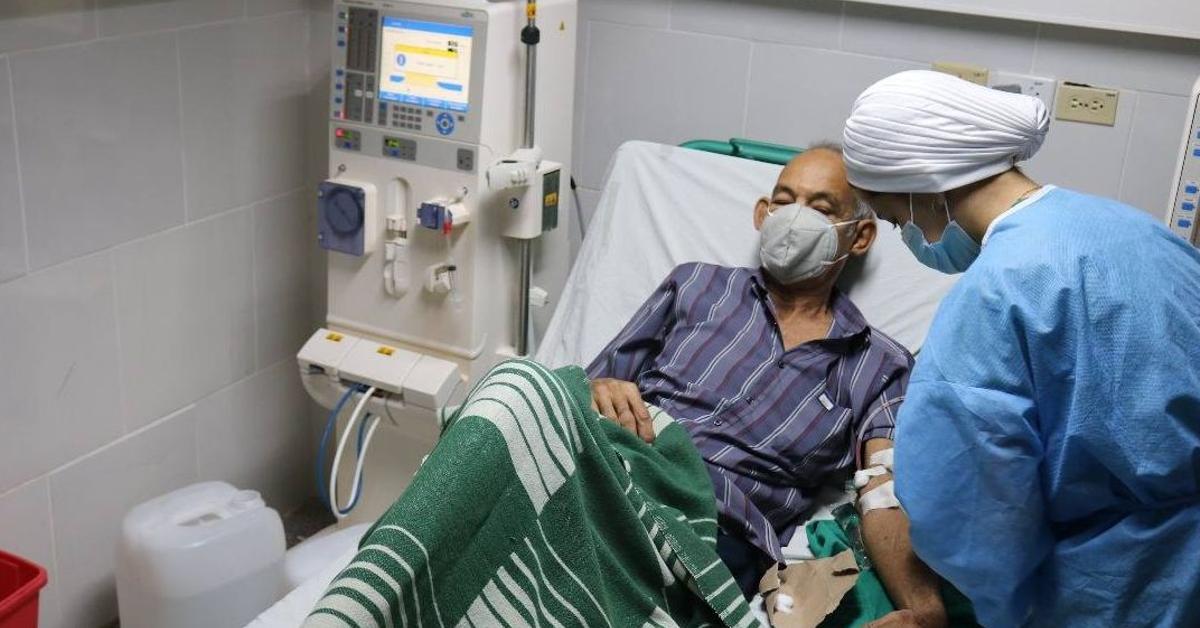
Hemodialysis is an invasive, painful and exhausting process. It requires hours of connection to machines that supplement kidney function and leave the patient in a state of extreme exhaustion. Added to this is that many must suffer from other common ailments: diabetes, hypertension, chronic anemia or infections. For those who live in the city of Holguín, the situation is not simple either. Although the distances are shorter, the cost of an electric tricycle to the door of the house ranges between 1,000 and 1,500 pesos per person. If the patient needs three trips a week, the monthly expense easily exceeds 12,000 pesos for a single person, and more than 20,000 if traveling with a companion.
“You feel like you are completely abandoned,” says another patient who goes to the Clinic, a center that houses fewer and fewer patients due to the deterioration of the equipment at the Lenin hospital. “Many machines are broken and those that work practically do not rest. So, when there is also a lack of transportation, the process collapses.” In Holguín, it is estimated that more than a hundred people require hemodialysis on a regular basis, according to calculations shared by relatives of patients.
But fuel is not the only problem. The young woman from Rafael Freyre denounces that medical supplies are also scarce and that “almost everything has to be bought externally.” “From needles to gauze and solutions, what doesn’t appear we have to look for in the market on 13th Street,” he says, referring to a candonga in the city of Holguín where informal sellers of medical supplies proliferate.
“Many machines are broken and those that work practically do not rest”
The most alarming detail comes with the use of hemodialysis needles: according to several testimonies collected by this newspaper, health workers have had to reuse some up to five times per patient due to a lack of material. “This is dangerous because it can cause infections and very painful because the needle is no longer in as good condition as the first time,” the woman explains to this newspaper. In a process as critical as hemodialysis, where any poor disinfection can mean serious complications, the data deeply worries patients and families.
The crisis worsens during the month of December, when hundreds of vehicles have seen their use restricted due to the general fuel shortage in the region. Although those affected have gone to the municipal Public Health directorates, the response they have received is limited to that “there is no fuel at the moment” and that the service will resume “when possible.” There is no specific date for its restart, patients say.
“There are those who have had to suspend sessions because they have no way to travel, and that can be fatal, it is very dangerous,” warns a nursing technician who preferred not to give her name for fear of reprisals. Each missed session increases the risk of complications: body poisoning, heart failure, brain damage and even death. “This type of treatment does not allow interruptions, not even for days,” he explains.
“There are people who are selling furniture, clothes, phones, anything to pay for the car.”
In some municipalities, such as Mayarí and Banes, several relatives are organizing group trips in rented cars to share expenses, but the economic burden remains enormous. “If it was difficult before, now it is almost impossible,” summarized the son of a 64-year-old patient who requires three weekly sessions at the Lucía Íñiguez hospital. “My father leaves shaking after each hemodialysis, he can’t go in just any car. It has to be a decent transportation, that leaves him at home. And that costs what we don’t have.”
Although the health authorities have not issued an official statement, medical sources confirmed to this newspaper that “alternatives are being sought” to transfer patients, without specifying when they might be available.
Meanwhile, families live between anguish and debt. “There are people who are selling furniture, clothes, phones, anything to pay for the car,” says the young patient. “I don’t know how long people will last.”