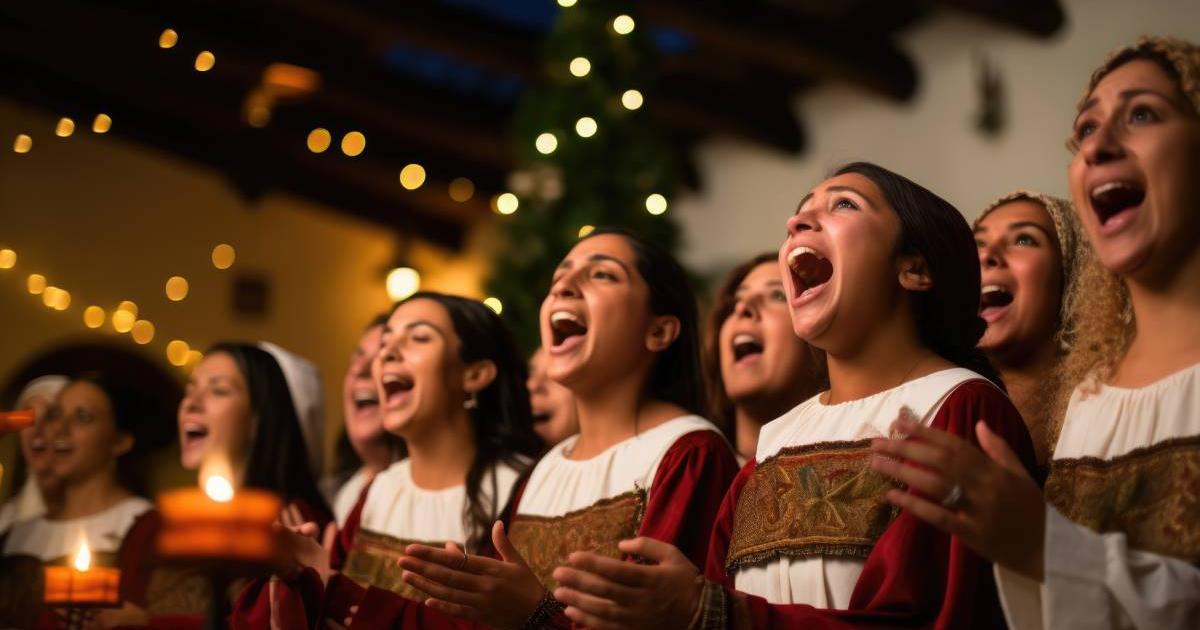
Christmas carols, originating in medieval Spain, are sung today in churches, homes and squares, keeping the Christmas tradition alive.
The carolsknown for their cheerful melodies and lyrics dedicated to the birth of the Baby Jesushave their origin in Spain during the Middle Ages. Initially, they were popular songs that were sung at religious festivities and community celebrations, combining religious elements with expressions of everyday life.
The term “carol” comes from the word villainwhich in medieval times referred to the inhabitants of rural towns. Thus, Christmas carols were, literally, songs of the people. These songs were performed in the vernacular language and not in Latin, which allowed all members of the community to understand and participate in the celebration.
Read also: What does ‘Tutaina Tuturumaina’ mean? This is the story
Over time, Christmas carols were incorporated into the liturgical celebrations of Christmas in churches, especially during mass and novenas. In the 16th and 17th centuries, Spanish composers began to formalize these songs, writing scores that combined religious texts with popular melodies.
The Spanish tradition expanded to Latin America during colonization, and each country adopted and adapted Christmas carols to its own customs and musical rhythms. For example, in Mexico, Colombia, Peru and VenezuelaChristmas carols are sung in homes, in squares and during Christmas novenas, incorporating native instruments and folkloric styles.
Today, the carols They not only celebrate the arrival of Baby Jesusbut they also reflect the cultural wealth and the musical diversity of each region. From the traditional “fish in the river” in Spain and Latin America, to modern compositions around the world, Christmas carols continue to be a bridge between religiousit popular and the joy of Christmas.