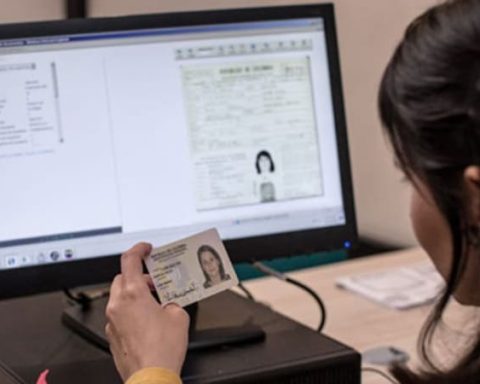
In Colombia, there is debate about whether children can take the mother’s surname first, adapting tradition to new dynamics. We tell you!
For decades, the order of surnames seemed like an immutable rule. Today, a legal change begins to give another direction to the way newborns are named in Colombia, with an impact that goes far beyond the civil registry.
With the entry into force of the Law 2129 of 2021the country took an important step by allowing the order of surnames be defined by agreement between the parents. This means that the mother’s last name can occupy first place in the civil birth registry, a possibility that for decades was relegated by an established legal tradition.
What is this change intended for?
For generations, the Colombian legal system prioritized paternal surname As a general rule, a practice inherited from social structures that gave greater weight to the male lineage. However, this new regulation recognizes that family dynamics have changed and that the identity of children can also be built from gender equality.
The law establishes that, when registering a newborn, parents can freely decide whether the first surname It will be that of the mother or that of the father.
This choice will be recorded in the civil registry and will be reflected in all the official documents of the boy or girl throughout their life, from the identity card until the citizenship card.
One of the most relevant aspects of the standard is that does not impose a new mandatory orderbut it expands the options. That is, it does not eliminate the possibility of the paternal surname coming first, but it does eliminate its automatic imposition.
You may be interested in: How to get the Pico y Placa Solidario in Bogotá for this Christmas?
What happens if there is no agreement?
The legislation also provides for scenarios in which parents they can’t agree about the order of surnames. In these cases, the National Registry of Civil Status will be in charge of defining it through a lotterya mechanism that seeks to prevent any of the surnames from having priority for gender reasons.
This procedure aims to protect the fundamental right of the minor to identity and prevent differences between parents from delaying their civil registration, a key document to access other rights such as healththe education and the social protection.
An advance in rights and equality
From different social and academic sectorsthis change has been interpreted as a significant progress in civil rights. For organizations defending the gender equalitythe law represents a fairer recognition of the role of mothers and corrects a tradition that, for years, made his last name invisible within the family structure.
Besides, Colombia joins a regional trend. In several countries of Latin Americajudicial decisions and legal reforms have questioned the mandatory nature of paternal surname as a way of indirect discriminationopening the debate on the symbolic weight of the name and its relationship with the identity.
You may be interested in: Oil and gas production fell in 2025, despite more drilling
To whom does this measure apply?
The law applies to all birth records carried out since its entry into force. However, it also contemplates alternatives for people who were registered with a single last name or who, for different reasons, wish reorganize your nominal identityalways under the procedures and requirements established by the regulations.
It is key to clarify that this change does not modify parental rights or dutiesnor does it have implications on the parental authoritythe filiation or the legal obligations of parents in front of their children. This is exclusively a decision related to the name and the order of surnames.
With this law, Colombia not only updates a legal procedurebut moves towards a more equitable vision of the family, recognizing all the voices that make it up.