The closure occurs amid new audits and measures that expand state control over the private sector, in a context of deep economic crisis.
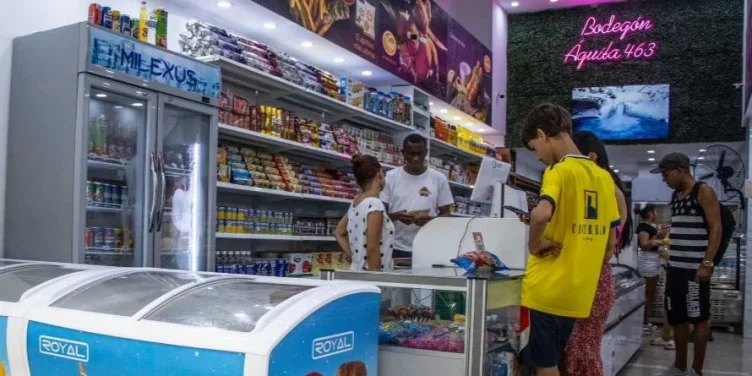
MADRID, Spain.- The Cuban Government announced the total or partial closure of 65 micro, small and medium enterprises (MSMEs) after a review process that covered 869 entities, within the framework of the so-called “Government Program to correct distortions and re-boost the economy.” The measure was presented by the prime minister Manuel Marrero Cruz during his speech before the National Assembly of People’s Power.
According to official data, 87% of the MSMEs evaluated presented losses, a situation that authorities attribute to deficiencies in management, accounting failures and omissions in the recording of income and expenses. The Executive maintains that these irregularities justify the closures and the strengthening of control mechanisms over the non-state sector.
The figures revealed by the regime indicate that in 2025, 77 new state MSMEs were created, bringing the total number of companies of this type to 330, while the country has 11,866 private MSMEs and 73 non-agricultural cooperatives. However, the emphasis on the growth of the state sector contrasts with the sanctions applied to private enterprises, which have been one of the few spaces of economic dynamism in the midst of the crisis.
The announcement of the closures occurs in a context that the Government itself recognizes as “economically complex”, marked by currency restrictions, structural problems in production and a deep energy crisis. The authorities have estimated the accumulated damage to the economy at $7.1 billion, although they continue to blame external factors and alleged internal inefficiencies of economic actors.
As usual, these audits and closures are part of a strategy of recentralization and control over the private sector, which includes new regulatory schemes, greater state supervision and the promotion of business formulas where the State maintains a dominant role.
While the Government affirms that these actions seek to “order” the economy and lay the foundations for a future recovery, the reality is that the closures of MSMEs deepen the uncertainty of thousands of workers and further limit the ability of the private sector to operate in an environment already marked by inflation, shortages and the lack of real autonomy.