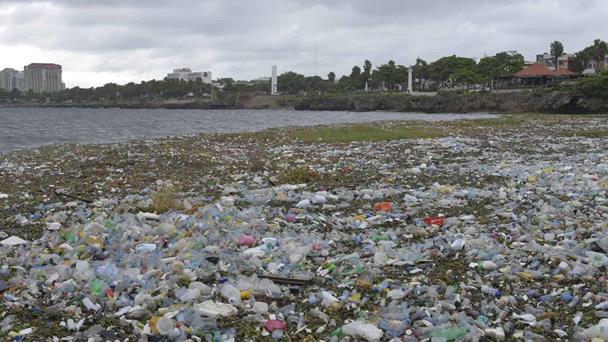
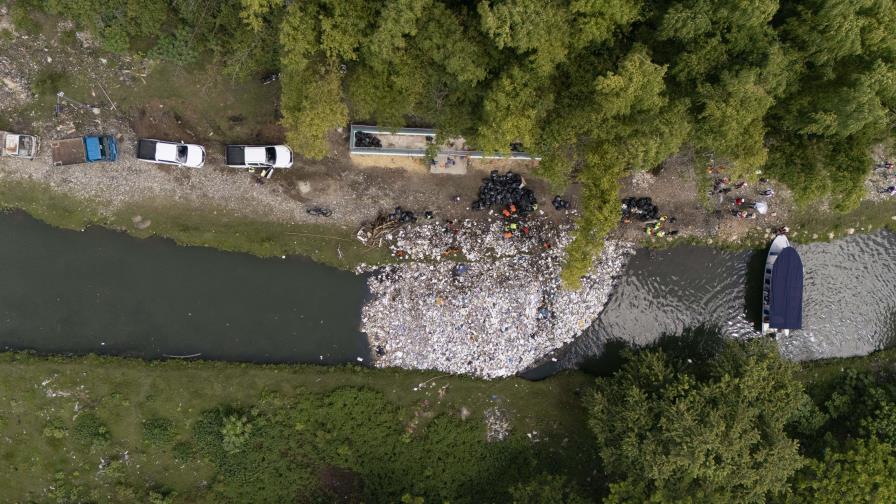
The Dominican Republic is at a crossroads with the new Law 98-25 on Comprehensive Management and Co-processing of Solid Wastea regulations that, without affecting the productive apparatus, must urgently face the historic garbage problemimmune to successive State administrations.
The regulations It was barely five years after it was enacted, but the magnitude of the problem motivated a new modification. However, related sectors fear that some of the provisions will deteriorate the plastic industrya sector that only in 2024 generated more than 48,080 jobs and contributed 20,000 million pesos to the treasuryaccording to official data.
He Government It has set ambitious goals: reducing poorly managed waste by 87%; reduce plastics that reach rivers, lakes and oceans from 244,000 tons in 2022 to 18,000 in 2040; increase the volume of recycling from 23,000 to 136,000 tons; and increase the circularity of the plastic from 6% in 2022 to 53% in 2040.
These projections come from the Action Platform by the Plastics of the Dominican Republic (NPAP-RD), coordinated by Ministry of IndustryCommerce and MSMEs.
Prohibition regime
The Law 98-25 prohibits the import of straws, forks, knives, spoons, lids, glasses and any other product manufactured in polystyrene (foam) that does not have biodegradability certification.
And within a period of 12 months, from the entry into force of the rule, the marketing of straws, forks, knives and spoons manufactured in plastic that do not present the biodegradability certification, with the exclusion of packaging thermal foam with lid attached in the shape of a hinge for food consumption.
In addition, it sets the deadline for prohibiting commercial establishments from providing free single-use covers at one year. Likewise, that same period is granted from the entry into force of the law, to producers of covers and plastic bottles to join a specific program of extended responsibility to the producer to recover, treat and safely dispose of the waste generated. In what has to do with the mayorships and municipal districts, these will have a new period of 36 months to promote the progressive implementation of source separation programs and selective waste collection.
Given the lack of viable substitutes in some cases, the law contemplates exceptions that will allow the import of medical packaging and laboratory, as well as plastics used in road and construction works.
Plastics and foam
The intensive use of disposable plastics which has become popular in the country also faces new regulations. Article 154 provides that marketed plastics have a certification that guarantees a minimum biodegradation of 20% in the first year or 90% within a maximum period of five years. In turn, article 161 prohibits the use of foam that does not incorporate biodegradable additives.
To ensure compliance, the provision will be carried out annual audits to manufacturers and importers. Rape would be considered a serious violationwhich would entail disqualification for at least two years, in addition to the temporary confiscation of machinery.
The law also establishes that only a valorization plant —separation center for organic and inorganic waste—for each of the ten regions of the country, without allowing another within a radius of 50 kilometers, with the exception of the Ozama region, the most populated, with 3.7 million inhabitants, according to the 2022 Census.
The contributions
As for the contributionsarticle 36 establishes a annual contribution mandatory that ranges between 3,000 pesos for companies with income of up to one million pesos and 650,000 pesos for those who pay taxes from 100 million.
These charges will be deductible from the gross income and indexed according to the consumer price index (CPI) of the Central Bank. Although legislators maintain that the amounts are lower than those applied in other Latin American countries, they were not exempt from disagreements.
Contributions to the economy
When reviewing the figures, the plastic industry It is a relevant economic pillar. Of the 254,687 million pesos collected in 2024the import of plastic contributed 12,403 million, equivalent to 4.87%, placing it in the “top 5” of the products that the State collects the most, according to the General Directorate of Customs (DGA).
The national industries import 68% of plasticmainly those dedicated to the manufacture of packagingnon-alcoholic beverages and chemicals.
As for the exportsare
totaled 258 million dollars, equivalent to 6.4% of the total exports national in 2024above the 4.7% recorded in 2021. That same year, 34,367 tons of waste were exported. plasticgenerating 1,150 jobs.
Likewise, the sale of plastic contributed to treasury 37,433 million pesos in 20244.4% more than in 2023, according to the General Directorate of Internal Taxes (DGII).
A circular economy
Within the sector of plastic operates the industry recyclingwhich processes only 10% of the materials, but generates 1,148 direct jobsexported 34,367 tons and generated income of 18.6 million dollars in 2024mainly to Mexico, the United States and China.
This represents a growth rate of 13% compared to 2021, when only 13 tons were exported, according to the second edition of the report Contribution of the plastics sector in the Dominican economy, prepared by the firm DASA with data from the DGA and which will be published in January 2025. The Dominican Association of the Plastics Industry (Adiplast) appreciates that the law establishes that the foam is biodegradable, but is concerned about the ban on importing plastic cutlery, spoons and knives.
Plates and trays have a deadline
The modification to the General Law of Comprehensive Management and Co-processing of Solid Waste (Law 225-20) sets new deadlines and prohibitions that directly impact producers, city councils and the Ministry of Environmentwith emphasis on reducing the use of plastics and polystyrene expanded (foam).
Among the central provisions, the regulations forces the local producers to present, within a period of no more than twenty-four months from the entry into force of the law, eco-friendly alternatives and/or biodegradable that replace plates and trays manufactured in foam.
Other obligations include a period of twelve months to make the return of packaging with deposit value; the promotion, also in twelve months, of social inclusion and formalization programs for grassroots recyclers and the environmental assessment of municipal waste plans and final disposal projects.
The law grants up to forty-eight months for the closure of all existing open-air landfills in the country and establishes new deadlines for the transformation of the final disposition of solid waste urban in landfills regional or shared.
He breach of the deadlines and prohibitions established constitutes a serious violationsubject to sanctions in accordance with article 164 of current legislation.