He mexican cinema It is based on a framework as complex as its stories.
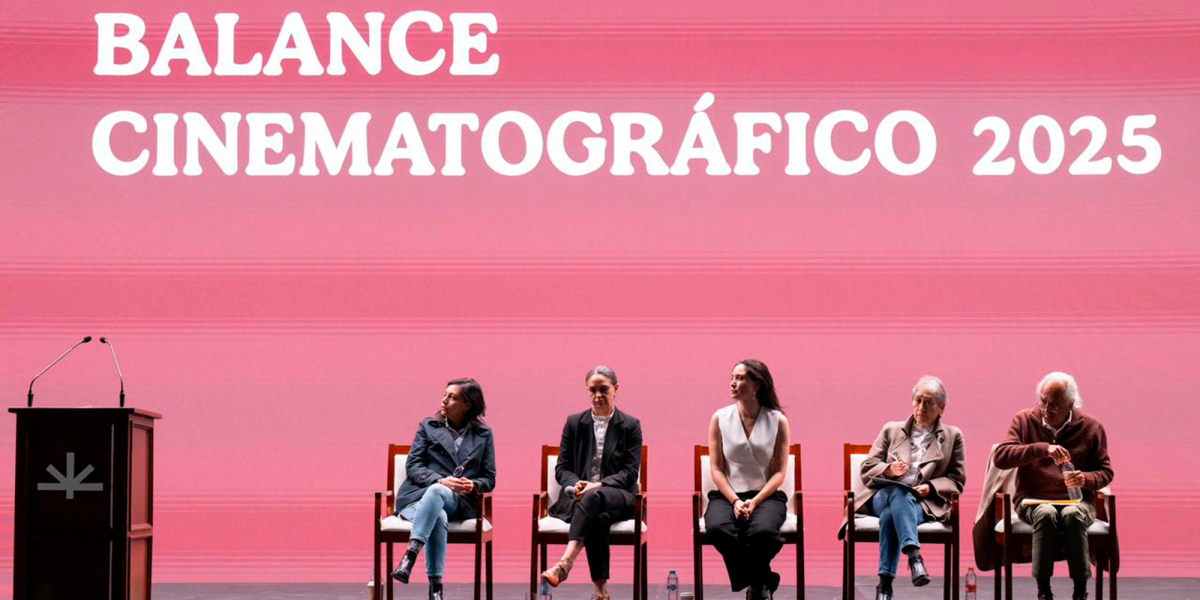
This year, the Federal Ministry of Culture decided to offer a joint balance conference in which the cinematographic nodes dependent on the State and their owners participated, such as Daniela Alatorre, general director of the Mexican Institute of Cinematography (Imcine); Marina Stavenhagen, director of the National Cinematheque; Dinorath Ramírez, director of the Cinematographic Training Center (CCC) and Cristián Calónico, director of Churubusco Studies, all headed by Claudia Curiel de Icaza, federal Secretary of Culture.
In this session, Curiel initially highlighted that this year he increased the amount available for the tax incentive Efficiencya situation that had happened in a decade, going from 700 to 815 million pesos. Likewise, he highlighted the 25% increase in the public budget for Imcine focused on support for film production.
For her part, the general director of the Imcine He pointed out that thanks to the increase in the budget for Focine there was an increase in the maximum amounts that a production can access according to its status. For example, he said, this year you can aspire to up to 8 million pesos for production and 2 million pesos for post-production. For animated feature films, with the understanding that they have their own times, up to 10 million pesos can be accessed for production and also 2 million pesos for post-production, among other details.
He highlighted that “the operating rules have been renewed for greater agility, transparency and equity. Work was also done to strengthen the evaluation of projects: communication was strengthened with the institute and its teams, the evaluators, seeking to have an evaluation floor that can be shared.”
He pointed out that during the year that was dying, work was done to support Mexican cinema with both a physical presence and in promotion and dissemination in meetings of the seventh art of the likes of Sundance, the Berlinale, Cannes and Havana.
He mentioned that 105 Mexican films participated in international festivals and from this presence 150 awards were obtained until the month of November.
On the other hand, Alatorre indicated that “in particular, by 2026, we seek to strengthen script and development calls; production calls in the states and the ECAMC, as well as the exhibition of Mexican cinema.”
The Cineteca, for new audiences
With regards to the National CinemathequeMarina Stavenhagen stressed that this rests on two fundamental pillars, the restoration and preservation of film heritage and, of course, the exhibition of cinema that rarely finds spaces in commercial circuits.
“We are working very closely with some regional collections, we are interested in their rescue. We are very focused on activity in the states and the training of film preservation professionals in other spaces,” he mentioned.
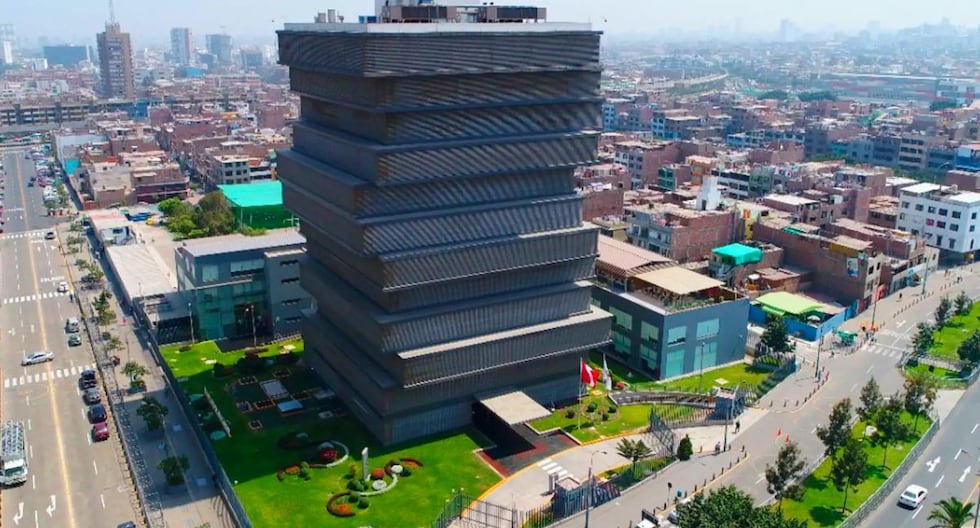
More than an exhibition work, the director of the Cineteca mentioned, it is about “training audiences” and highlighted that the National Cineteca now has 30 rooms and two open-air forums in its three headquarters: the main one in
New National Cinematheque in Chapultepec
Regarding this last venue, Stavenhagen highlighted: “until December 11, this new venue had received 119,500 attendees. It is a source of pride for us, because they were very complex months to reach the opening moment on August 15, but since then the public has embraced this new space. We have gone to meet a new audience, in the west of Mexico City.”
He highlighted that, at least until the aforementioned cut-off date, the National Cinematheque in its three locations registered an estimated 1 million 350 thousand visitors, which represents 5% more than last year.
Likewise, he mentioned that of the 218 films released this year in the Cineteca theaters, between 30 and 40% were Mexican films.
Sets deadline for new law
In the question and answer session with the specialized press, the officials were asked about the status of the cinematography bill, which promises a comprehensive reform in the regulations and standards of national cinematographic work, but has not found its legislative channel, and if there is room in it for regulatory points on artificial intelligence.
To which, Claudia Curiel de Icaza responded: “The issue of artificial intelligence It has not been possible to regulate anywhere in the world, there are laws in the European Union that are barely going to come into operation. It is the most complex topic. We made a reform for dubbing issues, but it is something that is being worked on.”
Immediately afterwards, the official stated: “next year without fail there will be this law that the sector has been waiting for. It was studied again, many things were re-profiled (…) (but) the promotion of cinema is guaranteed and with a progressive budget which, it seems to me, was the central concern.”
For her part, Daniela Alatorre clarified that the promotion of a law of such magnitude requires a consensus of opinions ranging from the Ministry of the Interior to the Legal Department of the presidency and the Ministry of Economy. “It is important to address all opinions and recommendations and understand what the scope of the law should be.”
During 2025 there were:
- 132 films on display
- 32 projects protected in collections
205 projects were supported by Imcine, of which:
- 64 films were shown
- 17 tapes were preserved
- 105 Mexican films participated in international festivals
National Cinematheque in 2025
- 1,350,000 people visited it this year
- 883,600 people visited the headquarters in Xoco
- 350,000 attendees at the Cenart headquarters
- 119,000 people attended the headquarters in Chapultepec
- 218 films were released in these spaces
- 77 of them were Mexican
*All figures are preliminary