In Cuba, power is not inherited by rules: it is granted and withdrawn. And it is almost never explained.
MIAMI, United States. – The Cuban leadership has used, since 1959, a recurring pattern to resolve internal crises and power disputes: sudden dismissals, opaque disciplinary processes, exemplary trials and “resignations” accepted by bodies controlled by the Communist Party.
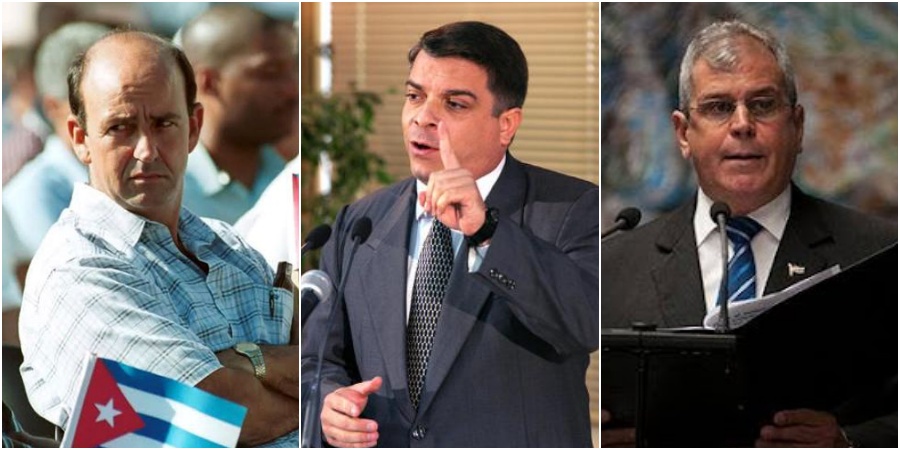
Now, at the close of 2025, that pattern is on display again with a new institutional shakeup which includes the output of Homero Acosta Alvarez as deputy and secretary of the National Assembly, as well as the replacement of Ruben Remigio Ferro at the head of the Supreme People’s Court, decided by the Council of State and processed in Parliament.
The most visible movement was the resignation of Homero Acosta from his status as deputy and from his position as secretary of the National Assembly, accepted by the Council of State. as reported by the official press. In parallel, the Council of State itself “proposed the release of Rubén Remigio Ferro from his position as president of the Supreme People’s Court and placed the Minister of Justice, Óscar Silvera Martínez, in his place, a change that further consolidates the subordination of the judicial system to the political core.
Although the ruling party usually presents these decisions as “readjustments” or “cadre movements,” history shows that falls from grace in Cuba are almost never explained with verifiable transparency and are often accompanied by chastening campaigns or forced silences.
These are the most significant purges in the ruling leadership since January 1959:
In 1962 there came a decisive purification within the political apparatus in formation: the “sectarianism” associated with Aníbal Escalante. Fidel Castro addressed it in official appearances, presenting it as an internal deviation that had to be eliminated to preserve the authority of the revolutionary leadership. Years later, the episode of the “microfraction” (1968) expanded the method: repression and political punishment against a group accused of operating as an internal tendency linked to the Soviet bloc, at a time when the Revolution consolidated a single party without real competition. Fidel Castro returned to the issue in official speeches in 1968, reinforcing the idea of “enemy” within his own ranks.
The most traumatic purge of the revolutionary period was, due to its spectacular nature and consequences, that of 1989: General Arnaldo Ochoa Sánchez and its environment in the so-called “Cause 1”.
The official press announced the arrest with a formula that remained the regime’s propaganda seal: “We find ourselves in the unpleasant duty of reporting that General Arnaldo Ochoa Sánchez (…) has been arrested and subjected to investigations for serious acts of corruption and dishonest management of economic resources.” Organizations like Amnesty International They documented in real time the dimension of the process and the application of the death penalty in a case of high political and military impact. Beyond the charges, the inevitable critical reading is that the case served to send a disciplinary signal to the armed establishment and to close, through judicial terror, any perception of autonomy within the Armed Forces.
In 1992, in the midst of the crisis of the so-called “Special Period”the fall of the ideologue Carlos Aldana showed another variant: the expulsion from the foreground of a key Party cadre with a typical and elastic justification, based on “deficiencies” and “serious personal errors,” without verifiable public accountability. This language, repeated for decades, functions as a wild card: it proves nothing, but it socially condemns and enables political erasure.
In 2009 the most significant purge of the early post-Fidelista era occurred: the fall of Carlos Lage Davila and Felipe Pérez Roquetwo of the best-known faces of Cuban power abroad. The operation included a public moral condemnation from Fidel Castro himself, who wrote: “The honey of power for which they knew no sacrifice, awakened in them ambitions that led them to an unworthy role.” Shortly after, letters of resignation and political self-incrimination circulated, where Lage stated: “I recognize the mistakes made and I assume responsibility.” The mechanism was surgical: reputational demolition, public confession and disappearance from the scene.
The most recent cycle combines “releases from office” with criminal proceedings for corruption, used as a pedagogy of fear of bureaucracy. In February 2024, the Government advertisement the release of Alejandro Gil Fernandez as Deputy Prime Minister and Minister of Economy and Planning. Even without knowing what would come, the case already smelled of a controlled fall.
Just now, in December 2025, the case escalated to a historic level: the Supreme Popular Court sentenced Gil Fernández to life imprisonment for “espionage” and, additionally, to 20 years for crimes associated with corruption. The very handling of the trial, closed and with little verifiable information about the facts, reinforces the structural problem: in Cuba the “fight against corruption” operates without transparency, without a free press and without independent judicial control, which is why it can also function as a selective political purge.
Finally, the shakeup that has just occurred, with the departure of Homero Acosta and the replacement of Rubén Remigio Ferro, reopens the issue of purges without explanation. Granma reported that the Council of State accepted resignations and proposed filling vacancies in full parliamentary session. Likewise, he reported the proposed “release” of Remigio Ferro and the promotion of the Minister of Justice to the presidency of the highest court.
The political significance of these movements is difficult to hide: when the head of the judicial system is changed by decision of the same political power that must be controlled by the courts, the separation of powers remains a fiction, and the internal message is usually disciplinary. The constant in all these purges is not just the fall of a name, but the method: late announcements, vague motives and lack of public evidence. In Cuba, power is not inherited by rules: it is granted and withdrawn. And it is almost never explained.