The hopeful perspectives that are opening up for the southern country should not make us forget some important realities.
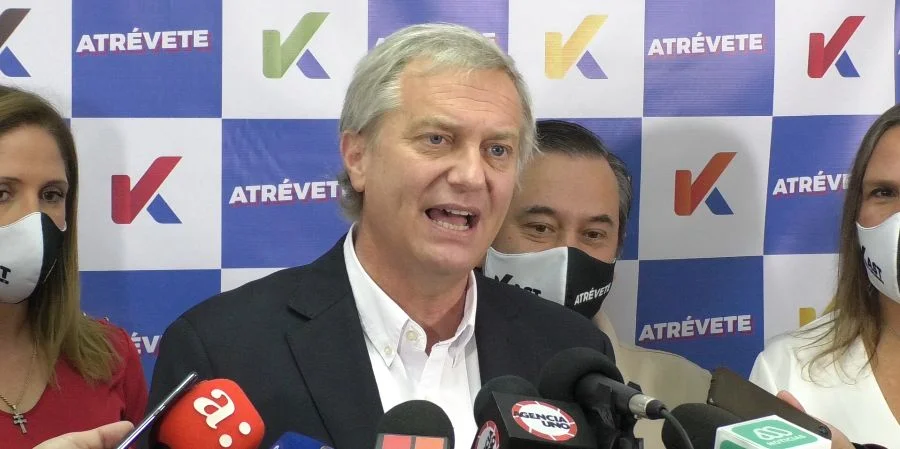
HAVANA.- With the beginning of this week, the interest arising from the second round of the presidential elections in Chile has intensified, among the Republican José Antonio Kast (who ultimately achieved a clear victory) and the communist candidate Jeanette Jara, nominated by the left-wing government coalition. Mr. Kast’s victory predicts important democratic advances in the fraternal southern country.
But it seems appropriate that, before delving into the implications of the aforementioned electoral result, we make a brief comparison with the elections held in our neighbor Honduras two weeks earlier. In Chile, the results were announced (and accepted by everyone) a few hours after the polls closed. In the Central American country, there is still no officially certified result. And it is possible that there will not be one until the end of this December, a month after the elections…
This undesirable situation, by the way, has served as a pretext for the official candidate Rixi Moncada (and the current president Xiomara Castro, as well as her husband Manuel Zelayaleader of the Libre party) to try to ignore the popular will, alleging the invalidity of elections in which the only thing that has been clear is the rejection of the electorate to the government candidacy, which came in a distant third place (with less than a fifth of the votes).
But let’s return to Chile and the perspectives that are opening up for that country with the new President who must take office on March 11. This same newspaper, without going any further, has published a documented report whose text strives to answer a question that arouses justified great interest in all of my compatriots, and which serves as its title: “What will be the policy of the elected president of Chile with the Cuban regime?”
At its very beginning, the journalistic work dates back to some statements made by Kast during the previous presidential campaign (2021). In them, the candidate (then defeated, today victorious) describes the regimes of Cuba, Venezuela and Nicaragua as “dictatorships.” It seems obvious that it would not deserve special attention. But no, unfortunately it is a true fact that governments (especially those that have certain ideological affinities with the three mentioned above) avoid in a thousand ways giving them the name that they widely deserve (and that—I insist—they assign to themselves).
In Nuestra América, those who clearly address this important issue are a minority, and it is to be hoped that, starting in March, Chile led by Kast will join them.
This is clear from the text published by Cuban Diary (DoC) this Monday: “The new Chile that will come with Kast“. This press organ highlights not only the 17 point advantage that the future President gained over his rival; it also highlights, as an “unprecedented fact since democracy was restored in the country,” that Kast has obtained this advantage throughout the territory. He “devastated all of Chile,” he points out. In the newspaper’s opinion, “this geographical dominance […] “underlines a transversal discontent with the outgoing government” (that of the leftist Gabriel Boric).
The author has focused on three vital themes: security, economy and traditional values. According to DoCthese are “issues that resonated with an electorate tired of street insecurity and persistent inflation.” However, the new President-Elect has avoided raising unfounded hopes; “The results will not be seen the next day,” he clarified, while warning: “2026 will be a very hard year.”
His words make us remember the early days of Javier Mileiwho, as the new Argentine head of state, spoke with absolute clarity to his compatriots. We are talking about the same Milei that has been the object of Kast’s first international visit. This important (although brief) meeting was covered by PanamPost. This medium echoes the statements of the Chilean leader, who “anticipates a bilateral relationship ‘like never before seen’.”
In the meantime, another important news outlet (Infobae) welcomes the hopes of the Old Continent: “The European Union stated that it hopes to deepen its relationship with Chile after the victory of Kast.” He also echoes statements made by Hebrew Prime Minister Netanyahu: “Israel looks forward to working closely with you.”
The hopeful perspectives that open up for the long southern country when Mr. José Antonio assumes the presidency in less than three months (which I consider very justified), should not make us democrats around the world forget some realities that we should not lose sight of.
Yes, it is true that Kast led Jara by more than 17% of the votes, and that he did so throughout the country. But we must not forget that she obtained more than two-fifths of the valid votes: 41.84%, to be exact. And don’t forget that, although the left-wing candidate tried to distance herself from her political background, we are talking about a communist militant.
It is true that she obtained the official nomination for having won a primary election in which several pre-candidates participated. It is also true that a good part of those who voted for this communist lady did so not because they felt specifically identified with her worldview, but as a way of supporting the leftist coalition that nominated her, and even the government of Gabriel Boric, which in these weeks is playing its last moments in the midst of popular discontent.
But I think that, when more than 40% of the voters of an educated country like Chile (which, in addition, had the experience of Salvador Allende’s government) cast their votes in support of an openly communist candidate, the matter deserves more careful consideration. What can and should we Latin American democrats do to avoid dangers of this type in our countries?