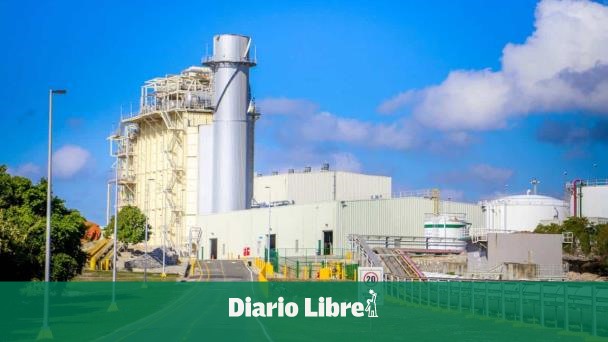
three provinces from the Dominican Republic: Peravia, Saint Dominic and San Pedro de Macorisin addition to sharing their location on the Caribbean coast, host in their territory a key piece in national development: the electricitybeing responsible for generating more than half of the energy consumed by the country.
Although there are generation projects in others 20 demarcationsthese three locations contributed just over 60% of the electricity of the system, at least in the last almost two years, revealing the concentration of the energy park in the south and east of the country.
Peraviawhich houses the Punta Catalina thermoelectric plantthe one with the greatest capacity of the National Interconnected Electrical System (SENI), appears as the province that injected the most energy last year, with 23.66%, equivalent to 5,457.76 gigawatt-hours (GWh).
Likewise, between January and September this year, the generation parks installed in that province contributed 4,190.83 GWh of energy, representing, on average, 23.44% of the electricity of the SENIaccording to the different statistical bulletins of the Ministry of Energy and Mines (MEM).
-
San Pedro de Macorís, which last year was the second district that injected the most electricity into the system, with 4,444.30 GWh, representing 19.27% of the total, was displaced in the first nine months of 2025 by Santo Domingo.
The generation parks from this last town, which together contributed 4,271.54 Gigawatt-hours in 2024 and represented 18.52% of the total, ranking third among the provinces with the most electricity generationrose to second position among January and September of 2025.
This year the energy production in Saint Dominic moved to that of San Pedro de Macorisby accumulating 3,368.57 GWhexceeding the 3,348.77 GWh generated by the parks of Sultana del Este.
Of January to September of 2025the electricity generation of Saint Dominic represented, on average, 18.84% of the total SENI and that of San Pedro de Macoris 18.71%.
In mid-November of this year, the country suffered a general blackout, product of a manual disconnection of an energized line at the 138 kV substation of San Pedro de Macorís I, which first caused the shutdown of several plants in the eastern region and then those of the rest of the system.
The three provinces accounted for 61.45% of the energy in the national system during the 2024while in the first nine months of this year the figure totaled, in average terms, 60.99%, according to data from the MEM.
The remaining 38.55% of the electricity from last year, equivalent to 2,445.46 GWh was separated by the parks located in Saint Christopherhe National DistrictAzua, La Vega, Barahona, Duarte, among other provinces.
Without generation parks
Of the 31 provinces of the country, plus the National Districtonly in eight of them there is no generation parks electrical, according to the different statistical documents of the Ministry of Energy and Mines.
The list is made up of Elias Piña, DajabónBahoruco, El Seibo, Hato Mayor, Hermanas Mirabal, Samaná and Altagracia.
Renewables with advance
Despite the advance of the renewable electricity generationmost of the energy that was produced in the country between January and September of 2025 came from non-renewable sources, the latter representing between 77.88% and 79% of the total, according to the statistical records of the Ministry of Energy and Mines.
During the first quarter of this year, 77.88% of the injected energy to the SENI was generated from conventional sources, a figure that fell to 76.23% in the second quarter and then increased to 79% in the July-September period.
He natural gashe coal and the sun were the main sources used for the electricity generation inside the SENI in the first nine months of this year.