The Cuban-American legislator assured that the Venezuelan dictatorship will be “the first to fall,” but not the only one.
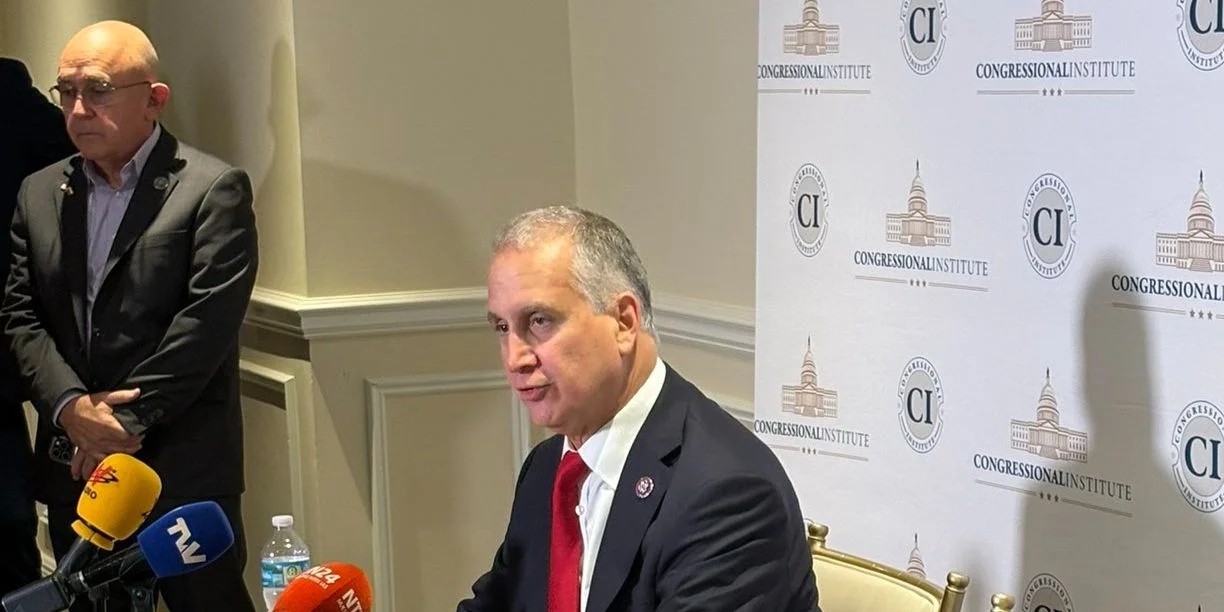
MIAMI, United States. – Cuban-American congressman Mario Díaz-Balart assured this Wednesday that the Nicolás Maduro regime “has little time left” and affirmed that the policy of the president of the United States, Donald Trump, towards Venezuela, Cuba and Nicaragua is headed towards a sustained hardening, with direct consequences for the three “dictatorships” that, in his opinion, will not survive the current presidential term.
During an interview with journalist Mario J. PentónDíaz-Balart called the Venezuelan regime “a narco cartel that has taken over a country” and accused a majority of Democratic legislators of “doing everything possible to maintain and help tyranny in Venezuela.” According to the congressman, in the legislative debate on a resolution that seeks to prevent armed actions against the Maduro regime, some democrats even went so far as to relativize the authoritarian nature of the Venezuelan Government.
Díaz-Balart affirmed that the current US Administration is demonstrating “very important leadership” in the Western Hemisphere and reiterated an idea that, he said, he has defended for years: that the dictatorships of Venezuela, Cuba and Nicaragua would not have survived a second Trump term. “I am convinced (…) that these three narco-dictatorships are not going to survive the three years and a little more that Donald Trump’s presidency has left,” he said.
The congressman also addressed the controversy surrounding the license granted to the oil company Chevron to operate in Venezuela, an issue about which he and other Cuban-American lawmakers in South Florida have been especially critical. He acknowledged that there are “large interests” that seek to do business with authoritarian regimes because, as he said, “slavery is lucrative.” He assured that, despite being a small group in Congress, Cuban-American representatives have repeatedly managed to stop these economic interests.
Regarding the specific case of Chevron, Díaz-Balart stated that it was necessary to intervene directly so that President Trump understood what was happening. “There was a person in his administration who was looking for ways to negotiate and appease Maduro,” he said, adding that they used their influence to get the president to focus on the issue.
In relation to an eventual military escalation, Díaz-Balart responded to versions that point to possible war actions against Venezuela. He stated that, from his point of view, the Chavista regime has been “at war with the United States” for years, accusing it of sending drugs, using oil resources to harm American interests and acting against humanity. “This is a war that is already being waged against the United States,” he declared.
The congressman explained that Washington’s current policy is based on the designation of these groups as terrorist organizations and a direct response to what he described as “state narcoterrorism.”
Díaz-Balart listed what, in his opinion, are the three options left to Nicolás Maduro: abandon power and “get away,” face a fate similar to that of former Panamanian dictator Manuel Noriega, or suffer the fate of terrorist leaders eliminated by direct actions of the United States. “I believe that those are the three options left for Maduro and his clan,” he said.
Regarding Cuba, the congressman assured that the regime in Havana “has never been so weak” in more than seven decades and maintained that the people of the Island “are fed up” and are demonstrating in the streets with increasing frequency, although he recognized the difficulties for an open organization due to repression. He linked the fragility of the Cuban regime to its dependence on oil sent by Venezuela, which —according to recent reports— is not used to benefit the population, but is resold to enrich the ruling elites.
At the end of the interview, the congressman reiterated his support for President Trump’s international policy in the Western Hemisphere, despite clarifying that he does not agree with all of his decisions. “In international politics, in this hemisphere, we really have not had a better ally,” he stated.