Risks of intervention?
The order that designates illicit fentanyl and its main chemical precursors as Weapons of Mass Destruction (WMD) will have impacts for Mexico.
However, experts predict that The United States government is more empowered to intervene in Mexican territoryeven despite the rejection of President Sheinbaum’s government.
“When States make a decision to intervene, unfortunately, it is not that they are going to ask Mexico. It has the technical capacity to make inroads, practically without us realizing it, at least initially,” explains José Andrés Sumano, professor at the Colegio de la Frontera Norte.
Although it is still necessary to know how the measures that the United States will take against the weapon of mass destruction will affect Mexico, the executive order establishes that heads of executive departments and agencies will take appropriate measures to eliminate the threat of illicit fentanyl and its major chemical precursors in the United States.
Last June, United States Attorney General Pam Bondi included Mexico as an enemy adversary country along with Iran, China and Russia, as a result of six Mexican cartels were already considered foreign terrorist organizations.
Sumano maintains that in the fight against cartels and drugs, The risk of intervention in Mexico by the United States is latent and he has already demonstrated it with actions he has directed towards Venezuela, and that in that nation it is not key to fentanyl trafficking.
“There is a very high risk, that is, it is convenient for the United States and Donald Trump to give this heavy-handed image, that great results are being achieved in the fight against drug trafficking, organized crime. Right now it is helping us that the tension is with Venezuela, it seems that the priority is going to be Venezuela and Maduro, however, the pieces are in place at the right time so that we can see another type of intervention. It is a real risk, the threat is latent,” he considers.
Beyond the recent attacks on Venezuelan vessels, there are other countries in which the US government has intervened by consider that they had weapons of mass destruction as happened with Iraq and Saddam Hussein’s regimeand this year carried out an attack on Iran’s nuclear facilities to put a “stop to the nuclear threat posed by the world’s number one state sponsor of terror.”
What Trump achieved with the designation of fentanyl as a weapon of mass destruction is that he will have more tools to continue with his strategy.
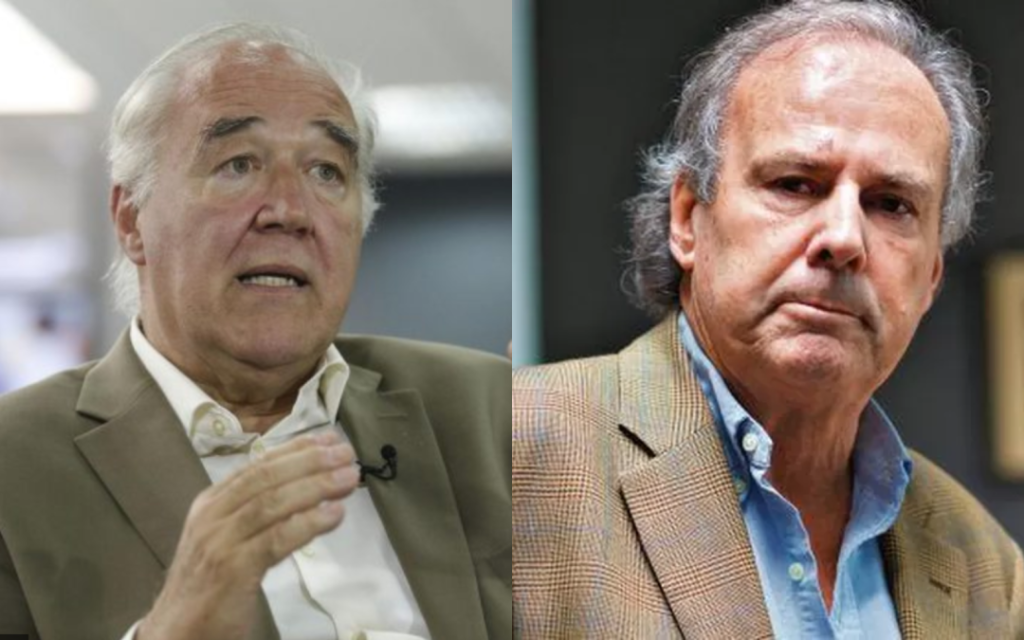
“Is this going to deter organizations from trafficking? No, but what it can do is make it easier for the Trump administration to focus public resources on combating fentanyl, giving the government greater capacity to mobilize troops, intercept calls, to freeze assets,” adds Víctor Manuel Sánchez.
…And Mexico analyzes effects
President Claudia Sheinbaum reported that the impact it will have is already being analyzed, although she asked to clarify what use it could be considered as a weapon of mass destruction.
“Fentanyl also has legal consumption, fentanyl is used as an anesthetic. So, what implications does it have for legal use and for non-legal use when it is determined that it is a weapon of chemical destruction. So, we have to analyze what the scope is,” he said on Tuesday. at his press conference .
Given the possibility that the United States government offers to help Mexico against fentanyl, the president clarified that she will not allow any type of intervention.
“Sovereignty, territoriality, these are not up for discussion for any reason. It is collaboration and coordination on different issues, but never the violation of our sovereignty,” Sheinbaum added.