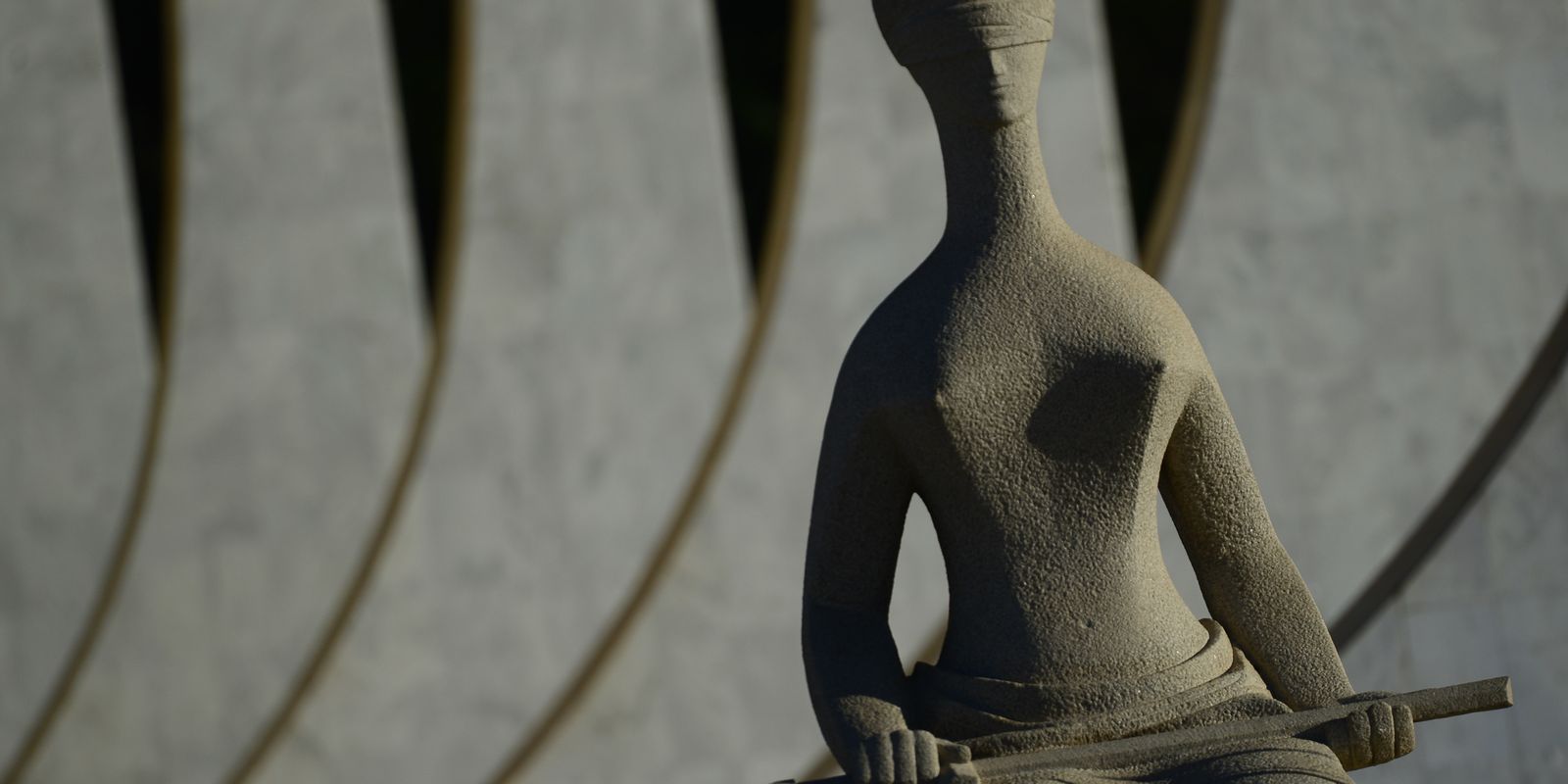
The Federal Supreme Court (STF) registered this Tuesday (16) the fourth vote for the unconstitutionality of the time frame for the demarcation of indigenous lands. The case has been judged in a virtual plenary session of the Court since Monday (15).
The last to vote on the issue was Minister Luiz Fux, who formed a score of 4 votes to 0 against the restriction.
Yesterday, Gilmar Mendes, rapporteur, Flavio Dino and Cristiano also voted in the same direction.
Voting will remain open until Thursday (18), at 11:59 pm. There are seven votes left.
So far, the rapporteur’s understanding prevails. For Mendes, the time frame is unconstitutional.
However, the minister pointed out a series of measures, including the determination that all demarcations of indigenous lands be completed within ten years.
Understand
Two years after the Court declared the landmark unconstitutional, ministers returned to analyzing the issue.
In 2023, the STF considered that the time frame is unconstitutional. Furthermore, the landmark was also blocked by President Luiz Inácio Lula da Silva, who vetoed part of Law 14,701/2023, in which Congress validated the rule. However, parliamentarians overturned Lula’s veto.
In this way, the understanding once again prevailed that indigenous people only have the right to lands that were in their possession on October 5, 1988, the date of the promulgation of the Federal Constitution, or that were under legal dispute at the time.
After voting on the presidential veto, the PL, the PP and the Republicans filed actions with the STF to maintain the validity of the bill that recognized the time frame thesis.
On the other hand, entities representing indigenous people and government parties also appealed to the Supreme Court to challenge the constitutionality of the thesis again.
Senate
In parallel to the Supreme Court’s judgment, the Senate approved last week the proposal for Amendment to the Constitution (PEC) 48/23 which inserts the time frame thesis into the Magna Carta.