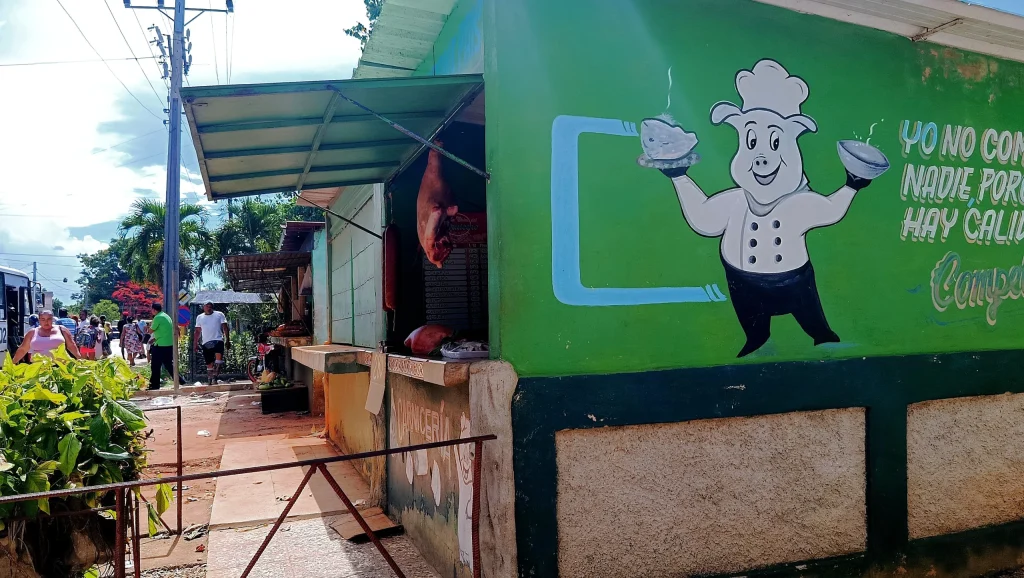
Guantanamo/At first glance, El Salvador, in the province of Guantánamo, seems like a town stopped in a long and uncomfortable pause. The streets, once the scene of the constant passage of trucks and workers, today barely support the sporadic traffic of a motorcycle. Silence prevails where the blasts of the El Salvador sugar mill used to rule, known for decades as Soledad, a mill whose paralysis more than two decades ago marked a before and after in the economic and social life of this eastern municipality.
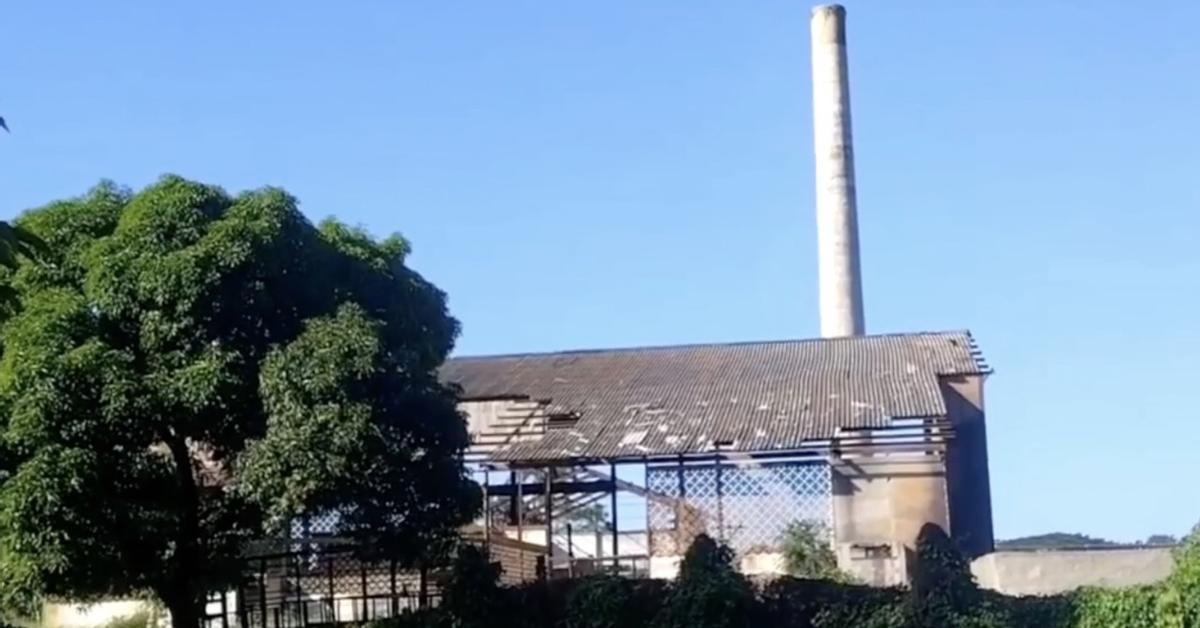
“The death of the El Salvador power plant is the biggest thing that has happened here, this should not have happened. They left us with nothing, with nothing,” summarizes a neighbor to 14ymedio while pointing out, with a dry gesture, the rusty structures and the unpainted chimney. The phrase is repeated with slight variations in every corner of the town, like an echo that never ends.
The Soledad mill was not just any power plant. Founded at the end of the 19th century and modernized in several stages during the 20th century, it became one of the productive pillars of eastern Cuba. Its history is linked to American capital, the big harvests of the first republican decades and an infrastructure that turned El Salvador into a railway and commercial node. Trains loaded with cane entered through here and tons of sugar left for ports and refineries, while the town grew around the industrial colossus as a natural extension of its milling.
For decades, Soledad – renamed El Salvador after 1959 – guaranteed direct and indirect employment to almost the entire community.
For decades, Soledad – renamed El Salvador after 1959 – guaranteed direct and indirect employment to almost the entire community. “Almost the entire town worked there and even people from the city of Guantanamo came,” recalls a former worker. The central snack bar “had everything, even non-workers could buy there, but now you can’t even have a soda.” The sugar industry not only provided salaries: it organized life, transportation, supplies and even the daily rhythm of the municipality.
“People were happy when we fulfilled the plan and blew the whistle and it was a party, everyone was happy,” remembers an engineer who lost his job when the old Soledad closed its doors. “It even had a foundry workshop that helped the community a lot because all kinds of work was done there, it didn’t stop.”
All that was broken at the beginning of this century, when Fidel Castro promoted the Álvaro Reynoso Task, a campaign designed to drastically reduce the weight of sugar in the national economy. The decision coincided with the moment of greatest flow of the Venezuelan oil subsidy to the Island, an external support that made it possible to do without – at least in the official discourse – mills considered “inefficient.” The Savior was one of them. In 2004, the mill stopped milling and began a dismantling process that, for the town’s inhabitants, was as rapid as it was irreversible.
“Now there is no transportation,” warns Carlos Manuel, another resident. “When the mill was working it even took the train, but now to get around you have to pay for a motorcycle to get to Guantanamo.” The physical disconnection is also symbolic: without the plant, El Salvador was left outside the productive and logistical circuits that once sustained it.
There are no alternative projects that replace the economic role of the mill, nor investments that give the town a reason to stay.
Today, the old mill is an empty skeleton. The machinery was removed, sold for scrap or redistributed to other centers. There was almost nothing left that could be used, “not even to build a fence,” says a neighbor. The roof threatens to collapse, the walls are cracked and grass grows between what were industrial warehouses. The place conveys a feeling of total abandonment, as if the sugar industry had been uprooted, leaving no possibility of replacement.
The local debacle is a reflection of a broader national process. Cuba went from producing millions of tons of sugar to figures that today are irrelevant in the international market. According to data collected by the EFE agency and published by this newspaperthe last harvest barely reached 147,652 tons, a figure not published by the official press and which confirms the collapse of a sector that for more than a century was the backbone of the Cuban economy. Added to this are thousands of hectares of sugarcane left unharvested, mills paralyzed and entire communities condemned to inertia.
In El Salvador, this paralysis is felt in the lack of employment, in the constant migration of young people and in the growing dependence on remittances or informal jobs. “There is no work for anyone here,” insists one resident. The houses, many built when the plant was in full swing, age along with their inhabitants. There are no alternative projects that replace the economic role of the mill, nor investments that give the town a reason to stay.
Walking through El Salvador today is walking through a map of broken promises. The closure of the plant not only put out a chimney: it dismantled an entire community. More than two decades after that decision made from above, the people are still waiting for a convincing explanation – and, above all, an alternative – that never came. Meanwhile, old Soledad remains there, dilapidated and silent, as the most visible reminder of a policy that opted to dismantle without building anything in return.