Cuba established its limits in the Gulf of Mexico through a published decree-law in recent days in the Official Gazette.
The norm, in force since its publication last Friday, sets the outer limit of the Continental Shelf of the Caribbean nation in the Gulf in accordance with Cuban law and International Law, in accordance with what is expressed in the legislation itself.
It states that, in accordance with the United Nations Convention on the Law of the Sea, of which the island is a signatory, Cuba “exercises exclusive rights of sovereignty for the purposes of the exploration and exploitation of natural mineral resources, hydrocarbons and sedentary species found on the seabed and its subsoil” in the area under its jurisdiction.
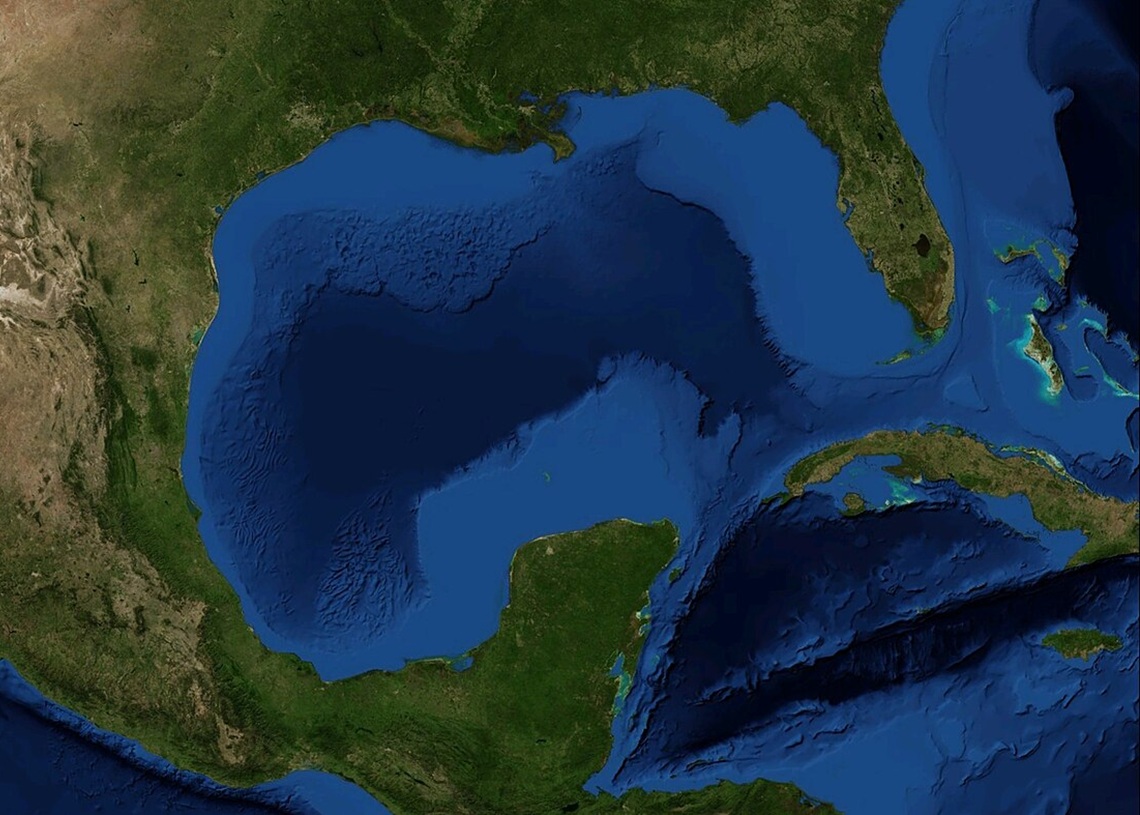
The decree-law, approved by the Council of State last October but made public now, considers it “necessary” to establish this outer limit in writing. To do this, it establishes the different latitude and longitude coordinates that comprise that maritime border in the Gulf.
Its northernmost point, the document explains following technical criteria, “is at a distance of 227.74 nautical miles, measured from the closest point of the System of Straight Base Lines from which the width of the Cuban Territorial Sea is measured.”
Final provisions and prior agreements
As final provisions, the decree-law instructs the island’s Minister of Foreign Affairs “to deposit with the Secretary General of the United Nations, the list of geographical coordinates” of Cuba’s external limit in the Gulf, determined in the regulation itself.
Furthermore, it establishes that “the heads of the bodies, agencies of the Central Administration of the State and corresponding national entities, adopt within the scope of their competence the
legal provisions that are necessary” for the application of said regulations.
The decree-law does not specify how much the Cuban area on the Continental Shelf of the Gulf of Mexico amounts to in terms of surface area —according to international sources The island has about 80 thousand square kilometers in the Gulf, 5% of the total—nor does it explicitly mention the agreements signed with the remaining nations in the area on the subject.
These agreements include those signed with Mexico and the United States on the delimitation of the Continental Shelf in the Eastern Polygon of the Gulf beyond 200 nautical miles. Both were signed in January 2017, in Havana and Washington respectively, just days before the end of the Obama Administration.
It is an area located off the coast of the Mexican state of Yucatán, the American state of Louisiana and the northwestern region of Cuba.
While the agreement with Mexico came into force in 2018the one from the US has not yet done so officially, as it has not been ratified by the Senate of that country. Despite this, until now its provisional application and respect for its provisions have been maintained.
Donald Trump, in his second term, unilaterally renamed that body of water the Gulf of America—against the grain of history and the internationally accepted name—and has increased pressure and hostility on Cuba with various measures.
At the same time, it maintains a strong military deployment in the Caribbean Sea, according to Washington aimed at combating drug trafficking. Meanwhile, Havana assures that this is intended to overthrow the Government of Nicolás Maduro, the island’s main political and economic ally in the region.