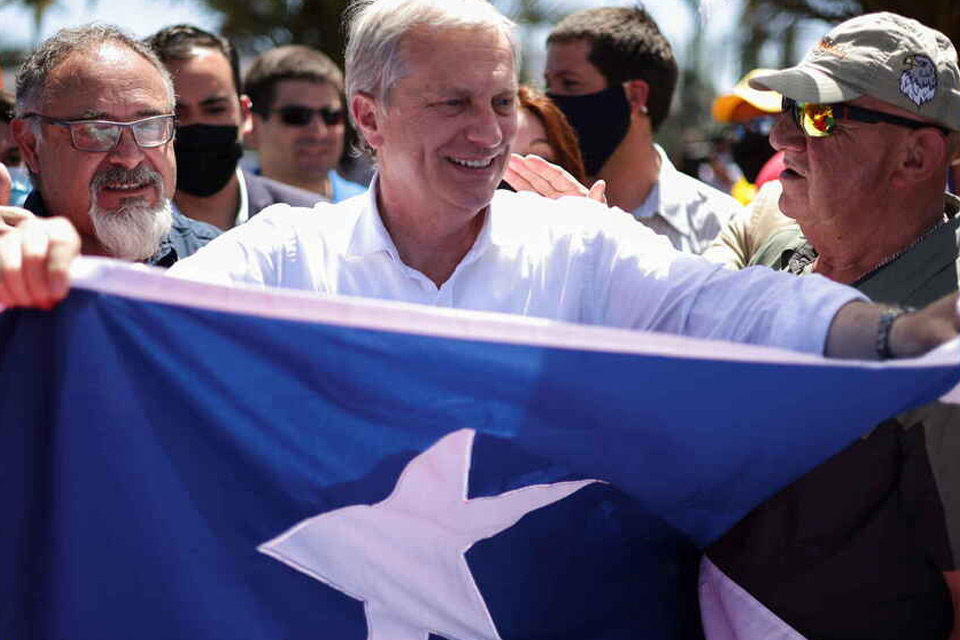
The standard-bearer of the Republican Party obtained 58.6% of the votes compared to 41.3% of his opponent, in an election marked by security, the wear and tear of the constituent process and the accumulated unrest of the last decade.
José Antonio Kast became the new president of Chile this Sunday after comfortably winning the second round of elections, in a result that reconfigures the political map of the country and represents a major defeat for the Chilean left.
The standard-bearer of the Republican Party obtained 58.6% of the votes compared to 41.3% for his opponent, in an election marked by security, the wear and tear of the constituent process and the accumulated unrest of the last decade.
A 59-year-old lawyer, Kast will assume the presidency between March 11, 2026 and March 11, 2030, with a robust mandate that is close to 60% of the votes, figures that recall the resounding rejection of the constitutional proposal in the 2022 plebiscite. The challenge, analysts warn, will be to translate that electoral support into governability without confusing it with total ideological adherence, a mistake that they have already made. Sebastián Piñera and Gabriel Boric.
The victory was not surprising. Kast started the day with an advantage after a first round in which, although it obtained 23.92%, the center-right and right bloc together exceeded 50%. His rival, Jara, reached the runoff with 26.85%, but needed a complex transfer of votes from the entire left, in addition to the support of Franco Parisi’s electorate and even part of the world that supported Evelyn Matthei. That transfer did not occur.
The Republican won in all regions of the country, with especially strong results in La Araucanía, where it exceeded 70%, but also in the north, Parisi’s traditional bastion. Even in territories where Jara concentrated his efforts, such as Coquimbo—the fiefdom of deputy Daniel Manouchehri and the scene of the closing of his campaign—Kast managed to win with 46%.
In at least six regions—Arica and Parinacota, Tarapacá, Ñuble, La Araucanía and Los Lagos—Kast’s vote marks historical records for a presidential second round, even surpassing the numbers achieved at the time by Michelle Bachelet against Matthei.
*Journalism in Venezuela is carried out in a hostile environment for the press with dozens of legal instruments in place to punish the word, especially the laws “against hate”, “against fascism” and “against the blockade.” This content was written taking into consideration the threats and limits that, consequently, have been imposed on the dissemination of information from within the country.
Post Views: 152