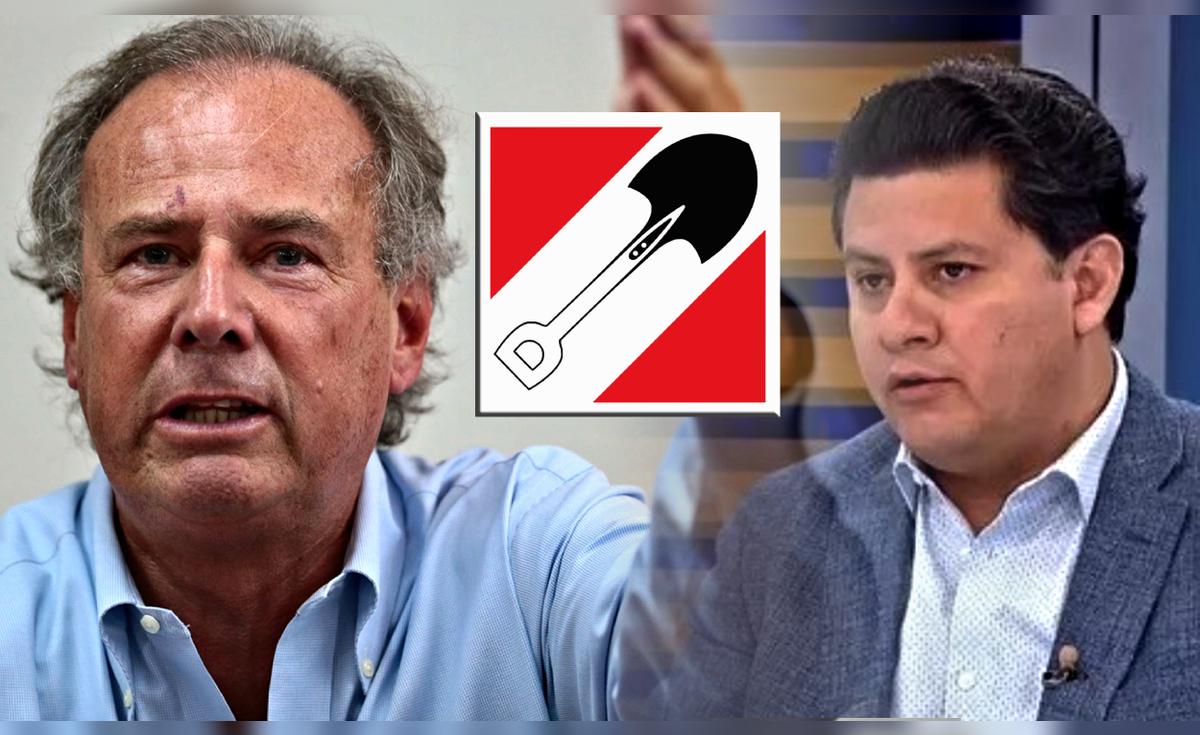
The Plenary Session of the National Election Jury (JNE) resolved to declare null the primary elections held by Popular Action to define its candidates for the 2026 general elections. The decision was adopted by the Resolution No. 0745-2025-JNE, after concluding that the process presented substantial defects that compromised the legitimacy and regularity of the party’s internal democracy, so they will not be able to participate in the 2026 general elections.
listen to the newsText converted to audio
Artificial intelligence
The electoral body determined that there were inconsistencies in the formation of delegates, when it was detected that the list of people proclaimed by the National Electoral Committee (CNE) did not coincide with the list of electoral material prepared by the National Office of Electoral Processes (ONPE). These irregularities were recorded in the internal elections held on November 30 in various constituencies in the country.
WE RECOMMEND YOU
BYE LAVA JATO AND WHITE NECKS + ELECTIONS | WITHOUT SCRIPT WITH ROSA MARÍA PALACIOS
The JNE was emphatic in pointing out that 100% of the tables presented a substantial defect, as citizens who were not elected as delegates in the internal process were included, which directly affected the principles of internal democracy and due process. “This situation shows that 100% of the tables presented a substantial defect related to the formation of the electoral body, affecting the legitimacy and regularity of the internal democracy process of the OP,” they detail in the resolution.
The arguments of the JNE
He JNE He explained that internal democracy is the basis of any political party, since it guarantees that the election of candidates is done with clear, transparent rules and respected by all. In the case of Acción Popularr, that principle was not fulfilled, because the internal process was carried out with serious irregularities.
The electoral body indicated that its function is to ensure that the elections truly reflect the will of those who vote, and that the processes are carried out in accordance with the law. For this reason, he indicated that the challenges presented by the party members could not be ignored, since doing so would have meant failing to comply with their duty to supervise the electoral processes.
Likewise, the JNE recalled that the electoral system, made up of the JNE, lto ONPE and the Reniec, has the responsibility of guaranteeing that the votes are clean and that the results faithfully express what was decided at the polls. Since serious flaws have been detected in the composition of the delegates who voted They determined that the process lost legitimacy.
Finally, the Plenary clarified that, although it declared the nullity of the primary elections, new internal elections cannot be ordered, since the deadlines of the electoral calendar are strict and that if they did so, the general elections of 2026 would be put at risk.
Chronology of the crisis
The crisis of Popular Action occurred after the election of Alfredo Barnechea as presidential candidate. Several militants denounced that delegates had been irregularly replaced; In addition, they reported that alleged job offers were offered in exchange for political support. But not only that. Also, they accused of impersonations and questioned accreditations in the process.
Thus, on December 4, it was reported that at least 26 delegates who were elected on November 30 had been replaced without arguments. According to the complainants, the Electoral Committee, which presides Cinthia Pajuelowould have sent the ONPE a list different from the one that was initially approved in regional minutes.
After coming in second place, Julio Chavez He denounced fraud in the internal election, alleged manipulation of the list of delegates and announced the presentation of a challenge to the JNE to evaluate the legality of the process and the proclamation of the presidential candidate.
“It is an unprecedented fact in the history of the primary elections of Popular Action: A manifest and gross fraud was perpetrated. The former president of the National Electoral Committee, without any foundation or documentary support, replaced 28 delegates who had been elected on November 30, allegedly with the complicity of the ONPE“said Chávez in a statement.
These challenges were finally evaluated by the Plenary of the JNEwhich concluded that the irregularities detected could not be corrected and that it was appropriate declare the annulment of the primary elections.