The next general elections are just around the corner and, visibly, those who will be most exposed to the growing wave of crime and delinquency that affects Peruvians are the candidates for popularly elected positions themselves.
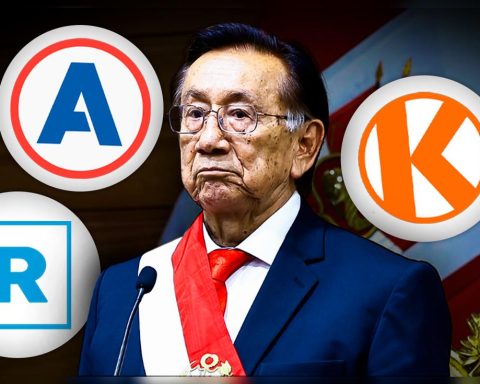
The electoral process has already highlighted this vulnerability. The recent shooting attack against the presidential candidate Rafael Belaunde, who did not lose his life, raised alarms about the current situation and the risk that the candidates face.
Faced with this threat, the question is mandatory: what protocol has the Government prepared to ensure that the elections take place with minimum security conditions for the candidates?
A HARD REALITY
For the former Minister of the Interior and retired General of the Police, Carlos Morán, the protection of aspiring civil servants revolves around a rule that today seems to be insufficient. As he explains, the State assigns a minimum group of agents who must take turns to cover 24 hours a day.
“The official candidates are assigned two police officers. They do it one by one, twenty-four by twenty-four. It is the same for everyone,” the former minister told Peru21.
This safeguard is strictly personal. In the second round, for the two candidates who pass, security is doubled: four police officers for each one. He also said that they do not have the right to vehicles or to be transported.
Despite the current context of crime and the history of conflicts in other countries, Morán warns that the system does not act ex officio to increase protection. The scheme is designed in such a way that the candidate must demonstrate that he is targeted – by criminals – before receiving a booster.
“If a candidate believes that his life is at risk because he has threats, the Police will have to evaluate and the Minister of the Interior will have to make a statement. Not before, a priori,” he concluded.
The reality is that, unlike neighboring countries, such as Colombia and Ecuador, which have already dealt with political assassinations, Peru does not have a clear electoral protection scheme. The only measure announced so far by the National Elections Jury (JNE) has been the purchase of bulletproof vests for the electoral authorities.
However, JNE sources mentioned Peru21 that although bulletproof vests are being purchased for the members of the Plenary Session and the presidents of the Special Electoral Juries, as well as security personnel and officials, the responsibility for the purchase of vests for the candidates lies with the government of José Jerí.
“We cannot purchase vests for the candidates, since according to the law it is a function of the Executive. It has been requested to advance the security plan to prevent any incident,” they mentioned.
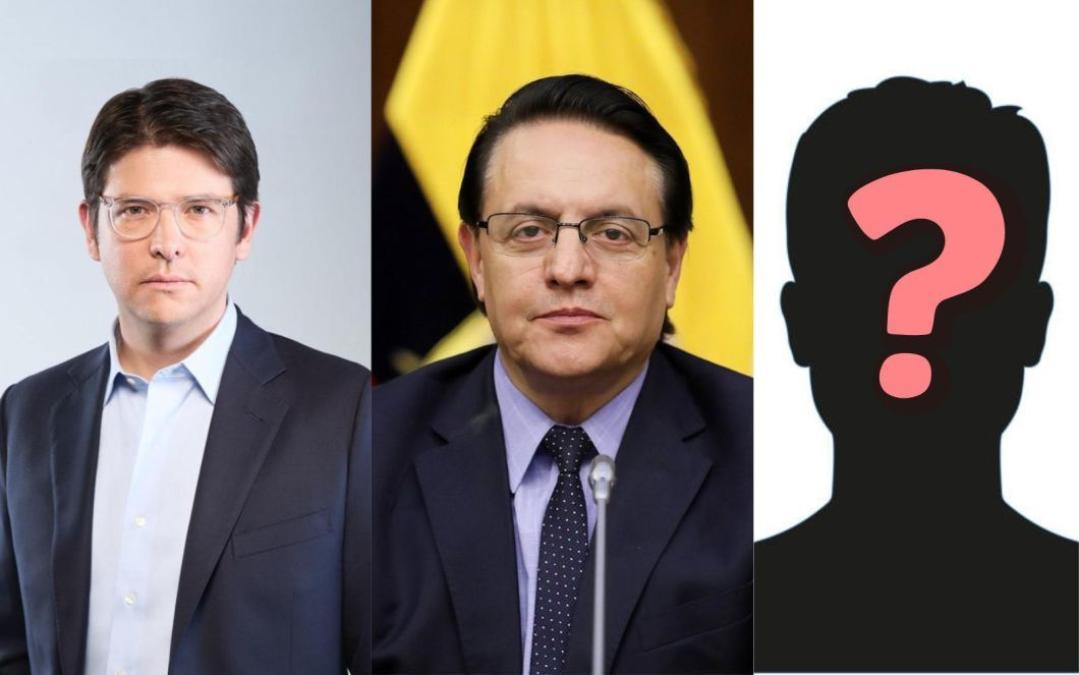
Precisely, regional experience shows that just a vest is insufficient. In Ecuador, organized crime has escalated to the point of assassinating a presidential candidate, Fernando Villavicencio, in the middle of the electoral process. In Colombia, this year a presidential candidate was also murdered (See interview).
Peru21 spoke with Leonardo Gómez Ponce, an Ecuadorian investigative journalist and director of the Nobody’s Land Investigation Unit, who recalled that, after the murder of Villavicencio, many Ecuadorian candidates began to wear vests out of fear.
“Between 2022 and 2023, at least 12 candidates or pre-candidates for local governments (councilmen, mayors, prefects) were threatened or murdered. These incidents are focused on “peripheral areas” and not so much in the capitals due to their strategic value where there is a known presence of criminal groups,” he mentioned to this newspaper.
Gómez Ponce explained that, after the assassination, political figures such as journalist Christian Zurita (who assumed the candidacy) received state protection, but not under an electoral protocol, but through the witness protection system.
The journalist explained that this scheme is applied due to the risk that the individual maintains as a citizen, not due to his temporary status as a candidate. Even so, the protection offered can be rejected by those affected, just as Gómez Ponce himself did at the time.
“Our entire continent obeys the same threshold. We are connected, since the criminal dynamics of Mexico are repeated in Colombia, Ecuador and Peru. All areas where illegal and criminal economies operate, including those disguised as legal businesses, must have particular attention in the electoral processes, since the arrival of a new authority that tries to change the status quo may suffer direct reprisals,” he said.