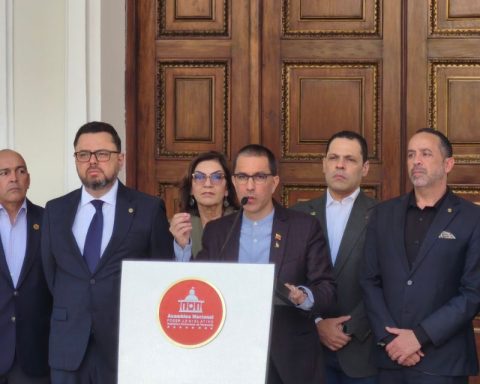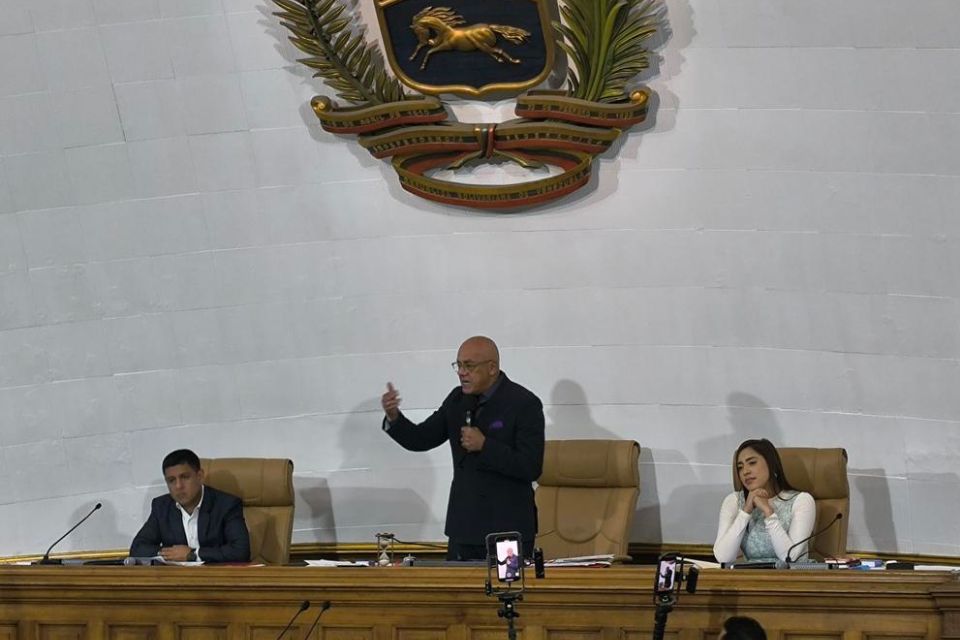
After approving the repeal of the Rome Statute in the second discussion, the National Assembly (AN) moved forward with the presentation of the legislative budget for 2026, marked by a speech of resistance against international sanctions, presented the BCV budget and approved an agreement for the declaration of the joropo as cultural heritage
The National Assembly (AN) sanctioned this Thursday, December 11, the Repeal of the Law Approving the Rome Statute of the International Criminal Court (ICC), an instrument promoted by the ruling party under the name of “Law for Palestine and humanity, law repealing the Rome Statute.” In addition, progress was made in the discussion of Parliament’s draft budget for the financial year 2026 and other points were discussed.
Parliament unanimously approved, in second discussion, the law that completely repeals Venezuela’s accession to the Rome Statute, in force since 2000. The sole repealing provision establishes that the approving law published in the Extraordinary Official Gazette 5,507, of December 13, 2000, is without effect.
This legal instrument was presented as a political gesture to “accompany the Palestinian people” and, at the same time, as a denunciation by the ruling party about the supposed “uselessness” of the International Criminal Court (ICC) and its “vassalage to North American imperialism.”
*Read also: Russia demands exhaustive investigation into seizure of oil tanker by the US
National Assembly Budget for 2026
The AN then approved the budget of the National Assembly for the financial year 2026. The person in charge of presenting it was the representative Geraldina Parada, representing the Commission of Economy, Finance and National Development.
He amount proposed amounts to 7,046 million 777 thousand 671 bolivarsfinanced by recurring operating funds and a specific source destined for projects.
According to the presentation, the budget is aimed at:
- Promote the participation of Popular Power.
- Strengthen integration and international solidarity.
- Encourage Parliament’s communication strategy.
- Improve the administrative efficiency of the Legislative Branch.
Parada maintained that each item in the report “does not represent cold numbers,” but rather “symbols of resistance and dignity of the people” in the face of international sanctions and the economic context, but they did not break down the amounts. He attributed the institutional advances to the decisions of the Executive under the leadership of Nicolás Maduro.
*Read also: Venezuelan Parliament expressly sanctions the 2026 budget and debt
BCV budget for 2026
The plenary also approved the report on the income and expenditure budget of the Central Bank of Venezuela (BCV) for 2026. Representative Lizeth Muñoz, in charge of the presentation, assured that the country faces “1,047 unilateral coercive measures”, which have affected the institutional and transactional performance of the economy.
The BCV projects for 2026:
- Operating income: Bs 35,786 million
- Operating expenses: Bs 114,248 million
- Budget distribution:
- 38% current expenses
- 11.40% capital expenditure
- 18.16% social security
- 30.7% strategic expenses
- 1.96% rectifications
The report defines the budget as an “expression of sovereignty” and an instrument to “guarantee peace and social justice.”
The AN also discussed other points, including the declaration of the joropo as a world heritage site. In the session, an agreement was approved in support of UNESCO’s declaration of the Venezuelan joropo as intangible cultural heritage of humanity.
The project was presented by the singer-songwriter and deputy Cristóbal Jiménez, who highlighted the diversity of joropo styles.
There was also the first discussion of the reform of the Law of the Statute of the Function of the Investigative Police. Deputy Rodbexa Poleo presented a reform that seeks to modernize the career of the Scientific, Criminal and Criminal Investigation Corps (Cicpc), raise entry and promotion standards, add formal academic requirements and strengthen professionalization.
*Journalism in Venezuela is carried out in a hostile environment for the press with dozens of legal instruments in place to punish the word, especially the laws “against hate”, “against fascism” and “against the blockade.” This content was written taking into consideration the threats and limits that, consequently, have been imposed on the dissemination of information from within the country.
Post Views: 342