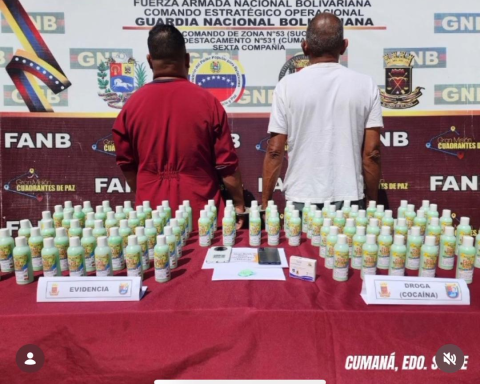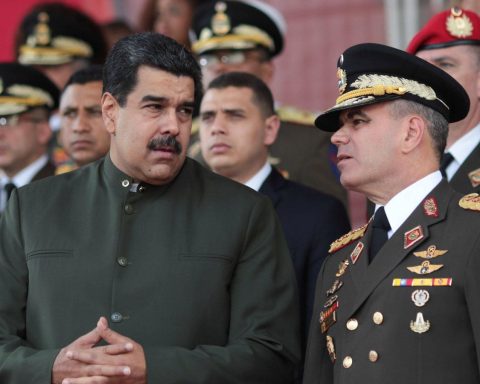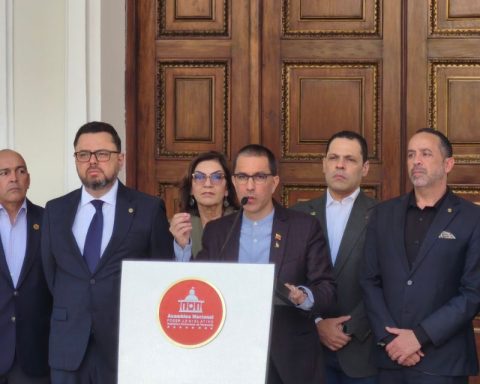
The “narco-nephews” Efraín Antonio Campo Flores and Franqui Francisco Flores de Freitas, convicted of drug trafficking in 2016, as well as Carlos Erick Malpica Flores, were sanctioned by the United States Department of the Treasury. Donald Trump’s administration also identified and blocked a series of companies and vessels linked to the transportation of Venezuelan crude oil.
The United States Department of the Treasury announced this Thursday, December 10, a group of sanctions against several companies and people linked to Nicolás Maduro’s inner circle. Among those sanctioned are three nephews of Cilia Flores and the Panamanian businessman Ramón Carretero Napolitano, as well as six shipping companies that transport Venezuelan oil.
«These sanctions derail the Biden administration’s failed attempt to reach an agreement with Maduro, allowing his dictatorial and brutal control at the expense of the Venezuelan and American people. “Under President Trump’s leadership, Treasury holds the regime and its circle of cronies and companies accountable for their continued crimes,” declared Treasury Secretary Scott Bessent.
Efraín Antonio Campo Flores and Franqui Francisco Flores de Freitas, known as the “narco-nephews,” are designated by the Office of Foreign Assets Control (OFAC) as “drug traffickers operating in Venezuela.”
In November 2015, Campo and Flores de Freitas were arrested in Port-au-Prince (Haiti) while making an agreement to transport drugs to the United States. Extradited to the United States, a year later they were convicted of drug trafficking, but then-president Joe Biden granted them pardon in October 2022 as a result of negotiations with the Maduro administration.
*Read also: What is known about the oil tanker seized by the US near the Venezuelan coast
Campo and Flores de Freitas returned to Venezuela. OFAC noted that this year “they have continued their drug trafficking activities.”
Another of the sanctioned nephews is Carlos Erik Malpica Flores, who was national treasurer and would be part of the vice presidency of PDVSA.
Malpica had been designated in July 2017, explains the Treasury Department, “but was removed from OFAC’s List of Specially Designated Nationals and Blocked Persons (SDN List) in 2022 to promote the resumption of negotiations for an agreement, ultimately failed, promoted by the Biden administration to restore democratic elections in Venezuela.”
The Treasury Department noted that US foreign policy must “continue to pressure those linked to the Maduro regime,” whose immediate family is under sanctions or on the list of specially designated persons.
Those sanctioned also included Panamanian businessman Ramón Carretero Napolitano, who was accused of maintaining business with the Maduro-Flores family as a partner and participating in “lucrative contracts” linked to the oil sector.
US identifies ships
OFAC included in its sanctioned list the companies Myra Marine Limited, Arctic Voyager Incorporated, Poweroy Investment Limited, Ready Great Limited, Sino Marine Services Limited and Full Happy Limited, registered in the Marshall Islands, the United Kingdom and the British Virgin Islands.
Crude oil transportation companies were accused of “deceptive practices to hide their location, either by omitting their location or transmitting a false location” to transport Venezuelan oil to various markets, mainly Asia.
Also identified as blocked properties were the Panamanian-flagged vessels Kiara M, Lattafa and H. Constance, Tamia (flagged by Hong Kong) and Monique (flagged by the Cook Islands).
These tankers have been identified by the US as transporting Venezuelan crude oil between May and October of this year to continue “providing financial resources that drive Maduro’s corrupt narcoterrorist regime.”
The blockade of these vessels occurs after the seizure, reported a day earlier by President Donald Trump, of a tanker near the Venezuelan coast, an issue that the Maduro administration repudiated, stating that it only pursues the goal of “appropriating” the country’s natural resources.
White House spokeswoman Karoline Leavitt confirmed this Thursday that the oil tanker “will go to a US port and the United States does intend to seize the oil. However, there is a legal process for the seizure of that oil, and that legal process will be followed.
*Journalism in Venezuela is carried out in a hostile environment for the press with dozens of legal instruments in place to punish the word, especially the laws “against hate”, “against fascism” and “against the blockade.” This content was written taking into consideration the threats and limits that, consequently, have been imposed on the dissemination of information from within the country.
Post Views: 367