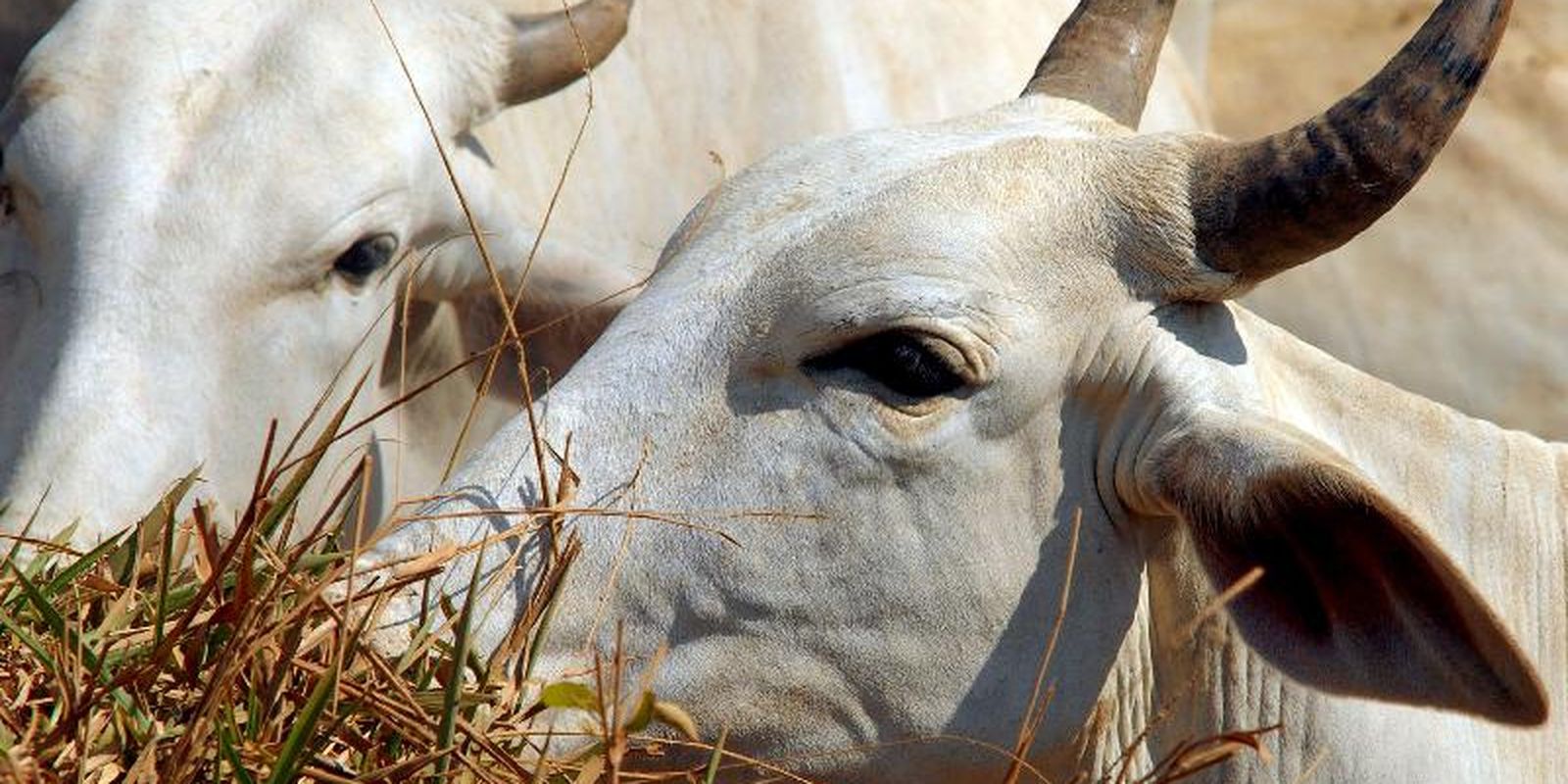
Three weeks ago, the ship Spiridon II was authorized to disembark almost three thousand cows in Libya, after months adrift. The initial destination was Turkey, which refused to receive the vessel due to health and animal identification failures. Carcasses piled on the deck, bad smells of feces and urine, and shortages of water and food were reported.
This is the latest example of problems involving the live animal trade, according to Mercy for Animals. The non-profit organization participated this Thursday (11) in a public hearing on the topic, at the Environment and Sustainable Development Committee of the Chamber of Deputies, in Brasília.
“The ship’s artificial environment, the roughness of the sea, high temperatures and overcrowding, among other factors, cause physical and psychological stress in animals. This depresses their immune system and favors the development of diseases, especially infectious ones”, denounces George Sturaro, director of government relations and public policies at Mercy For Animals in Brazil.
“The precarious hygiene conditions inside ships and the lack of adequate medical and veterinary assistance worsen the situation”, he adds.
Sturaro also points to the environmental risks of this type of trade. One of them is the greater risk of shipwrecks, as most vessels are very old and were not designed to transport animals. There is also the problem of pollution.
“Feces and urine fall from trucks full of animals along the way to the port, permeating the air of the municipalities where shipments take place with a strong stench,” says the director of the NGO.
“This air pollution has serious consequences not only for public health, but also for the local economy, as it disrupts commerce, tourism and people’s daily activities. For this reason, the municipalities of Santos and Belém have left the live animal export circuit.”
Public hearing
The public hearing in Brasília was requested by federal deputy Duda Salabert (PDT-MG) and also had the participation of the Animal Working Group of the Environmentalist Parliamentary Front, the National Forum for Animal Protection and Defense, Gaia Libertas, the Animal Rights News Agency and the National Non-Export Lives Movement.
Data from Comex Stat – a portal linked to the Ministry of Development, Industry, Commerce and Services – indicates that Brazil is the largest exporter of live animals in the world. In November 2025, the country broke its own record with 952 thousand cattle shipped throughout the year. If the monthly average is maintained, it should surpass the one million mark by the end of December.
Two bills in the National Congress address the issue and focus on taxation as a way of discouraging the export of animals. Complementary Bill 23/2024, by federal deputy Luciene Cavalcante (PSOL-SP) intends to amend the Kandir Law (LC 87/96), to veto exemptions from Tax on the Circulation of Goods and Services (ICMS) in export of live animals. Bill 786/2024, by federal deputy Nilto Tatto (PT-SP), provides for the incidence of export tax on operations involving live animals.
In the Executive, the Animal Protection department of the Ministry of the Environment has made technical demonstrations against exports and participated in actions in the Judiciary in defense of animal rights.
Director Vanessa Negrini cites one of the recent obstacles promoted by an amendment by the Parliamentary Agricultural Front (FPA) to Bill 347/2003, which deals with the protection of wild fauna.
“The wording of this amendment creates threats of regression to the legislation. It is proposed to create an exceptional legal regime, which weakens the criminal protection of animals. By excluding productive activities from the protective incidence of the law on environmental crimes, this amendment indicates that agricultural practices that cause avoidable pain and suffering are reinterpreted as regular acts”, warns Negrini.
Global change
According to Mercy for Animals, the end of exporting live animals by sea is a global trend, which has gained momentum in recent years. In 2018, India banned the activity. New Zealand and the United Kingdom did the same in 2021 and 2024, respectively. In 2022, Germany and Luxembourg banned the export of live animals to countries located outside the European Union.
In 2024, Australia, historically the main supplier of live animals to the international market, announced the end of the practice for sheep. In Argentina and Ecuador, bills are being processed that aim to prohibit the export of live animals. A project will also be presented in Uruguay, a country that has already suspended the export of live animals in 2025 due to negative impacts on the economy.
“Brazil is going against the global trend. Even from an economic perspective, exporting live animals does not make sense, as it exports jobs and transfers activities abroad in the meat and leather production chains that add the most value. This has a negative impact on income generation and tax collection”, says George Sturaro.
The study Analysis of the Socioeconomic Impacts of the Ban on the Export of Live Cattle in Brazil reveals that the transition to the export of processed meat would generate additional added value of up to R$1.9 billion, with an expansion of formal employment of up to 7,200 jobs and an increase in tax revenue of up to R$610 million.
The study was authored by researchers Maira Luiza Spanholi, from the State University of Mato Grosso (UEMG), and Carlos Eduardo Frickmann Young, Federal University of Rio de Janeiro (UFRJ).
“In addition to reducing supply and increasing the price of raw materials on the domestic market, the export of live cattle harms exports of chilled beef when both are destined for the same importing country, which is quite common”, says George Sturaro.
“It is important to highlight that, if Brazil bans the export of live animals, no country will be able to take its place in the medium term, given the volume of Brazilian exports. In this scenario, the most likely thing is that importers will increase their purchases of chilled meat”, he states.
*The article was changed at 6:24 pm to correct the vessel’s arrival location, in the first paragraph