He Government reported this Thursday that the sector free zones reached its historical maximum of 200,134 direct jobsconsolidating itself as one of the main engines of economic and social growth in the country.
He President Luis Abinaderwho led the event held at the National Palace, highlighted that the fact of reaching more than 200,000 jobs is due to the result of a joint strategybetween the governmentthe private sector and foreign investment.
“This goal achieved is the result of silent effort of thousands of workers; It is the result of the trust of our businessmen; and it is, above all, confirmation that the world sees our country as a serious, stable and capable partner. Every job achieved is a testament to the international credibility that today distinguishes the Dominican Republic,” said Abinader.
The growth by years
During the period April 2020 and October 2025employment in free zones increased by 67%, going from 119,974 to 200,134 positions, of which 54% are occupied by women.
The greatest growth occurs in Saint Dominic and the National District with 17,260 new jobs and the province Altagraciawhich went from 905 in 2020 to 2,791 in 2025. Meanwhile, in the Southern region 5,374 new positions were added.
![[object HTMLTextAreaElement]](https://resources.diariolibre.com/images/2025/12/11/whatsapp-image-2025-12-11-at-194740f04d946b-cba6710a.jpg "Government highlights that the free zone sector exceeds 200,000 jobs")
“In it year 2020 The world was experiencing a complex reality, and our economy was facing great challenges. However, the Dominican Republic knew how to respond with responsibility, with clear policies and with an intelligent openness to the world. Today we celebrate the full recovery of jobs and sustained expansion of a sector that is consolidated as one of the pillars of our national economy,” Abinader argued.
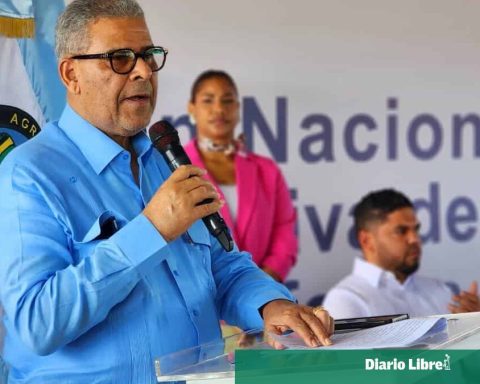
The Minister of Industry, Commerce and MSMEs, Victor -Ito- Bisonó, highlighted that they currently operate in the country 97 parks and 861 companiesand in these five years 436 new companies and 45 parks have been approved.
- “Since 2020 we have been working to bring jobs where there were none before. We reopened parks that had been closed for more than 15 years and we built new productive spaces such as San Juan de la Maguana. All this effort translates today into more than 200,000 jobs and an economy that advances with people at the center,” the minister emphasized.
Bisonó added that, as of November 2025, the value of the sector’s exports free zones amounts to US$7,936.1 million, being led by subsectors such as medical devicestobacco and its derivatives, as well as electrical and electronic products.
To date, the free zones have evolved from traditional manufacturing to activities like medical deviceselectrical, electronic, logistics and services. This last line recorded 45,460 positions from work to October 2025for an increase of 6.03% compared to the month of October 2024.
Likewise, in these five years the technical capabilities of human talent, “developing 24,494 training actions in coordination with Infotep and companies in the sector, which allows us to increase the productivity and salary trajectory of employees,” he indicated. Claudia Pelleranopresident of the Dominican Association of Free Zones (Adozona).
Technicalization of employment

![[object HTMLTextAreaElement]](https://resources.diariolibre.com/images/2025/12/11/whatsapp-image-2025-12-11-at-1947405f1f216b-c9a2a7f6.jpg "Government highlights that the free zone sector exceeds 200,000 jobs")
Between 2004 and 2024, the participation of operators fell from 86% to 63.4%, which is equivalent to more than 39,000 fewer positions in traditional functions. The technical jobs increased from 9.1% to 25.3% and the administrative positions they doubled, going from 4.9% to 11.3%.
The local shopping of the free zones have grown by 87%, going from 83 billion pesos in 2020 to 155.4 billion in 2024. Meanwhile, the accumulated investment It reached 7,735.7 million dollars in 2024, for an increase of 49% compared to 2020.
Also participating in the event were the director of the National Council of Free Zones, Daniel Liranzoand representatives of the public and private sectorsthe academy and international organizations.