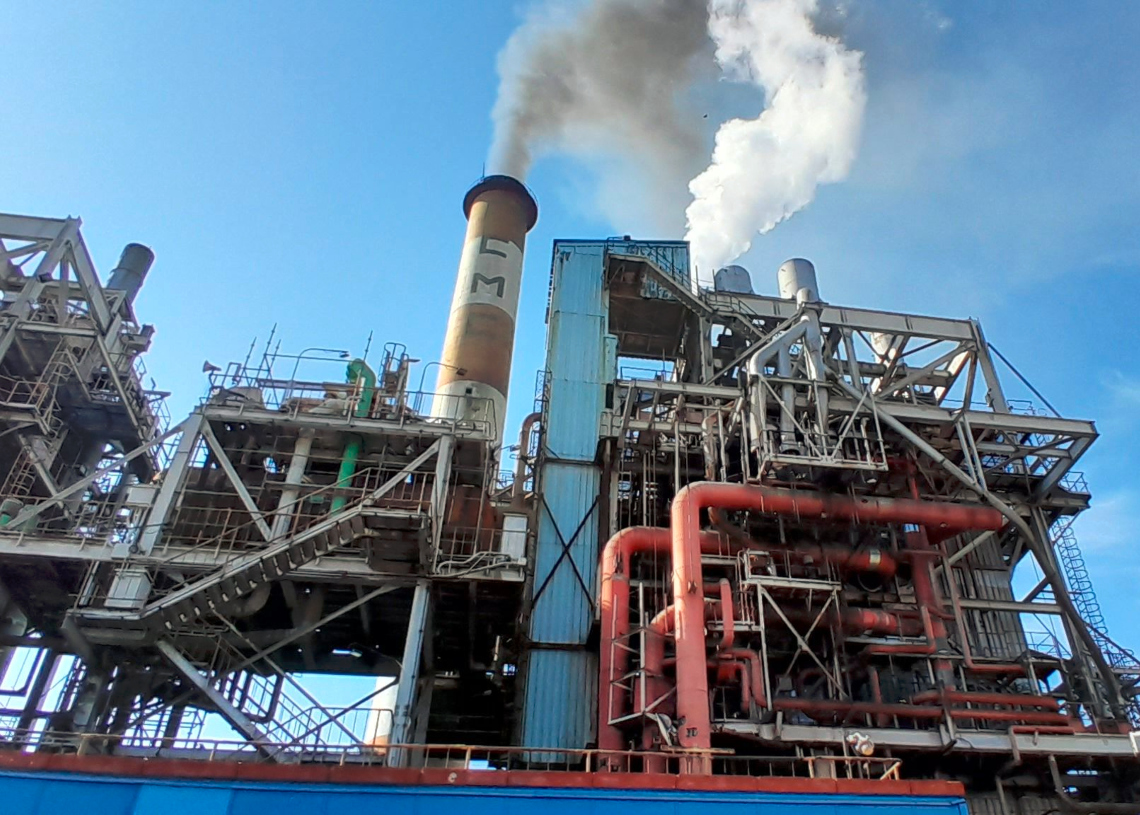
This morning unit 3 of the Cienfuegos thermoelectric plantafter several days in repairs.
The Cienfuegos plant, which had suffered a boiler break, was able to rejoin the National Electrical System (SEN) on the date scheduled by the authorities. In this way, it followed in the footsteps of other blocks connected in recent days, such as Felton 1, Santa Cruz 1 and Renté 5.
However, although these additions represent a slight relief for electricity generation on the island, the outlook is still very deficient.
The reason for this situation is no mystery: the recurring problems of aging thermoelectric plants – most of which have been in operation for more than 30 and 40 years – and, most especially, the lack of fuel and lubricants for distributed generation.
For this last reason, in the current peak of blackouts, around 1000 MW have stopped being generated each day, with particular emphasis on nighttime hours, and this Wednesday history repeats itself.
There are 1005 MW unavailable for this reason, according to the report from the Electrical Union (UNE)according to which there are 98 plants stopped without fuel to generate and none of them will turn on their engines even at night, at the time of greatest demand.
Another day of blackouts
In the current scenario, availability remains far behind what is needed to meet demand, meaning that blackouts will dominate most of the country throughout the day.
Already at 6:00 AM there were 1016 MW affected by generation deficit, a figure that should rise to 1350 MW at noon and up to 1790 MW at the night peak.
Meanwhile, availability, which was 1,450 MW in the morning, should rise to 1,540 MW at night if unit 6 of Nuevitas comes in, as predicted by the UNE, and no breakage occurs that would derail the official forecast.
If achieved, it would, without a doubt, be a visible improvement when compared to the mere 1047 MW on Monday nightbut even so the debt compared to the installed capacity remains enormous.
Furthermore, for many Cubans — burdened for months by endless blackouts — this difference may not be perceptible or have a real relief effect on their daily existence and activities.
For this to be the case, the generation capacity would have to be raised considerably more with the reincorporation of more thermal blocks, particularly those that are under maintenance – something that, according to the authorities, should happen in the remainder of the year – and with a reduction in the current fuel deficit, something about which there are no official indications.