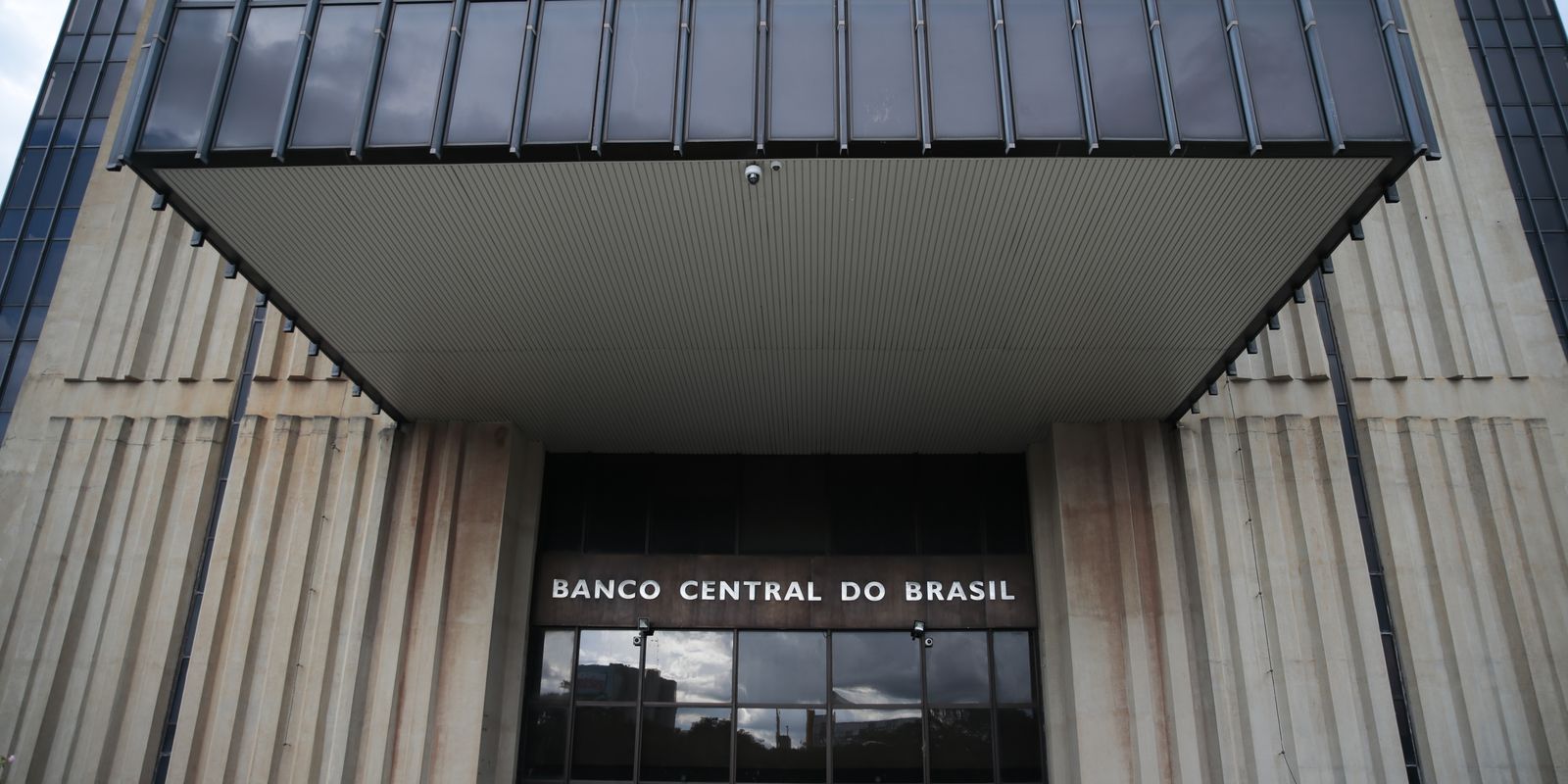
The financial market’s forecast for the growth of the Brazilian economy this year rose from 2.16% to 2.25%. The estimate was published in Focus newsletter this Monday (8), a survey released weekly by the Central Bank (BC) with the expectations of financial institutions for the main economic indicators.
For 2026, the projection for the Gross Domestic Product (GDP, the sum of goods and services produced in the country) increased from 1.78% to 1.8%. For 2027 and 2028, the financial market estimates GDP expansion at 1.84% and 2%, respectively.
Driven by the expansion of services and industry, in the second quarter of this year the Brazilian economy grew 0.4%according to the Brazilian Institute of Geography and Statistics (IBGE). In 2024, GDP closed with an increase of 3.4%. The result represents the fourth consecutive year of growth, being the biggest expansion since 2021, when GDP reached 4.8%.
The dollar exchange rate forecast is R$5.40 for the end of this year. At the end of 2026, it is estimated that the North American currency will be R$5.50.
Inflation
In this edition of Focus newsletterfinancial institutions’ estimate for the Broad National Consumer Price Index (IPCA) – considered the country’s official inflation – went from 4.43% to 4.4% this year.
For 2026, the inflation projection varied from 4.17% to 4.16%. For 2027 and 2028, forecasts are 3.8% and 3.5%, respectively.
For the fourth week in a row, the forecast was reduced, following the release of the October inflation result, the lowest for the month in almost 30 years. As a result, the estimate reached the inflation target range that should be pursued by the BC.
Defined by the National Monetary Council (CMN), the target is 3%, with a tolerance range of 1.5 percentage points up or down. In other words, the lower limit is 1.5% and the upper limit is 4.5%.
The reduction in the electricity bill pushed official inflation down and caused the IPCA to close October at 0.09%, the lowest for the month since 1998, according to IBGE. In September, the index had marked 0.48%. In October 2024, the variation was 0.56%.
With this result, inflation accumulated in 12 months is 4.68%, the first time in eight months that the level is below 5%. However, still above the CMN target ceiling.
Next Wednesday (10), IBGE releases the IPCA for November.
Basic interest
To achieve the inflation target, the Central Bank uses as its main instrument the basic interest rate – the Selic – set at 15% per year by the BC’s Monetary Policy Committee (Copom). The decline in inflation and the slowdown in the economy led to Selic maintenance for the third time in a row, at the last meeting, at the beginning of last month.
However, the board does not rule out the possibility of raising interest rates again “if it deems it appropriate”.
In a note, the BC reported that the external environment remains uncertain due to the situation and economic policy in the United States, with repercussions on global financial conditions. In Brazil, the authority highlighted that inflation remains above the target, despite the slowdown in economic activity, which indicates that interest rates will remain high for a long time.
The Copom holds its last meeting of the year this Tuesday (9) and Wednesday (10), and market analysts estimate that the basic rate will end 2025 at 15% per year.
By the end of 2026, the expectation is that the Selic will fall to 12.25% per year. For 2027 and 2028, the forecast is that it will be reduced again to 10.5% per year and 9.5% per year, respectively.
When Copom increases the Selic, the purpose is to contain heated demand; This has an impact on prices because higher interest rates make credit more expensive and encourage savings. Therefore, higher rates can also make it difficult for the economy to expand. Banks also consider other factors when defining the interest charged to consumers, such as risk of default, profit and administrative expenses.
When the Selic rate is reduced, the tendency is for credit to become cheaper, encouraging production and consumption, reducing control over inflation and stimulating economic activity.