
According to the INEGI, of the 33.5 million crimes committed in 2024, only 0.8% had a favorable resolution in the Public Ministry, that is, the impunity figure was 99.2%.
When appearing before the Senate, the advisor to the Presidency until a few days ago promised that there would be no impunity and no culprits would be fabricated. “No one will be accused unjustly, because in the administration of justice there is no room for partial actions or actions with political overtones,” he said.
(Photo: Yared de la Rosa/Cuartoscuro.)
Justice with less budget
The FGR that Alejandro Gertz Manero left will represent a risk for Ernestina Godoy, not only because of the workload, but also because of the lack of financial resources and specialized personnel.
“The lack of resources, the insufficiency of elements of the Federal Ministerial Police and the policies that, instead of increasing this personnel and professionalizing them, tend to reduce them and thereby undermine the capabilities of the Prosecutor’s Office, will persist,” explains criminal lawyer Gabriel Regino.
In the last budget discussion, the FGR requested a budget for 2026 of 21,059 million pesos, but was authorized 20,240 million pesos, that is, 819 million of less pesoswithout the deputies or the opinion subject to voting justifying the reasons.
According to the FGR’s budget planning, one of its main spending items is the Federal Ministerial Police, which – according to the National Census of Federal and State Justice Procurement – totals 20,214 elements.
For Gabriel Regino, a real change would begin with the call to train more professional personnel, since this is an exclusive task of the FGR and is not the responsibility of either the judges or the Court.
“Those who carry out the investigation are precisely police officers from the FGR who unfortunately have been gradually reduced due to erroneous decisions by many administrations,” he points out.
Ángel Briones, law expert and professor at the Intercontinental University, explains that given the complexity that the administration of justice represents and the workload it has, it is required that prepared and experienced people reach key positions.
“The Attorney General’s Office has a structure that is too broad and complex. Many profiles have to be assessed so that they add up, that is the main challenge, reviewing the profile of positions that are strategic, relevant, with a lot of power. Profiles of trained people are required, people capable of transforming the prosecutor’s office,” he indicates.
Susana Camacho, lawyer and coordinator of the justice program in Mexico Evalúa, explains that what is sought in the administration of justice is to be based on evidence and to professionalize all personnel so that they have sufficient capabilities to build cases well.
However, he points out that Gertz presented his own Organic Law of the FGR and one of the things that was modified was the professional career service so that prosecutors had sufficient working conditions and to carry out their work without having to depend on the orders of the prosecutor on duty.
For her part, Cristina Reyes, researcher at the organization Mexico United Against Corruption (MUCD), points out that in order to truly fix the justice system, the first thing that has to be fixed are the prosecutor’s offices, which are those dedicated to investigating crimes and which is where the bottleneck is for many people who are victims of crime.
After the departure of Gertz Mandero, officials close to Omar García Harfuch, head of the Secretariat of Citizen Security, were chosen to control key areas in the Attorney General’s Office of the Republic.
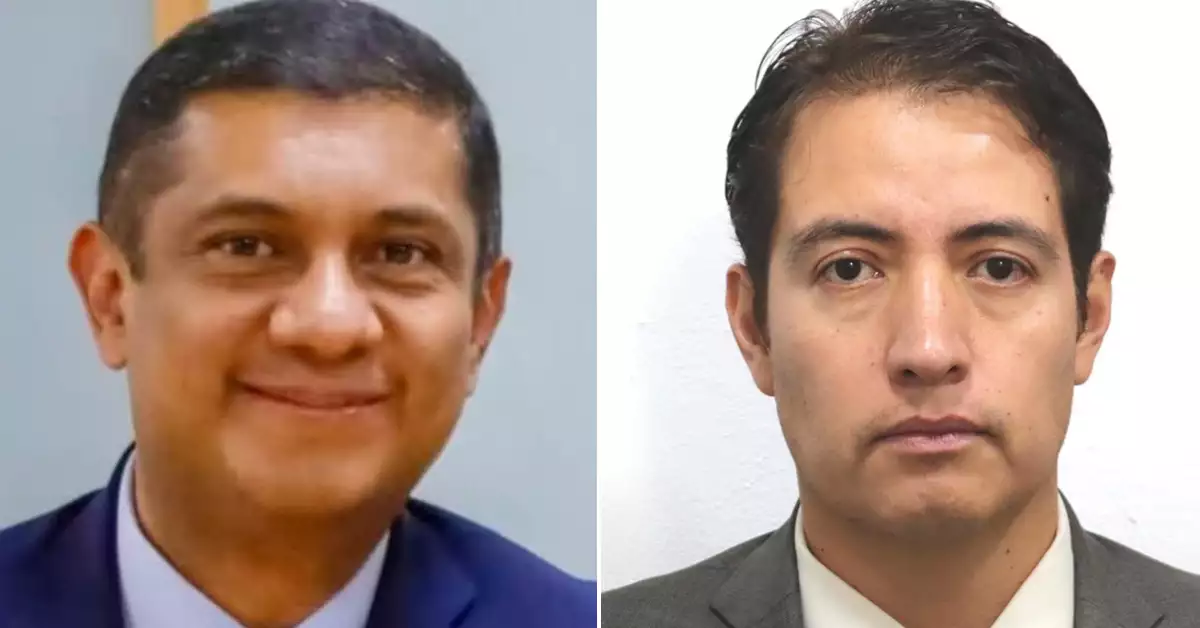
These are César Oliveros Aparicio as head of the Specialized Prosecutor’s Office for Organized Crime (FEMDO), and Héctor Elizalde Mora who was in charge of the Criminal Investigation Agency (AIC). Both officials were also part of Godoy’s work team during his time in the Mexico City Prosecutor’s Office.