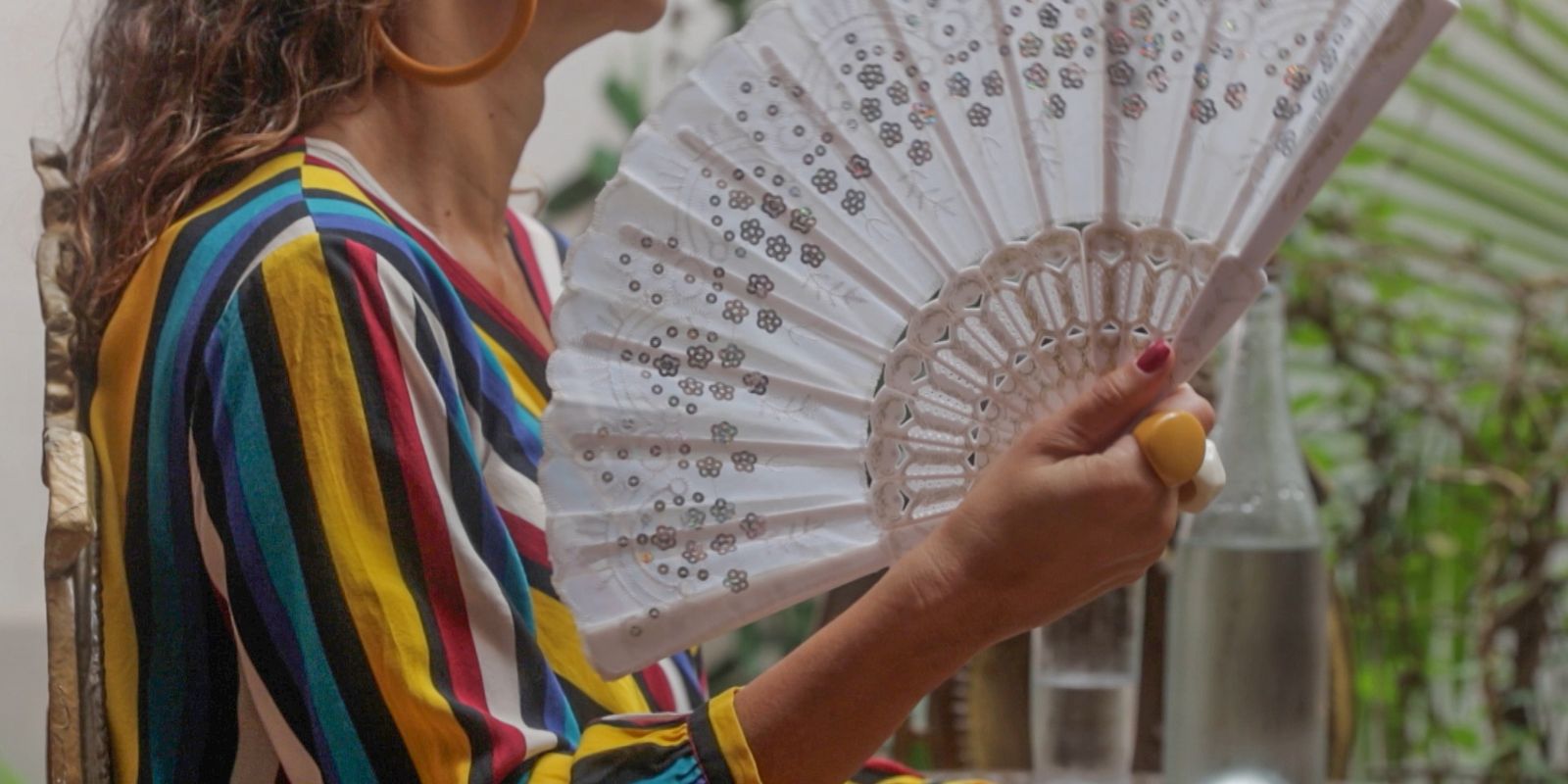
This Monday (8), the TV Brasil airs, at 11pm, a new episode of the program Reporting Pathswhich has the theme “Menopause without a Secret”. The attraction shares the routine of women in a phase that is still little discussed, surrounded by taboos and symptoms that are not always known. 
In just over a century, female longevity took a leap: it increased 2.5 times. In 1900, the life expectancy of a Brazilian woman was 33.7 years; today, it is 79.9. Now, most women spend a third of their lives in menopause.
It is estimated that more than 30 million Brazilian women are in climacteric, pre-menopause or menopause. Journalist Maria Cândida was surprised by the symptoms of perimenopause.
“It was a hurricane, a storm, a shock,” he says. She adds: “I was so exhausted that I wanted to lie down on the couch.” Irritability, insomnia and loss of libido were among the strongest signs.”
The president of Instituto Menopausa Feliz, Adriana Ferreira, experienced a similar situation.
“In my medical records it was written as ‘polycomplaining woman’. I had never heard the word climacteric”, he reveals. Both improved with Hormone Replacement Therapy, recommended by the Brazilian Federation of Gynecology and Obstetrics Associations, according to each case.
To the Reporting Pathsgynecologist Beatriz Tupinambá explains that the best time to start treatment is before menopausein the climacteric. Furthermore, he warns that symptoms reveal deeper changes, such as bone loss, cardiovascular risk and increased hypertension. “After menopause, two women have a heart attack for every man”, says the doctor.
Early menopause
According to experts, early menopause affects around 1% of women. Actress Julieta Zarza was diagnosed at the age of 37. “My feeling was that there was a stamp on my forehead: expiration date”, he says. Confectioner Nayele Cardoso went through the same thing at 27. “The only thing the doctor said was that I wouldn’t be able to have children”, she remembers.
Genetic factors, surgery, chemotherapy or autoimmune diseases can bring menopause forward, explains general practitioner Andrea Alvarenga.
A survey carried out by the consultancy Korn Ferry heard more than 8 thousand women in three countries and showed that 47% felt impacts on their work with menopause. “The three most common symptoms were stress, difficulty concentrating and loss of patience”, says Adriana Rosa, partner at Korn Ferry.
Since 2004, the National Policy for Comprehensive Attention to Women’s Health guides care in the Unified Health System (SUS). The manual is being updated.
“We don’t have so many actions aimed at women in the menopause transition”, says Maria Teresa Rossetti Massari, from Fiocruz. The Ministry of Health says that there is support in primary care, with consultations, exams, medications and integrative practices. More complex cases are referred to specialists.
The Hospital das Clínicas (HC) of the University of São Paulo (USP) is the main public reference in the country.
“During the week, I receive 90 to 120 visits”, says José Maria Soares Júnior, head of the Climacteric Outpatient Clinic. In addition to consultations, the HC offers exams and hormonal therapy within the indicated protocols.