Guantanamo/The morning progresses in Guantanamo. Many of its residents suffer not only from the lack of food and high transportation costs, but also from chewing problems. In a province where a large part of the population ages without real access to a functional dental service, the manufacture of dental prostheses has become a problem that seems to have no solution in either the state or the private sector.
Mercedes, a 68-year-old woman who lives in the Caribbean neighborhood, sums up the situation in one sentence: “Everything is based on little gifts.” For almost a year he has been trying to have a superior dental prosthesis made at his polyclinic, but the only thing he has received in return are excuses. “Every time I go, they tell me that there is no raw material. That if the acrylic is missing, that if the special plaster didn’t arrive, that if they don’t have wire. But in that same place they come and tell me quietly that, if I pay, they can make it for me,” he explains.
That “if I pay” is not a symbolic figure. In Guantánamo, as in the rest of the country, the majority of state dentists carry out work on the left using supplies stolen from official clinics. Making an upper or lower prosthesis can cost between 10,000 and 12,000 pesos, depending on the design. A complete prosthesis easily exceeds 20,000 pesos, in an Island where the average salary is around 6,500 pesos per month. “My checkbook doesn’t cover that. What am I going to do? Go without teeth?” Mercedes laments.
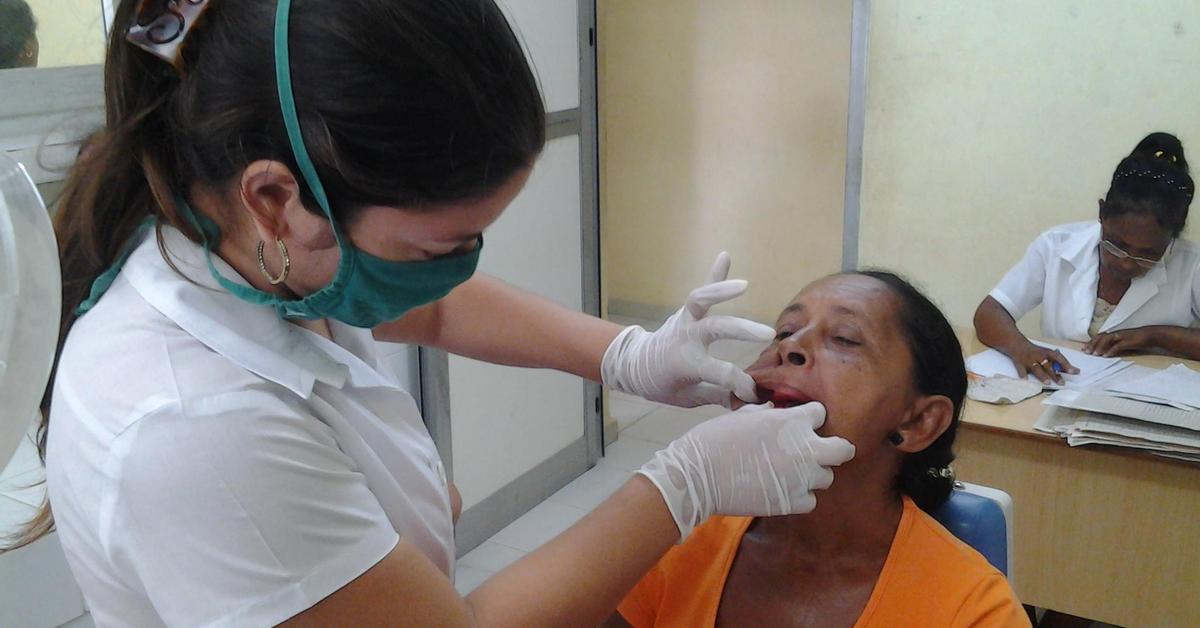
In state clinics the situation is discouraging. Technicians who prefer not to give their names say that they have not received basic materials for months. “There is no acrylic, there are no artificial teeth, there is no metal for partial structures, there is nothing,” confesses one of them. “If someone comes with a broken prosthesis, we have to tell them to come back in a few weeks. But those weeks turn into months. And in the end people get tired and pay out of pocket.”
Instead of solutions, phrases such as “there are no materials”, “we have to wait” or “come back next month” are repeated.
The situation is not new, but it has worsened. In September 2022, the local press he announced enthusiastically the resumption of dental services in the city, after months of paralysis due to the pandemic and scarcity of resources. Among the restarted services was the making of prostheses, although at that time they clarified that they would only attend to accumulated cases, both for repair and to complete pending treatments.
Three years later, these restrictions have become a kind of silent norm: the waiting list does not progress, the accumulated cases multiply and the clinics have become orientation points where, instead of solutions, phrases such as “there are no materials”, “we have to wait” or “come back next month” are repeated.
It’s not just the elderly who are affected. Jeancarlos, 25, suffered an accident while driving his motorcycle. “I lost all my front teeth,” he tells 14ymedio. For three years he has been living an ordeal to “do things as basic as eating and laughing,” he summarizes. Through official channels he was never even able to take measurements for his partial prosthesis. “I had to do everything on the black market.”
A young woman who recently graduated attended to him in the kitchen of his house. “He did the whole process for me right there, next to the sink and with his family coming in to get water from the refrigerator or to wash a dish.” Part of the materials that the specialist used to make the piece were taken from the polyclinic where she works and the rest were brought from abroad by a relative.
“It doesn’t have optimal quality but at least something is better than nothing,” says Jeancarlos. His dream: “to complete the money to travel to Mexico or Panama and get a new prosthesis, more functional and not as rigid as this one that constantly causes sores on my gum.” Until then, he avoids laughing and maintains a strict ban on “pork cracklings and hard Christmas nougats.”
“Here everyone knows someone who makes prosthetics at home”
While the state system dies, the informal and semi-private market flourishes. And for Guantanamo residents with family members abroad, another option appears: combos for dental prostheses sent from abroad. By 85 dollarsone of the most used sites for shipments to Cuba, offers an “upper and lower removable partial denture kit” that includes the same materials that are missing in state clinics: artificial teeth, acrylic, adjustment resins and tools to mold and adapt pieces.
Although officially these kits should not be used by inexperienced hands, in practice they end up in small clandestine workshops or in houses where unemployed technicians have restarted their trade outside of state control. “Here everyone knows someone who makes prosthetics at home,” says a resident of the city center, who prefers not to give his name. “The sad thing is that many of these materials are the ones that should be in state clinics.”
The consequences of this crisis are palpable. Older adults, the main users of these services, see their quality of life deteriorate. Digestive problems increase, self-esteem is affected and daily communication becomes difficult. “I almost don’t go out because I’m embarrassed to talk,” confesses Mercedes. “Without teeth you feel less.”
For their part, dentists in the state sector, trapped between a lack of supplies and low salaries, continue to emigrate to other professions or to other countries. “The best technicians left a while ago,” says a general practitioner at the Julio Antonio Mella clinic in the city. “And those who remain work with their nails.”