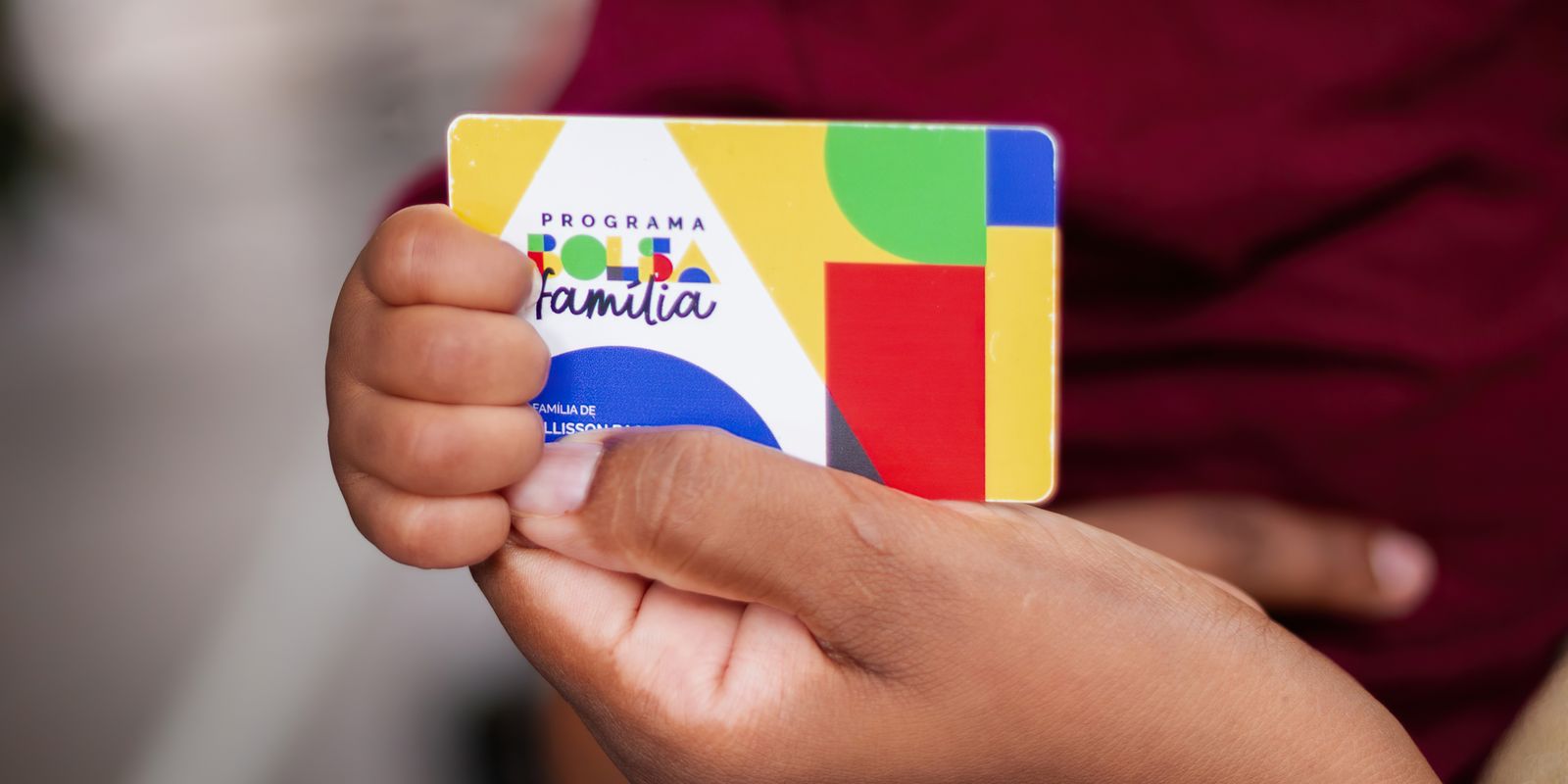
Of every ten people who received Bolsa Família in 2014, six managed to leave the assistance program in the following ten years. The finding is part of the study Children of Bolsa Famíliareleased this Friday (5) by Fundação Getulio Vargas (FGV)in Rio de Janeiro.
The survey carried out in partnership with the Ministry of Development and Social Assistance, Family and Fight against Hunger (MDS) also shows that the The highest rate of exit from the program is among those who were teenagers in 2014.
While the average exit rate of beneficiaries was 60.68%, among young people aged 15 to 17, the proportion reached 71.25%. In other words, out of every ten, seven no longer needed the income transfer in the following ten years.
Next comes the 11 to 14 year old age group, with 68.80%. Among people up to 4 years of age, the proportion of those who left the program within a decade was 41.26%.
The public evaluated in the research is classified as the “second generation” of the program created in 2003.
Social mobility
Author of the study, FGV economics professor Valdemar Rodrigues de Pinho Neto classifies Bolsa Família not only as a relief from the effects of immediate poverty, but also as a form of social mobility.
He highlights the importance of health and education conditions, such as the obligation for guardians to keep children in school, up-to-date vaccination coverage and prenatal examinations.
“Income transfer and, at the same time, enable the promotion of human capital for these young people, so that in the future, with work and entrepreneurship opportunities, they will be able to access the productive sector, have better socioeconomic conditions and, in a way, make this mobility viable”, he says.
The researcher points out that the departure of people from Bolsa Família is a determining factor for the continuity of social policy.
“In the context of scarce resources for the government, knowing that Bolsa Família children will not necessarily be present in the program in the future, in a way, also says a little about the sustainability of the program itself.”
Valdemar Neto points out that the people who left Bolsa Família were not left unprotected. In the group of those aged 15 to 17 in 2014, 28.4% had a formal employment contract ten years later; and more than half (52.67%) had left the Single Registry (CadÚnico)gateway to government social programs, aimed at the most vulnerable population.
The research sought information from the formal job market through Annual List of Social Information (Rais)from the Ministry of Labor and Employment, mandatory annual declaration that companies send to the government to record data on workers.
Situation around
The research concluded that the socioeconomic environment in which Bolsa Família beneficiaries are inserted influenced the exit rate from the program in the period from 2014 to 2025.
Among other findings, the survey points out that:
- In urban areas, the exit rate of young people aged 6 to 17 (67%) exceeds that of rural regions (55%);
- Young people aged 6 to 17 in families in which the reference person has a formal job have a higher exit rate (79.40%) than those who work without a formal contract (57.51%) and are self-employed (65.54%);
- Young people aged 6 to 17 in families in which the reference person has secondary education have a dropout rate (70%) above that when education is only completed primary school (65.31%).
“Parents who have more access to education are able to break the poverty that we call intergenerational poverty. So, children of more educated parents, obviously, are also able to get out of the program more”, says Neto.
Difficult to study when hungry
The Minister of Development and Social Assistance, Family and Fight Against Hunger, Wellington Dias, celebrated the numbers leaving the program and stated that “Bolsa Família is not an end, but a beginning”.
“It’s very difficult to take big steps without eliminating hunger. It’s difficult to study if you don’t eliminate hunger. It’s difficult to work if you don’t eliminate hunger. This step justifies the poorest in the Budget”, he states.
Recent trend
The FGV study brings data from the Novo Bolsa Família, the current version of the program, which began in 2023.
Among the beneficiaries observed at the beginning of 2023, around a third (31.25%) were no longer in the program in October 2025. Among young people aged 15 to 17, the exit is even higher in the three years: 42.59%
During this period, the monthly entry of families into the program (359 thousand on average) is below the average exit, 447 thousand.
“It already offers an idea of what we can expect in the following decade”, points out Valdemar Pinho Neto.
“Just like the [taxa de saída da] The second generation was better than the first, the third is expected to be better than the second.”
The FGV survey was released in the same week that the Brazilian Institute of Geography and Statistics (IBGE) revealed that more than 8.6 million Brazilians left the poverty line in 2024, reducing the proportion of the population in poverty to 23.1%, the lowest ever recorded since 2012, when the institute’s historical series began.
The booming job market and social programs were cited as reasons for the reduction in the number of poor people.
Autonomy mechanism
Researcher Valdemar Pinho Neto emphasized the importance of two characteristics of the new version of the program.
One is the protection rule, which does not automatically remove the person who got a job from the beneficiary list. There is an adaptation period and the guarantee that she will be able to receive care again, without a waiting list, if she loses her job.
The other is the Believe Program, which offers microcredit to support low-income entrepreneurs.
“The idea is that the transition from Bolsa Família to the job market is something smoother and not a very drastic decision in the lives of the beneficiaries”, highlights the professor.
Bolsa Família
THE initial criterion For a person to be a Bolsa Família beneficiary, they must have a monthly family income of up to R$218 per person (how much the family earns per month, divided by the number of people).
The base benefit is R$600, which can be increased if there are children or pregnant women in the family, for example. The average value of the benefit is R$683.28. In November, the program had 18.65 million families and cost R$12.69 billion.