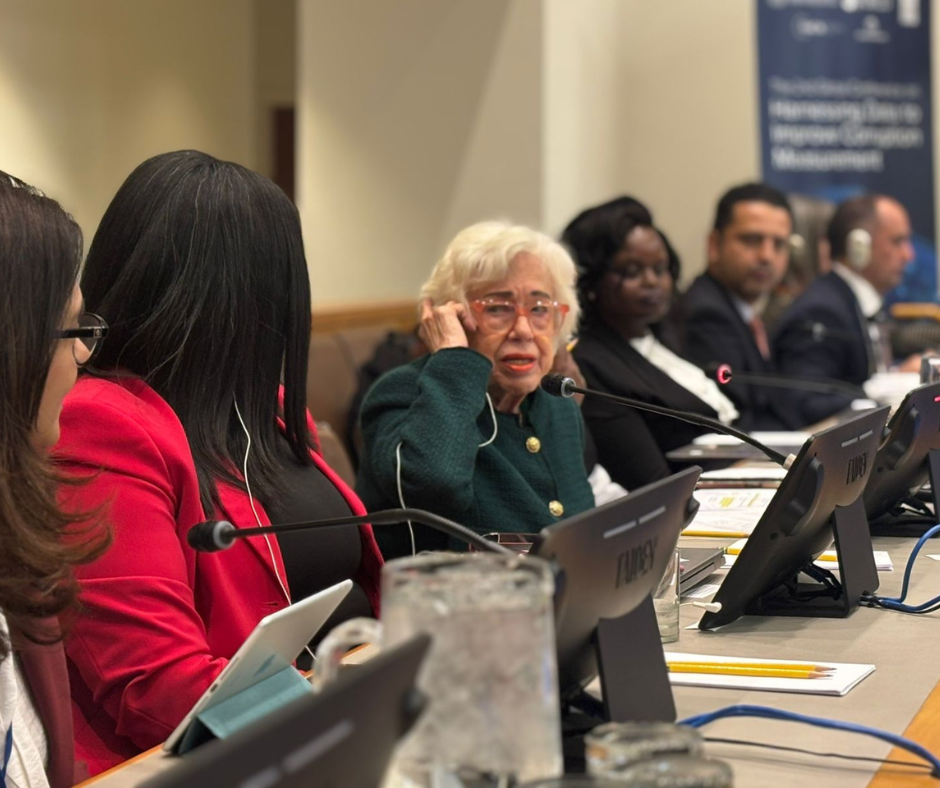
New York, USA – The Dominican Republic participated in the Second Global Conference on Leveraging Data to Improve Corruption Measurement, held at the United Nations Headquarters. United Nations.
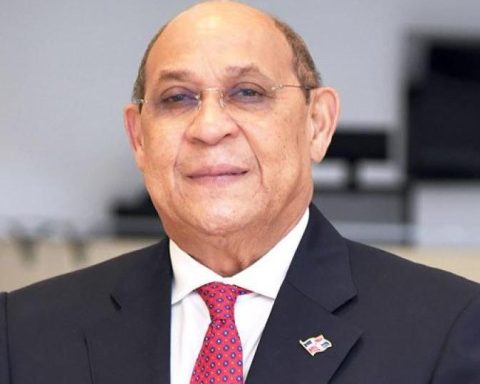
The Dominican delegation was led by Dr. Milagros Ortiz Bosch, general director of Ethics and Government Integrity (DIGEIG), and accompanied by Crismairy Jiménez, director of the Directorate of Standards and Methodologies of the National Statistics Office. Both had an active participation in the technical and high-level sessions of the event.
During her intervention, Dr. Ortiz Bosch highlighted the progress and challenges in creating solid statistics for next-generation corruption analysis, emphasizing the importance of having accurate, comparable, and evidence-based information. “The fight against corruption requires not only political will, but also reliable data that allows us to understand its behavior and anticipate its risks. Measuring well means preventing better,” he stated.
Within the framework of these meetings, Dr. Milagros Ortiz Bosch also held a meeting with Michelle Muschett, Undersecretary General of the United Nations, Assistant Administrator and Director of the Regional Directorate for Latin America and the Caribbean of the United Nations Development Program (UNDP), where they discussed issues of vital interest to the country in terms of ethics and transparency.
The conference, convened by the United Nations Development Program (UNDP), the United Nations Office on Drugs and Crime (UNODC) and the International Anti-Corruption Academy (IACA), brought together policymakers, academic experts, international organizations and civil society representatives. The central objective was to delve deeper into how the use of data, indicators and innovative tools strengthens the understanding and measurement of corruption at a global level.
Key topics were addressed such as the implementation of the Vienna Principles, the launch of the Global Digital Anti-Corruption Dashboard, technological innovations, emerging methodologies for data collection and analysis, and the publication of new global reports aimed at strengthening transparency and accountability.
Pilot plan for the verifiable measurement of corruption
This initiative is part of a pilot plan that seeks to move beyond measuring corruption based on perception, incorporating verifiable and objective data. Colombia, the Dominican Republic and Kenya are part of this pilot plan, which aims to strengthen the availability of information in open formats and improve the comparability of data internationally.
When referring to the progress of the Dominican Republic, Dr. Ortiz Bosch highlighted that regulatory compliance is key, and that the availability of open data will allow the generation of reliable and accessible information for decision-making in anti-corruption public policies.
Balance and next steps in the region
Within the framework of the conference, the parallel event “Balance and next steps in the implementation of the UNODC Statistical Framework for Measuring Corruption in Colombia, the Dominican Republic and Kenya” was held, where the Dominican representation presented the progress achieved, common challenges and lessons learned. This initiative is part of Data for Now, led by the UN Statistics Division (UNSD) in collaboration with UNODC, whose purpose is to strengthen the capacity of countries to produce timely and disaggregated data through the use of innovative methods.
The Dominican Republic, along with Colombia and Kenya, are part of the Pilot Plan as countries that have made progress in identifying information sources, measurement priorities and mechanisms to improve the production and dissemination of anti-corruption statistics, with the support of the UN Statistical Commission (UNSC) and the United Nations Commission against Corruption (UNAC). In addition, upcoming milestones were defined to guarantee the sustainability of the pilot plan and its impact on the formulation of public policies.