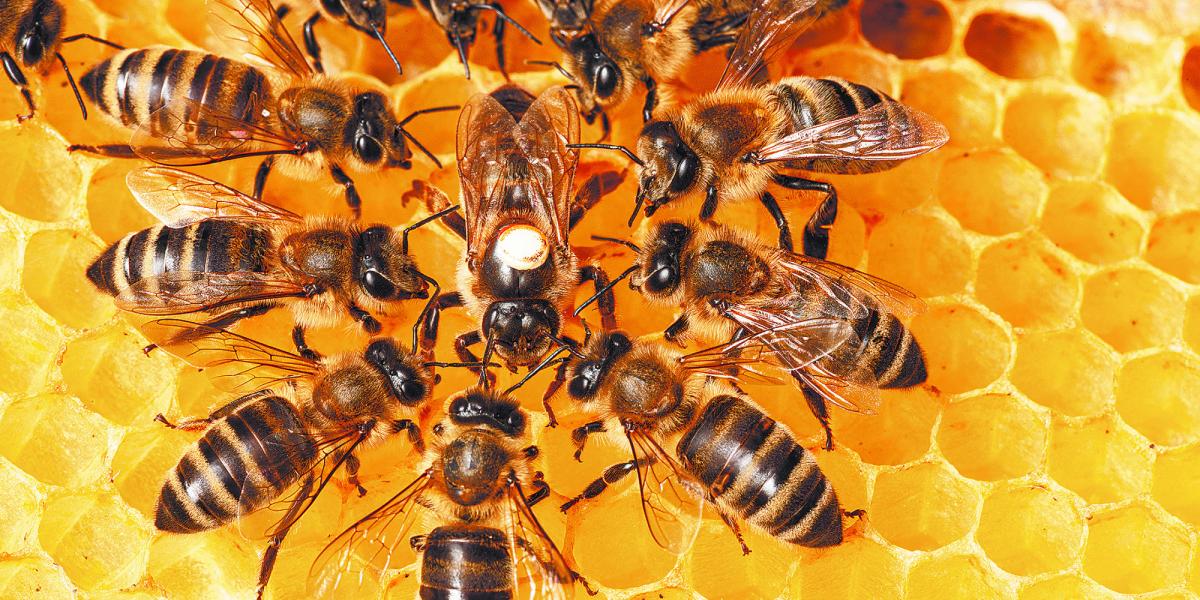
an unusual mortality of bees in hives scattered in agricultural fields in various regions keeps people on alert. Uruguaywhile the chemical product that caused the situation is being investigated, the president of the Beekeeping Society local.
The first complaints about millions of dead bees They were done in mid-November, but as the days passed, some 60 producers detected more than 11,500 affected hives throughout seven regions in the south and coast of the country.
“It is a very great misfortune not only for producers, it is also serious for pollination, for farmers, for the country in general,” he told AFP. Jihmy Fiorelli, president of the Uruguayan Beekeeping Society (SAU).
“It is more than clear that the deaths are due to poisoningbut we cannot say which product may be the one that was misapplied” until we have the results of the samples that are being analyzed,” said the president of a civil society which brings together about 500 beekeepers.
Estela Santosan entomologist at the state university, told AFP that it is “sure that it was a chemical product due to the type of mortality that occurred and due to the analyzes that have been carried out on the affected hives.”
“There is no disease that explains the massive mortality that was occurring. We know it was a chemical product, we don’t know which one or where it was put, but the environment of all these hives is agricultural,” explained the person in charge of leading the investigation.
Along the same lines, Alejandro Nario, director of the National Directorate of Quality and Environmental Assessment, assured AFP that the type of mortality is not due to climate issues.
However, he stressed that it is quite “unusual” how the deaths occurred as they were in the hives and not on the crops where the chemical was applied.
The ministry of Livestock, Agriculture and Fishing (MGAP) is also monitoring the situation.
“Samples will be sent abroad to analyze the active ingredient or the range of active ingredients” that caused the death, he told AFP. Gustavo FrippMGAP representative in the Honorary Beekeeping Development Commission.
For the Ministry of the Environment, it is a priority to know the origin of the contamination, which could have affected other natural pollinators, to continue working on pesticide management, said Nario.
In the last official count, 585,000 hives were detected, owned by 2,183 beekeepers. In 2024 the honey production in Uruguay it was 11,300 tons and around 90% was exported to USA.