Madrid/The December interventions of the Minister of Energy, Vicente de la O Levy, are similar to the letters that children send to the Three Wise Men or Santa Claus asking for that wonderful toy that only they can bring but that, year after year, does not arrive and must be included again in the following year’s list. This Friday, in an interview to the newspaper Granmathe official has assured that 2026 “will be a difficult year, [aunque] slightly better.”
“We are better prepared. We are going to have more generation,” he promised. like every year of those who have been in office, which are now four. De la O Levy took office in October 2022, replacing Liván Arronte, burned for what was then considered a disastrous year due to eternal blackouts that today are seen as minutiae. The finishing touch came from the fire at the Supertanqueros base in August, in which 17 firefighters lost their lives, including young people from military service, and whose economic consequences are still being managed by his successor with the same –little– resolution capacity.
“The lack of fuel is not only the lack of money, it has to do with logistics: with ships, tugboats, railways, tanks, storage and national distribution. We are addressing everything, but it is not an easy issue and requires a lot of resources,” the minister argues in the interview when referring to the worst of the energy problems that the Island has suffered for a long time: the shortage of crude oil. De la O Levy emphasizes that the Supertanqueros base is key – the tanks “are completely built, with their roofs and structures” – but it remains to be finished with other systems to close the repair, which is already taking too long.
In 2021, only 30% of the machinery was available, but donations and repairs – many of them thanks to China – have allowed it to be recovered to more than 80%.
The minister confirms in the interview what has been known for a long time. Distributed generation is worse than at its lowest, despite the fact that the generating sets have been largely recovered. In 2021, only 30% of the machinery was available, but donations and repairs – many of them thanks to china– have allowed them to recover up to more than 80%, making it easier for some vital facilities to remain active in large blackouts such as those caused by Hurricane Melissa at the end of October.
The fundamental problem is that, despite the arrangements, there is nothing to power these equipment. “There is a very significant fuel deficit. We have a distributed generation set up with more than 1,000 megawatts (MW) available and today practically those 1,000 are out for fuel. The fundamental cause is financial,” De la O Levy repeated. Two weeks ago, data from the Reuters agency revealed that shipments from the region’s main oil partners, Venezuela and Mexico, have plummeted by 73% between January and October 2025 compared to the same period the previous year. Neither of the two partners, for different reasons, is in a position to exceed in the facilities to Havana.
“For this reason, and we will not tire of saying it, we have to eliminate total dependence on imported fuels. It is a long road, but we are doing it, with our very scarce resources, prioritized by the country,” he emphasizes.
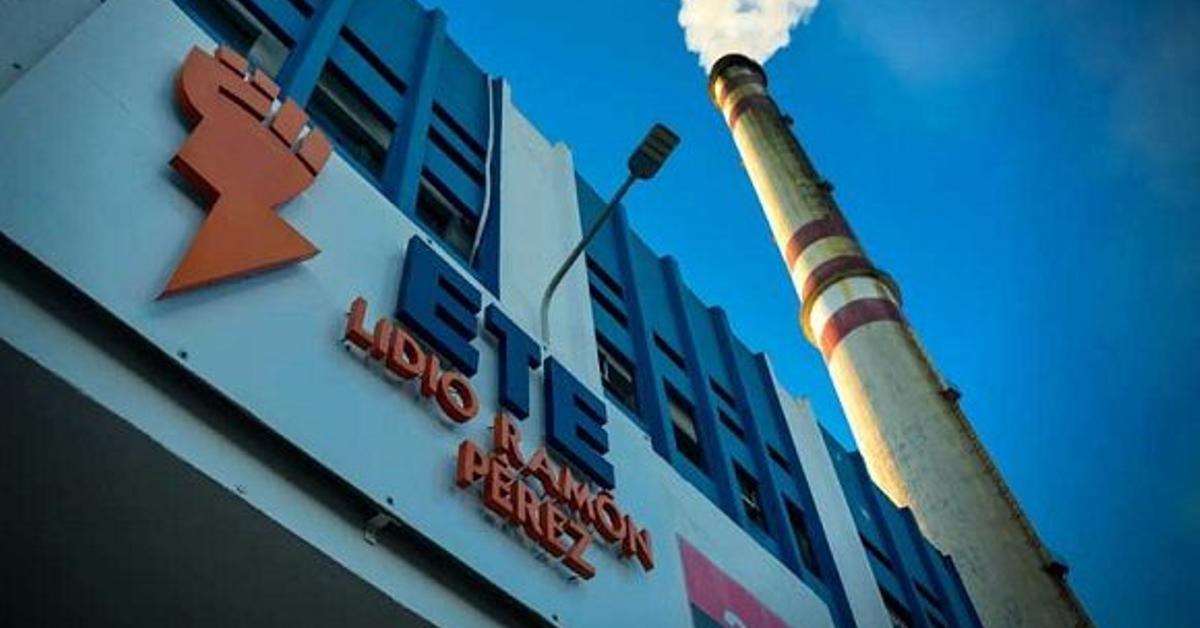
The minister reviewed the other energy sources that support the national electrical system (SEN). The backbone, thermoelectrics, faces another turning point. “Now we have to make a complex decision with Guiteras and Felton,” he warned in relation to next year. The first, the main thermoelectric plant in the country, in Matanzas, should have left the system for a capital repair of about nine months precisely in this December, but the measure has been changed and there will be “a short one-month stop at the beginning of 2026 to face the summer, while we support Felton, which is also unstable.”
The Government aspires, says the minister, to recover 1,400 MW in thermal generation and to do so it wants to have units 4 in Cienfuegos and 2 in Santa Cruz del Norte, which should have finished their maintenance in the summer but will do so this month. “The reason was that, when we opened them, we found a volume of work greater than estimated. It was not worth closing them, leaving things to do, because later they would constantly fail,” he points out. Both, along with 3 in Cienfuegos and 5 in Santiago de Cuba – which returned in April and October, respectively – are considered incorporated within 2025.
“This gives a situation in thermoelectric plants that is different from 2024. Starting in January 2026 we will have all these units generating. It is an additional power from the beginning of the year to what we gradually had in 2025,” he stated.
Regarding renewables, the minister once again insisted on the idea that he advanced at the beginning of the year. Although Cubans have not noticed their presence too much, in a year in which solar parks have grown like mushrooms after the rain throughout the territory, their contribution has alleviated the situation during sunny hours. “It has mitigated the blackout during the day; for example, without this generation source, the effects during the day would be similar to those that occur during peak demand hours,” he highlighted.
The Government aspires, says the minister, to recover 1,400 MW in thermal generation and to do so it wants to have units 4 in Cienfuegos and 2 in Santa Cruz del Norte, which should have completed their maintenance in the summer
In the year that is about to begin, more photovoltaic energy will be added, but De la O Levy stressed a new aspect. Its usefulness for starting microsystems – discovered during Melissa’s passage – is causing the ministry to completely rethink the SEN. “Provinces such as Guantánamo and Granma created energy islands with distributed generation and solar parks. This has led us to rethink the design of the system by region, to protect vital sectors of the economy and defense.”
The official mentioned other common places, such as the eternally under construction Herradura 1 – the wind farm which in January 2025 was “ready” to be completed–, the supposed increase in national oil and gas – denied by independent experts–, or the repair of Felton 2, also endless. The unit of this thermoelectric plant, located in Holguín, caught fire in 2022 and the “completely new” boiler continues to be built little by little. “We have found a financial way, with our scarce resources, for its completion,” says De la O Levy, who is only able to give 2030 as a horizon.
The minister ends the interview by admitting that 2025 has been (like everyone else) “very difficult, characterized by the greatest absence of fuel we have had. Very tense, with long hours of blackouts, with moments of 24 hours in some regions,” he acknowledged. And although for next year he promises (like everyone else, too) improvements, he admits that the suffering is not going to stop: “We are not going to eliminate the blackouts. There will be a decrease, but there is still a long way to go. It is a long road, but it is the national path, that of autonomy and energy sovereignty. We are going to have to continue fighting, resisting, building and improving the national electrical system.”